Conflict in Lebanon: Israeli Forces Expand Control of Border Villages Since Ceasefire
Israeli forces have expanded their control of south Lebanon border villages since the ceasefire took effect.[3] In the ongoing conflict in Lebanon, residents of Tyre in southern Lebanon express suspicion toward the truce, fearing an imminent return to war between Israeli forces and Hezbollah as the ceasefire approaches its expiration.[2] Despite the implementation of a 10-day ceasefire, a 21 per cent decrease in displaced people in collective shelters has been recorded, yet 117,420 individuals remain in 631 sites, with returns to 74 localities restricted due to ongoing military presence.[4] UNRWA has registered 1,741 displaced people from 519 families and is operating two emergency shelters in Lebanon as of 14 April 2026.[5] Continued mass displacement and immense humanitarian needs persist across southern Lebanon, with cross-border impacts extending to occupied Palestinian territory and Syria.[4]
Overview of the Current Security Situation
The current security landscape in Lebanon, particularly during the reporting period from April 13 to 19, 2026, reflects a tense environment marked by the onset of a ceasefire amid ongoing hostilities.[1] The Weekly Security Report: Lebanon Operational Assessment from SARI Global provides a comprehensive operational overview, highlighting key events that underscore the fragility of the situation in southern Lebanon and beyond.[1] This period coincides with the initial days of the 10-day ceasefire, which was intended to halt escalation but has not fully alleviated underlying tensions.[4]
According to the UN Office for the Coordination of Humanitarian Affairs (OCHA) Flash Update #19, dated as of 20 April 2026, the ceasefire's start has not stemmed continued mass displacement or addressed immense humanitarian needs.[4] The report covers not only Lebanon but also occupied Palestinian territory and the Syrian Arab Republic, indicating interconnected regional dynamics.[4] Security assessments during this week point to persistent risks, including military activities that have shaped the operational environment for humanitarian actors.[1] The general security assessment reveals a landscape where ceasefires offer temporary pauses but do little to resolve entrenched positions, with border areas remaining focal points of concern.[1][4]
Key events from the reporting period include the expansion of control in border regions, which has complicated access and mobility.[3] Humanitarian operations continue under constrained conditions, as outlined in the operational assessment, emphasizing the need for vigilance amid potential volatility.[1] The ceasefire's early phase saw a partial reduction in displacement figures, but the overall security posture remains precarious, with military presence dictating movement in southern Lebanon.[4] This overview encapsulates a period where humanitarian efforts persist against a backdrop of incomplete de-escalation, setting the stage for ongoing monitoring of truce compliance.[1][4]
Detailed analysis of the security report underscores patterns of activity that predate and persist through the ceasefire, including restrictions that affect civilian returns.[1] OCHA's highlights confirm that while there has been some stabilization in shelter occupancy, the broader security environment hampers full recovery efforts.[4] These developments collectively paint a picture of a conflict zone where temporary truces mask deeper strategic maneuvers, particularly along the southern border.[1][4]
Ceasefire Status and Local Perceptions
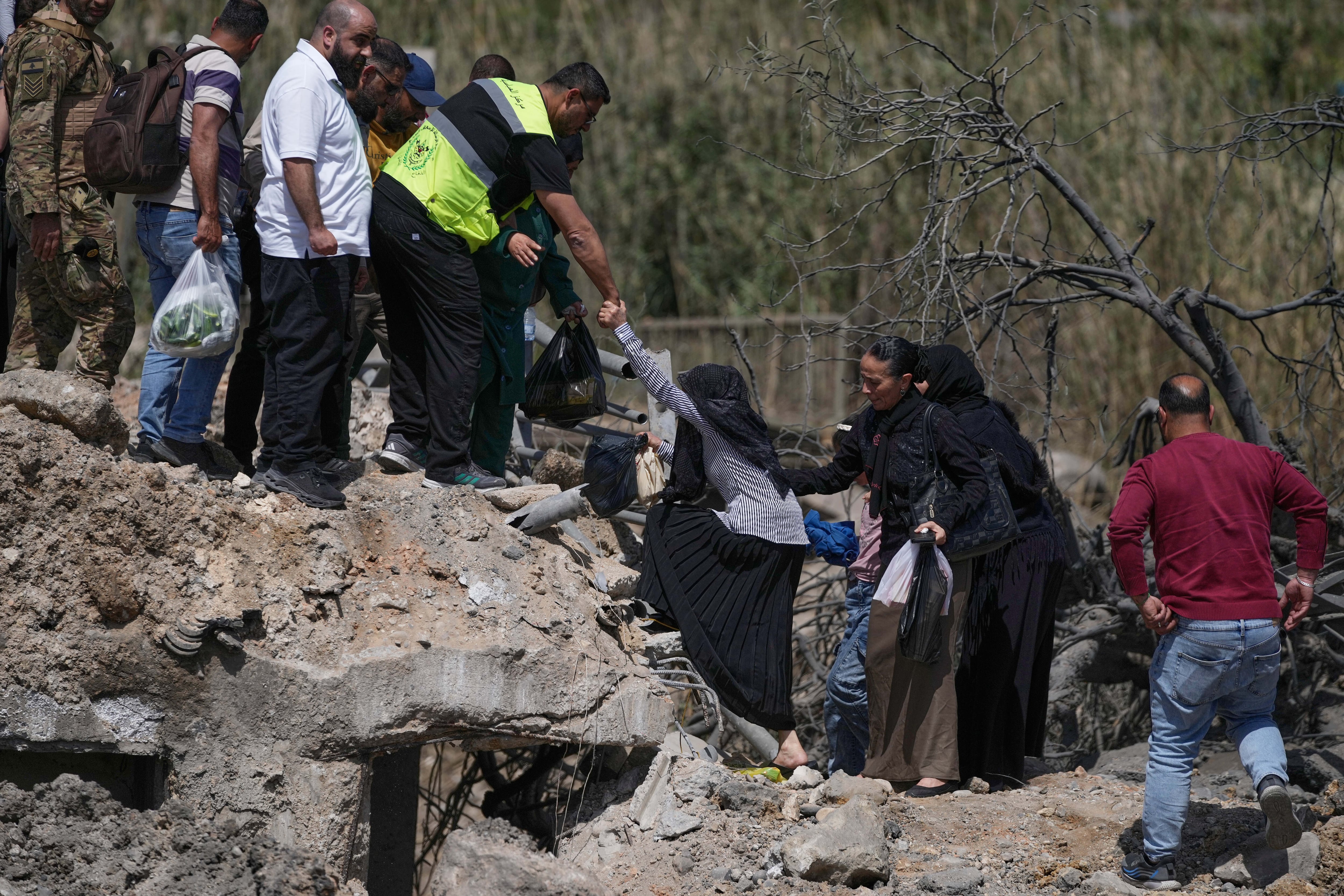
Residents of Tyre express suspicion toward the truce in southern Lebanon. — Source: elpais
The 10-day ceasefire, which took effect at the end of the previous week, has elicited mixed implementation outcomes and heightened concerns among communities in southern Lebanon.[4][3] Residents in Tyre, the largest city in the region, harbor deep suspicions about the truce's durability, viewing it as a potential prelude to renewed hostilities.[2] Local sentiments, as captured in reporting from El Pais, articulate fears that "Israel’s sole objective is to fill our hearts with terror," reflecting a pervasive anxiety over the ceasefire's expiration on Sunday.[2]
Community reactions in affected areas reveal a profound lack of trust in the truce's longevity, with many anticipating a swift return to conflict between Israeli forces and Hezbollah.[2] This perception is compounded by observable military dynamics during the ceasefire period, where expansions of control have continued unabated.[3] OCHA's Flash Update notes the ceasefire's role in slightly reducing displacement pressures, yet underscores that ongoing military presence severely limits returns, fueling local apprehensions.[4]
The status of the ceasefire, as detailed across multiple sources, shows partial adherence but persistent violations in spirit, particularly in border zones.[3][4] In Tyre, daily life is overshadowed by the truce's fragility, with residents bracing for escalation as the deadline looms.[2] These local perceptions align with broader reporting on how military sources describe post-ceasefire territorial gains, which erode confidence in the agreement.[3] Humanitarian updates reinforce this narrative, highlighting how the 21 per cent drop in shelter populations does not translate to security for those still displaced.[4]
Detailed community feedback from Tyre illustrates a psychological toll, where the ceasefire is seen not as relief but as psychological warfare.[2] This is intertwined with the truce's operational challenges, including restricted access to 74 localities due to military activities.[4] As the expiration date approaches, local reactions point to a consensus that the pause is tactical rather than transformative, with fears of war resumption dominating discourse.[2][4]
Military Developments in Border Areas
Military developments since the ceasefire's onset have centered on Israeli forces' expansion of control over south Lebanon border villages.[3] Military sources cited by The New Arab confirm that "Israeli forces have expanded their occupation of border villages since the ceasefire took effect end of last week."[3] This progression has solidified presence in strategic areas, complicating the security environment despite the truce.[4]
Observations from the period indicate a deliberate consolidation along the border, where ongoing military presence restricts civilian returns to 74 localities in southern Lebanon.[4] The Flash Update from OCHA explicitly links these restrictions to sustained operations, which persist even as shelter numbers decline.[4] Such developments suggest that the ceasefire has not led to withdrawals but rather to entrenchment, as reported in detailed accounts of territorial changes.[3]
The expansion's implications are evident in the operational constraints it imposes, affecting humanitarian access and civilian mobility.[4] Border villages, key to the conflict's dynamics, remain under heightened control, with military sources providing firsthand insights into the post-ceasefire shifts.[3] This aligns with broader security assessments that note continued activity shaping the ground situation.[1] The persistence of these developments underscores a pattern where ceasefires serve as intervals for repositioning rather than disengagement.[3][4]
Further examination reveals how these military moves influence local stability, with occupation expansions directly tied to the fears expressed in nearby urban centers like Tyre.[2] OCHA's reporting corroborates the tangible impacts, such as the 117,420 people still in shelters due to these very presences.[4] Collectively, these observations from military sources and humanitarian monitors depict a border area where control has intensified, setting a tense precedent for the ceasefire's remainder.[3][4]
Humanitarian Impact and Displacement
{IMAGE_3}
The humanitarian toll of the conflict in Lebanon remains profound, with continued mass displacement affecting tens of thousands despite the ceasefire.[4] A 21 per cent decrease in displaced people in collective shelters has been recorded overall, bringing the figure to 117,420 individuals across 631 sites.[4] However, returns to 74 localities in southern Lebanon are restricted by ongoing military presence, perpetuating vulnerability.[4]
UNRWA's Situation Report #7, dated 16 April 2026, details the agency's emergency response launched on 4 March 2026.[5] As of 14 April, UNRWA operates two emergency shelters: the Siblin Training Centre (STC) in Saida Area and Battir School in Nahr el-Bared Camp in northern Lebanon.[5] By that date, 1,741 displaced people from 519 families had been registered, highlighting the scale of needs even amid partial shelter reductions.[5]
OCHA's Flash Update emphasizes immense humanitarian requirements persisting across regions, with southern Lebanon bearing the brunt.[4] The restrictions on returns exacerbate the crisis, as military presence blocks repopulation efforts in affected areas.[4] This displacement dynamic is part of a larger pattern, where the ceasefire offers marginal relief but fails to address root causes.[4][5]
Detailed shelter operations by UNRWA demonstrate adaptive responses to the crisis, focusing on critical northern and southern sites.[5] The registration of over 1,700 individuals underscores the personalized impact on families fleeing hostilities.[5] Combined with OCHA's aggregate figures, these reports reveal a humanitarian system under strain, with 631 active sites accommodating over 117,000 people.[4] The 21 per cent decline is notable but insufficient, as military factors continue to displace and confine populations.[4]
Broader Regional Context
The humanitarian crisis in Lebanon extends beyond its borders, intertwining with developments in occupied Palestinian territory and the Syrian Arab Republic.[4][5] OCHA's Flash Update #19 covers these interconnected areas, noting continued mass displacement and needs despite the ceasefire's regional ripple effects.[4] Cross-border impacts amplify the scale, as movements and requirements spill over into neighboring zones.[4]
UNRWA's operations reflect this breadth, with its Lebanon response linked to activities in occupied Palestinian territory and Syria.[5] The agency's shelters in Saida and Nahr el-Bared serve displaced populations whose plight is exacerbated by regional hostilities.[5] This context highlights how Lebanon's southern conflict contributes to wider instability, sustaining immense needs across the area.[4]
Persistent military presence in southern Lebanon not only restricts local returns but also influences regional humanitarian flows.[4] The Flash Update's scope across three countries illustrates the interconnectedness, where a 10-day truce in one area fails to isolate effects.[4] UNRWA's registration efforts capture families affected by these dynamics, operating amid cross-border challenges.[5]
This broader lens reveals a regional humanitarian architecture strained by ongoing conflict elements, with Lebanon's border issues as a flashpoint.[4][5] The emphasis on collective shelters and restrictions points to cascading impacts that demand coordinated responses.[4]
Key Implications for Ceasefire Durability
Drawing from the security and humanitarian assessments, the ceasefire's implementation reveals underlying fragilities that could influence its extension or collapse.[1][4] Expansions in border control and persistent displacement suggest tactical pauses rather than strategic resolutions.[3] Local suspicions in Tyre, coupled with restricted returns, indicate eroding trust that may precipitate renewed escalation.[2][4]
The 21 per cent shelter reduction offers a glimmer of progress, yet the 117,420 remaining displaced underscore unresolved tensions.[4] UNRWA's targeted shelter operations highlight adaptive resilience but also the depth of needs.[5] Military sources' observations of occupation growth post-ceasefire point to a ground reality misaligned with truce intentions.[3]
These elements collectively frame a scenario where regional interconnections amplify local pressures, necessitating close scrutiny of expiration dynamics.[4][5]
What to watch next: As the ceasefire expiration nears, monitor potential returns to restricted localities amid ongoing military presence[4], community reactions in Tyre to truce developments[2], and updates on displacement figures from UNRWA shelters[5].