Conflict in Lebanon: Israel and Lebanon Extend Ceasefire for Three Weeks
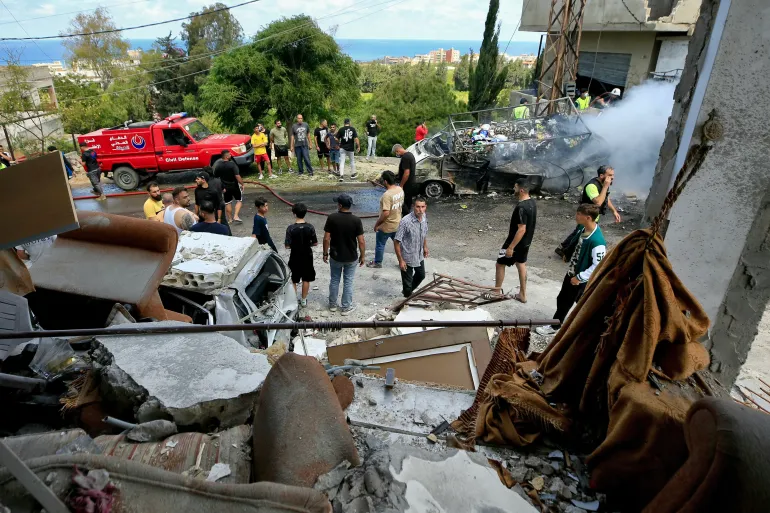
Israel and Lebanon have extended their ceasefire for three weeks, brokered by President Donald Trump, as part of efforts to address conflicts involving Iran.[2] This development in the conflict in Lebanon comes amid ongoing hostilities between Israel and Iranian-backed Hezbollah militants, offering a temporary pause in a confrontation that has drawn significant international attention.[2] The extension, agreed upon at a White House meeting, reflects broader diplomatic maneuvers aimed at stabilizing the region while Trump pursues what he describes as the "best deal" with Iran.[2]
Ceasefire Extension Details
The recent extension of the ceasefire between Israel and Lebanon marks a key diplomatic step in de-escalating tensions in the conflict in Lebanon.[2] At a meeting hosted at the White House, representatives from both nations agreed to prolong the truce by three weeks, with President Donald Trump playing the central brokering role.[2] Trump emphasized his commitment to securing optimal terms, stating he was prepared to wait for the "best deal" to resolve the wider conflict with Iran.[2] This extension directly addresses the fighting between Israel and Hezbollah militants backed by Iran, which has been a persistent flashpoint.[2]
The agreement underscores the involvement of high-level international mediation in the conflict in Lebanon, highlighting the White House's active engagement.[2] By extending the ceasefire, both parties aim to create space for further negotiations, potentially averting further intensification of cross-border exchanges.[2] Trump's role as broker positions the United States as a pivotal actor, linking the Lebanon-Israel dynamics to larger regional strategies involving Iran.[2] This three-week window provides a critical interval for diplomatic efforts, though the fragility of such truces in the region remains evident from past patterns.[2]
Background of the Conflict
The conflict in Lebanon between Hezbollah and Israel traces its origins to October 2023, when hostilities erupted in the wake of the Israel-Hamas war.[1] What began as a spillover effect quickly intensified, with significant escalation occurring in September 2024.[1] This timeline positions the confrontation as a direct extension of broader Middle Eastern tensions, where Hezbollah's involvement has been central.[1]
By April 2026, the situation had reached a critical juncture, as synthesized from data available up to April 24 of that year.[1] The conflict's progression from initial border skirmishes to more sustained engagements reflects the interconnected nature of regional disputes.[1] Hezbollah, operating from Lebanese territory, has engaged Israeli forces amid a complex web of proxy dynamics.[1] The period covered in the analysis, from April 13 to 19, 2026, captures ongoing developments, providing a snapshot of the entrenched positions on both sides.[1]
This historical context is essential for understanding the ceasefire's significance, as it interrupts a pattern of escalation that has persisted for over two years.[1] The involvement of non-state actors like Hezbollah complicates resolution efforts, intertwining local Lebanese security with international rivalries.[1]
Humanitarian Impact in the Region
Escalating hostilities across the Middle East, including in Lebanon, have triggered a profound humanitarian crisis with widespread effects on population mobility.[3] The International Organization for Migration's report for April 15-21, 2026, details how these conflicts span multiple countries such as Iran, Iraq, Lebanon, Syria, and Türkiye, straining national social systems and host community safety networks.[3] In an already fragile context, the disruptions have led to significant population movements, exacerbating vulnerabilities.[3]
Complementing this, UNHCR's CORE Middle East Situation update as of April 22, 2026, reports that affected areas host 24.6 million forcibly displaced people.[4] Many of these individuals, along with host communities, confront substantial protection risks and unmet humanitarian needs.[4] The escalation has deteriorated the overall situation across Asia and the Middle East, limiting access to essential services and heightening exposure to dangers.[4]
In Lebanon specifically, these dynamics compound existing pressures from the conflict in Lebanon, where mobility restrictions and safety concerns impede aid delivery and daily life.[3][4] Displaced populations face compounded risks, including inadequate shelter and health services, as hostilities disrupt traditional support structures.[3][4] The scale of the crisis—spanning Lebanon, Iran, Iraq, and beyond—illustrates how localized fighting reverberates regionally, overwhelming response capacities.[3][4]
Attacks on Aid Workers
Violence against humanitarian personnel has emerged as a grave concern in conflict zones, including Lebanon, with Insecurity Insight recording 1,073 attacks and acts of violence against UN, humanitarian, and civil society aid workers over the past 23 months.[5] These incidents have resulted in 735 aid workers killed, 579 injured, 325 kidnapped, and 46 subjected to other harms since the adoption of a relevant UN resolution.[5] The bi-monthly news brief for April 1-14, 2026, covers global hotspots such as Lebanon, Iran, occupied Palestinian territory, Sudan, and Ukraine, underscoring the pervasive threats.[5]
In Lebanon, these attacks hinder critical operations, endangering those delivering aid amid the conflict in Lebanon.[5] The data highlights a pattern of targeting that undermines protection efforts for vulnerable populations, from premises to personnel.[5] Such violence not only inflicts direct casualties but also erodes the capacity to address humanitarian needs, creating a vicious cycle in active war zones.[5]
Broader Regional Escalations
The conflict in Lebanon forms part of wider escalations across the Middle East and beyond, as outlined in mobility and displacement reports.[3][4] Hostilities have impacted countries including Afghanistan, Armenia, Azerbaijan, Pakistan, Syrian Arab Republic, and Turkmenistan, triggering mobility crises that strain resources.[3] The IOM notes significant disruptions to population movements, with safety networks in host communities under severe pressure.[3]
UNHCR's assessment reinforces this, detailing how 24.6 million displaced individuals in the region face heightened risks amid deteriorating conditions.[4] Limited humanitarian access compounds these challenges, affecting both refugees and locals in interconnected theaters.[4] Lebanon's role within this framework amplifies the stakes, as Iranian-backed elements link local fighting to proxy battles elsewhere.[2][3][4]
These escalations illustrate a cascading effect, where events in one area precipitate flows and instabilities elsewhere.[3][4] The humanitarian toll, marked by mobility restrictions and protection gaps, demands coordinated responses across borders.[3][4]
What to watch next: Monitor the three-week ceasefire period for signs of adherence or breakdown, alongside Trump's negotiations with Iran, as further escalations could intensify mobility crises and risks to displaced populations in Lebanon and neighboring regions.[2][3][4]