Conflict in Lebanon: Another Israeli Soldier Killed in Southern Region
In the ongoing conflict in Lebanon, the Israeli army has reported that another soldier was killed in southern Lebanon, marking the latest casualty in a series of incidents in the region.[1] This death brings the total number of Israeli soldiers killed to 15 since March 2, despite a ceasefire in place.[4] The event underscores the persistent tensions along the border area, where military operations continue to result in losses on the Israeli side. Accompanying this fatality, nine Israeli soldiers were injured in the same incident, highlighting the risks faced by forces operating in southern Lebanon.[4] Meanwhile, efforts to restore normalcy are evident in Lebanon's reopening of key transport routes damaged amid recent events, alongside international expressions of sympathy over separate peacekeeper casualties.[2][3]
Recent Casualties in Southern Lebanon
The Israeli army has confirmed the death of a soldier in southern Lebanon, a development that adds to the tally of military losses in the volatile border zone.[1] This incident represents a continuation of hostilities that have persisted despite broader ceasefire agreements aimed at de-escalating the situation.[4] Southern Lebanon has been a focal point for such clashes, where Israeli military personnel have encountered dangers leading to both fatalities and injuries.
According to reports, this latest soldier's death occurred in circumstances that also left nine others wounded, illustrating the intensity of the engagement.[4] The Israeli military's statement emphasizes the soldier's killing as a direct outcome of operations in the area, prompting ongoing assessments of security protocols in the region.[1] Since March 2, the cumulative figure of 15 Israeli soldiers killed provides a stark measure of the conflict's toll on ground forces deployed near the Lebanese border.[4]
These casualties occur within a context of fragile truce conditions, where violations or residual activities have sustained a cycle of losses.[4] The precision of the reporting from the Israeli army underscores the real-time nature of threats in southern Lebanon, where tactical movements can swiftly turn hazardous.[1] Military analysts, drawing from such announcements, note that each incident contributes to the broader narrative of sustained military presence and its inherent risks, though official tallies remain the primary factual basis.[4]
The impact of these losses extends to operational continuity, as the Israeli forces maintain positions amid these challenges.[1][4] Repeated confirmations from military sources highlight the consistency in reporting mechanisms, ensuring transparency on personnel casualties.[1] As the number climbs to 15 since early March, it reflects a pattern of engagements that have not fully abated, even under ceasefire terms.[4]
Nine Soldiers Injured in Latest Incident
In the same event that claimed the life of the Israeli soldier, nine others sustained injuries in southern Lebanon.[4] This cluster of casualties from a single incident amplifies the severity of the confrontation, affecting a significant portion of the involved unit.[4] The injuries, reported alongside the fatality, indicate the scale of the exchange or operation that unfolded in the area.
Details from the Israeli side point to the incident occurring despite the ceasefire, suggesting that localized actions or responses continue to pose threats to personnel.[4] The nine injured soldiers represent a substantial number requiring medical attention and potentially impacting unit readiness in the short term.[4] Such reports from the Israeli army provide critical data on the human cost of maintaining security postures in southern Lebanon.
The coincidence of one death and nine injuries in this episode draws attention to the dynamics of modern border conflicts, where protective measures may mitigate but not eliminate risks.[4] Official announcements stress the "despite ceasefire" context, implying that adherence or enforcement remains uneven across the zone.[4] Recovery efforts for the wounded would follow standard military procedures, though specifics on their conditions are not detailed in available reports.
This incident fits into the larger sequence since March 2, where the total fatalities have reached 15, now compounded by these additional injuries.[4] The emphasis on the number of injured personnel serves to quantify the broader operational strain on Israeli forces engaged in the conflict in Lebanon.[4]

Indonesian officials express condolences for the death of a French UNIFIL peacekeeper. — Source: antaranews
Infrastructure Repairs and Reopenings
Lebanese authorities have made progress in restoring vital transport links in southern Lebanon, with specialised units fully reopening the Khardali-Nabatieh road.[2] This key route's complete accessibility marks a crucial advancement in efforts to reconnect communities disrupted by recent damages.[2] Concurrently, the Burj Rahal-Tyre bridge has been partially reopened, allowing limited passage while full restoration continues.[2]
The Lebanese Armed Forces issued a statement detailing these reopenings, attributing the work to dedicated engineering teams addressing infrastructure hit in recent weeks.[2] Ongoing repairs target other damaged sites, reflecting a systematic approach to rehabilitation amid the prevailing security environment.[2] Specifically, work is underway on the Tayr Falsay-Tyre bridge, conducted in cooperation with the National Authority for the Litani River.[2] This collaboration highlights inter-agency coordination to tackle damage reportedly caused by Israeli actions.[2]
These developments signify steps toward normalizing mobility in southern Lebanon, where key routes like Khardali-Nabatieh serve essential economic and civilian functions.[2] The partial reopening of the Burj Rahal-Tyre bridge provides immediate relief for partial traffic, even as engineers address remaining structural issues.[2] The army's proactive stance in these repairs underscores commitment to infrastructure resilience, potentially aiding local populations affected by conflict-related disruptions.
Further rehabilitation efforts, such as those on the Tayr Falsay-Tyre bridge, involve specialized cooperation to ensure durability post-damage.[2] The statement from the Lebanese Armed Forces positions these actions as part of broader restoration initiatives, countering the effects of recent events on transport networks.[2]
International Responses to Peacekeeper Incidents
Indonesia has extended official condolences to France over the death of a French peacekeeper serving with the United Nations Interim Force in Lebanon (UNIFIL).[3] This expression of sympathy addresses the loss of personnel involved in monitoring and stabilizing efforts along the Lebanese-Israeli border.[3]
The Indonesian statement reflects international solidarity with UNIFIL operations, which have faced casualties amid the tense environment in southern Lebanon.[3] By directing condolences specifically to France, Indonesia acknowledges the nationality of the fallen peacekeeper and the contributions of French troops to the multinational force.[3]
Such responses highlight the global dimension of peacekeeping challenges in the conflict in Lebanon, where UNIFIL personnel operate under mandate to maintain ceasefires and facilitate disengagement.[3] The death of the French soldier prompts diplomatic notes of support, reinforcing the commitment of observer nations to the mission's objectives.[3]
Indonesia's action serves as a formal gesture in a series of international reactions to peacekeeper incidents, emphasizing shared concerns over safety in the region.[3]
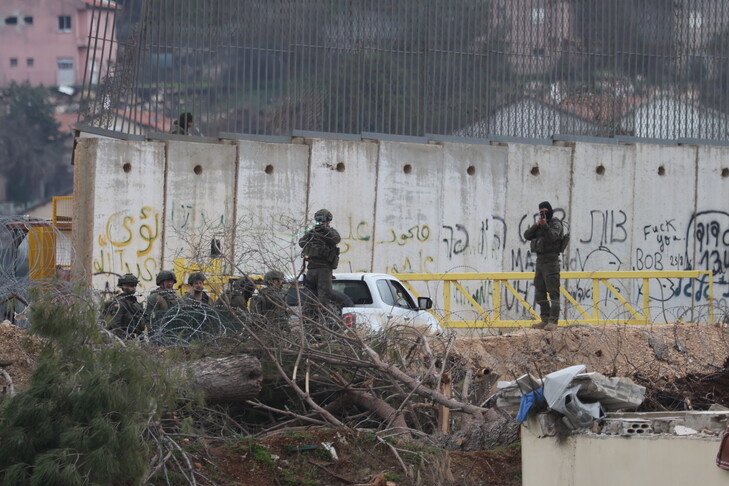
An Israeli soldier was killed and nine injured in southern Lebanon despite a ceasefire. — Source: anadolu
Details on Key Route Reopenings
The full reopening of the Khardali-Nabatieh road by Lebanese Armed Forces specialised units represents a major milestone in southern Lebanon's infrastructure recovery.[2] This route, critical for linking Nabatieh to surrounding areas, now operates without restrictions following intensive repair work.[2]
Partial access has been restored to the Burj Rahal-Tyre bridge, enabling some vehicular movement while crews complete necessary fixes.[2] These targeted reopenings address damage from recent weeks, prioritizing high-traffic corridors essential for daily logistics and aid distribution.[2]
In parallel, rehabilitation of the Tayr Falsay-Tyre bridge proceeds with involvement from the National Authority for the Litani River, focusing on structural integrity after reported Israeli-inflicted harm.[2] The army's statement outlines these as ongoing priorities, demonstrating sustained investment in transport restoration.[2]
These specific interventions collectively aim to mitigate the conflict's disruptions, fostering gradual return to pre-damage functionality across key southern networks.[2]
Overview of Ongoing Developments
The landscape of the conflict in Lebanon encompasses military casualties, infrastructure recovery, and international diplomatic notes, as evidenced by recent reports.[1][2][3][4] Israeli losses, now at 15 soldiers killed since March 2 including the latest fatality and nine injuries, persist despite ceasefire provisions.[1][4]
Lebanon's proactive reopenings of routes like Khardali-Nabatieh and partial Burj Rahal-Tyre, alongside Tayr Falsay repairs, indicate parallel civilian-focused stabilization efforts.[2] Indonesia's condolences for the French UNIFIL peacekeeper add an layer of global attentiveness to peacekeeping risks.[3]
These elements collectively portray a multifaceted situation in southern Lebanon, where military incidents coexist with reconstruction and multilateral responses.[1][2][3][4] The Israeli army's confirmations and Lebanese army statements provide primary accounts of personnel and infrastructure statuses.[1][2] Ceasefire contexts frame the casualties, while damage attributions shape repair narratives.[2][4]
Sustained monitoring reveals interconnected developments, from border security challenges to route rehabilitations supporting local resilience.[1][2][4] International gestures like Indonesia's reinforce UNIFIL's role amid ongoing tensions.[3]
What to watch next: Continued progress on rehabilitating the Tayr Falsay-Tyre bridge in cooperation with authorities, alongside any further reports on military casualties in southern Lebanon despite the ceasefire.[2][4]