
Conflict in Lebanon: 16 Israeli Soldiers Killed Since February 28
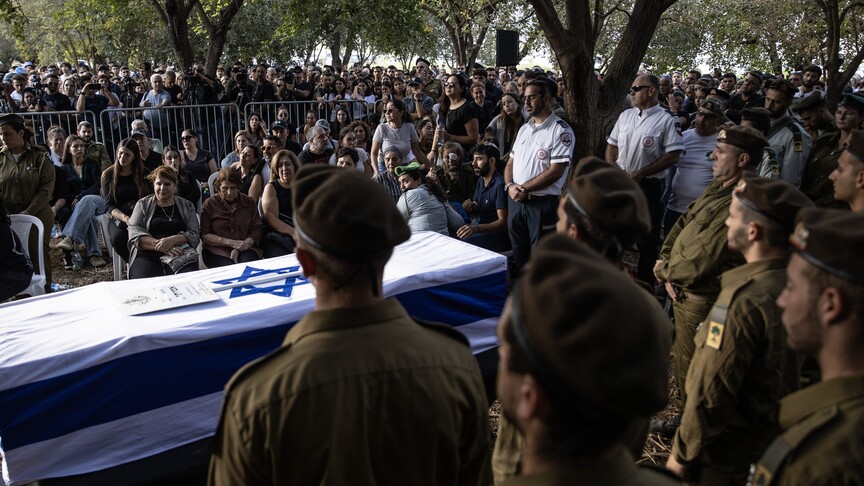
In the ongoing conflict in Lebanon, military data indicates that 16 Israeli soldiers have been killed and 690 wounded since February 28, with these casualties attributed to attacks linked to Iran and Lebanon.[1] This toll underscores the intensity of the engagements in the region, as reported by the Israeli army.
Overview of Recent Casualties
The Israeli military has disclosed significant losses in its operations, with precise figures highlighting the human cost of the conflict. According to army data, 16 soldiers have lost their lives and 690 have been injured since February 28.[1] These numbers reflect the cumulative impact of hostile actions tied to actors from Iran and Lebanon, painting a picture of sustained combat pressure on Israeli forces.[1]
This casualty report comes directly from military sources, providing a snapshot of the toll exacted over a period spanning more than two months at the time of reporting. The high number of wounded—far exceeding the fatalities—suggests a pattern of intense, close-quarters engagements where injuries from shrapnel, blasts, and small-arms fire are prevalent, though specific injury types are not detailed in the data.[1] In the broader context of military operations, such figures are tracked meticulously to assess operational tempo, resource allocation for medical evacuations, and the overall strain on troop readiness.
The release of these statistics serves multiple purposes within the Israeli military framework: it informs internal assessments, signals resolve to the public, and contributes to strategic communications amid the conflict in Lebanon. The linkage to Iran and Lebanon in the casualty reports implies coordinated or inspired attacks, potentially involving missiles, drones, or ground incursions, though the data focuses on outcomes rather than attack methodologies.[1] This transparency in casualty reporting contrasts with some conflicts where such details are withheld, allowing for public scrutiny and debate on the war's progress.
As the conflict persists, these numbers are likely dynamic, with daily updates potentially altering the totals. The army's acknowledgment of 690 wounded points to a substantial logistical burden, including field hospitals, rehabilitation facilities, and personnel rotations to maintain combat effectiveness.[1] Analysts viewing this data might note that the wound-to-kill ratio—approximately 43:1—indicates effective medical interventions on the battlefield, a hallmark of modern militaries with advanced trauma care protocols.
Israeli Military Incursion into Lebanon
Israeli forces have advanced deep into Lebanese territory, marking a significant escalation in ground operations. Reports confirm that troops have pushed 12 kilometers into southern Lebanon, establishing a presence that extends well beyond border areas.[3] This incursion represents a tactical shift toward deeper penetration, aimed at neutralizing perceived threats in the region.
The 12-kilometer advance, as stated by the Israeli defense minister, underscores the scope of the military footprint now embedded in Lebanese soil.[3] Such a push implies coordinated maneuvers involving infantry, armor, and supporting artillery, designed to secure key terrain and disrupt enemy supply lines. In military terms, gaining 12 kilometers equates to controlling a buffer zone of considerable strategic depth, potentially encompassing villages, ridges, and infrastructure nodes in southern Lebanon.
This territorial gain is not merely a temporary foray but part of a broader operational concept. The defense minister's statements frame the incursion as a deliberate expansion of influence, with forces holding positions that could reshape the border dynamics.[3] The implications for local populations and infrastructure in the affected areas are profound, though military reports focus on operational objectives rather than civilian impacts. Securing this depth allows for better surveillance, preemptive strikes, and denial of staging areas to adversaries.
From a strategic perspective, a 12-kilometer incursion provides high ground and observation posts that enhance defensive postures while enabling offensive operations further afield. It also complicates any adversary's ability to launch cross-border attacks, as Israeli forces can now interdict from within Lebanese territory.[3] The sustainability of holding these gains depends on supply lines, reinforcements, and air superiority, elements typically integral to such advances.
Publication of Maps and Strategic Positions
The Israeli army has taken the unusual step of publicly releasing detailed maps, offering visual confirmation of its operational achievements in southern Lebanon. One such map delineates territory under Israeli control, with explicit instructions to deployed soldiers to destroy what the military designates as Hezbollah infrastructure.[2][3]
This publication includes a depiction of the "forward defense line" and precise troop positions, providing a rare public glimpse into deployment layouts.[3] By sharing these visuals, the army not only documents its control but also communicates intent to domestic and international audiences. The map from source [2] specifically highlights areas in southern Lebanon under Israeli authority, accompanied by directives for systematic dismantlement of targeted sites labeled as Hezbollah-related.[2]
The decision to publicize such sensitive information—typically classified—serves psychological and informational warfare purposes. It asserts dominance over contested terrain, deters potential escalations, and reassures allies of progress.[2][3] Instructions to "destroy" infrastructure suggest a policy of scorched-earth tactics against perceived militant assets, including tunnels, bunkers, and command posts, though specifics on methods or targets remain within military channels.[2]
Complementing this, the "forward defense line" map outlines a fortified perimeter, with troop markers indicating battalion-level dispositions.[3] This level of detail implies confidence in holding these lines against counterattacks. In the context of the conflict in Lebanon, these maps transform abstract claims of advance into tangible evidence, potentially influencing diplomatic negotiations or cease-fire discussions by establishing facts on the ground.
Public maps also invite scrutiny: observers can cross-reference with satellite imagery or local reports, though the army controls the narrative through selective disclosure.[2][3] The emphasis on Hezbollah infrastructure underscores the conflict's core driver—Israel's campaign to degrade the group's capabilities—framing destruction as a defensive necessity.
Intended Control and Future Implications
Israel has articulated a clear policy on the territories gained during its operations: the defense minister has stated that the country intends to maintain control over all areas it has occupied in Lebanon.[3] This commitment signals a long-term holding strategy rather than a hit-and-run approach.
Maintaining control over these zones—encompassing the 12-kilometer advance—implies investment in fortifications, patrols, and governance-like functions to secure them.[3] Such a stance could redefine the security environment along the Israel-Lebanon border, creating a de facto buffer that persists beyond immediate combat phases. The defense minister's words carry weight in policy circles, outlining a vision where occupied lands serve as a deterrent against future incursions.
Future implications include potential diplomatic fallout, as prolonged occupation may draw international responses or pressure from Lebanese authorities. Militarily, it necessitates rotations, engineering projects for barriers, and sustained logistics, straining resources but bolstering defense depth.[3] This policy aligns with historical precedents of buffer zones in the region, though adapted to current threats.
Domestically, it reassures a public concerned with security, while internationally, it positions Israel as proactive against existential risks. The resolve to hold ground could prolong the conflict if met with resistance, shaping the trajectory of engagements.[3]
Context of Attacks and Involvement
The casualties reported since February 28 are explicitly linked to attacks originating from connections in Iran and Lebanon, as per military data.[1] This attribution frames the losses within a wider web of regional hostilities, where Iranian support and Lebanese-based operations fuel the violence.
Iran's involvement, implied through proxy networks, suggests missile barrages or drone strikes, while Lebanese links point to ground-level threats from militias.[1] The army's data ties these directly to the 16 deaths and 690 injuries, highlighting vulnerability despite technological edges.[1]
This context reveals a multi-front challenge: Iran's strategic backing amplifies local capabilities in Lebanon, creating a hybrid threat environment.[1] The period since February 28 marks a phase of heightened exchanges, with Israeli responses—incursions and infrastructure targeting—aimed at severing these links.[1]
Understanding this dynamic is crucial for assessing escalation risks, as attacks from these quarters sustain the cycle of retaliation.
What to watch next: Monitor updates on Israeli casualty figures and further advances beyond the 12-kilometer mark, alongside any shifts in policy on holding occupied areas in southern Lebanon, as indicated by military maps and defense minister statements.[1][2][3]