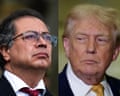

Colombian President Petro Warns of Armed Resistance to US Invasion Amid Post-Maduro Regional Instability
Bogotá, Colombia – Colombian President Gustavo Petro has issued a stark warning that he would "take up arms again" in the event of a US military invasion, escalating tensions with the United States as the country grapples with potential fallout from the abrupt removal of Venezuelan President Nicolás Maduro. The statements, made amid reports of US threats under President Donald Trump, come as Colombia prepares for possible waves of refugees and political violence spilling over from neighboring Venezuela.
Petro's remarks were reported on January 5, 2026, just days after turmoil began in Venezuela on January 3, following what sources describe as US-led action resulting in Maduro's ouster. Colombian officials have raised alarms over medium-level risks of instability, including violence and a refugee influx, prompting heightened border preparations.
Petro's Defiant Stance Against Perceived US Aggression
In interviews covered by The Guardian and Al Jazeera, Petro directly addressed speculation of US intervention in Colombia, invoking his past as a guerrilla fighter with the M-19 urban guerrilla group in the 1980s. "I will take up arms again" if the US invades, Petro declared, according to The Guardian, framing such an action as a defense of national sovereignty.
Al Jazeera reported Petro criticizing Trump-era rhetoric as "undue interference" in Colombia's internal affairs, violating international law. "I am prepared to take up arms" to defend the homeland, Petro stated, positioning his response as a patriotic duty amid what he described as external pressures. These comments reflect Petro's long-standing ideological opposition to US foreign policy in Latin America, which he has frequently labeled as imperialistic.
The timing of Petro's warnings coincides with broader geopolitical strains. Reports indicate US officials have issued threats related to Colombia's handling of Venezuelan migrants and its diplomatic overtures toward leftist regimes in the region, though specifics remain unconfirmed in the available coverage.
Colombia Braces for Venezuelan Spillover Effects
The catalyst for heightened vigilance in Colombia traces back to January 3, 2026, when events in Venezuela triggered concerns of regional contagion. Maduro's removal by US action has sparked fears of power vacuums, factional fighting, and mass displacement—echoing Colombia's existing burden from over 2.8 million Venezuelan refugees hosted since 2015, according to United Nations data.
Colombian authorities are mobilizing resources along the 2,200-kilometer border, anticipating a new surge similar to previous crises. Past influxes strained public services, fueled criminal networks, and exacerbated internal displacements from Colombia's half-century armed conflict, which formally ended with the 2016 FARC peace accord but persists in pockets involving dissident groups and drug traffickers.
Petro's government, which pursued warmer ties with Maduro's administration, now navigates a delicate balance. Elected in 2022 as Colombia's first leftist president, Petro has championed "total peace" initiatives to demobilize armed groups while advocating for environmental and social reforms. However, his policies have drawn US scrutiny, particularly under Trump's return to office in January 2025, amid disputes over migration enforcement and anti-narcotics cooperation.
Historical Context and US-Colombia Relations
Colombia and the US share a deep security partnership, forged through decades of joint counter-narcotics efforts under plans like the $10 billion Plan Colombia (2000-2015). Billions in US aid have bolstered Colombia's military against leftist insurgents and right-wing paramilitaries, making it Washington's closest ally in South America.
Yet frictions have grown under Petro. His criticism of US sanctions on Venezuela and calls for debt relief have clashed with conservative voices in Washington. Trump's past comments on Latin American "shithole countries" and threats of military action against drug cartels have fueled narratives of interventionism, which Petro explicitly rejects.
Experts note that Petro's guerrilla background lends authenticity to his rhetoric. As a former M-19 member captured in 1985, he participated in the 1990 demobilization process and later entered politics. His vow to "take up arms again" evokes this history, signaling resolve without immediate escalation.
Outlook Amid Rising Tensions
As of January 5, 2026, no invasion appears imminent, and both US and Colombian officials have downplayed direct conflict. However, the convergence of Venezuelan instability and rhetorical sparring risks further polarization. Colombia's government continues refugee preparations, while diplomatic channels remain open.
International observers, including the Organization of American States, urge de-escalation to prevent a broader crisis in the Andes. For Colombia, managing border security without alienating neighbors or donors will test Petro's leadership, as the nation eyes uncertain stability in the weeks ahead.
(Word count: 612)






