
Colombia Braces for Instability as Petro Vows Armed Defense Against Potential U.S. Intervention
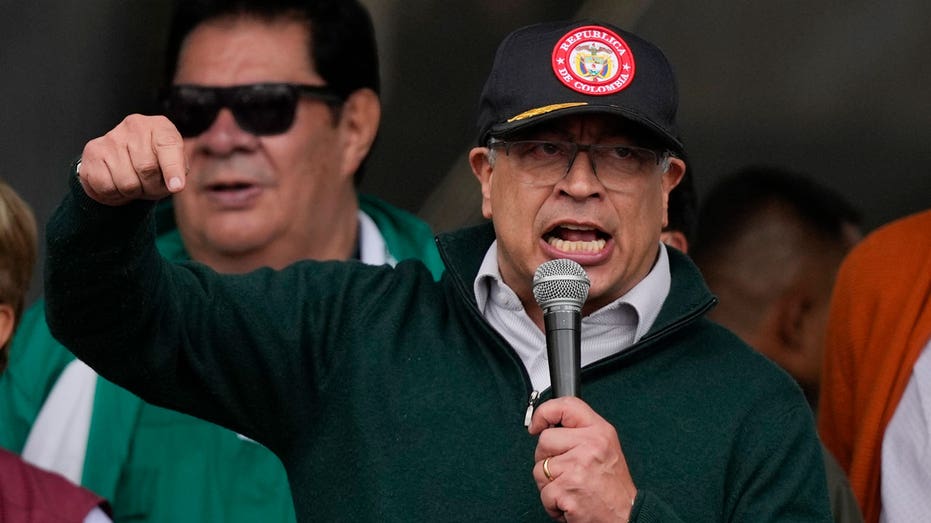
Bogotá, Colombia – Colombia is on high alert following the U.S.-backed removal of Venezuelan President Nicolás Maduro on January 3, 2026, with fears mounting over a potential refugee surge and regional violence. Tensions escalated further on January 5 when President Gustavo Petro warned he would "take up arms" against any U.S. aggression, in direct response to U.S. President Donald Trump's suggestion that Colombia could be his "next target."
The sudden ouster of Maduro, long accused by the U.S. and Western allies of authoritarianism and human rights abuses, has sent shockwaves through Latin America. Colombian officials are preparing for an influx of refugees from Venezuela, where political turmoil could spark widespread unrest. The event, described by analysts as a medium-severity geopolitical flashpoint, underscores Colombia's precarious position as Venezuela's neighbor, sharing a 1,400-mile border that has already seen millions flee Venezuela's economic collapse under Maduro's 12-year rule.
President Petro's stark rhetoric came during a Monday address amid reports of Trump's comments during a recent interview. Trump, who returned to the White House in January 2025, has maintained a hawkish stance on left-leaning governments in the region. Petro, Colombia's first leftist president elected in 2022, stated unequivocally: "I would take up arms against the U.S. if it attacks my country." This marks a rare public threat of military resistance from a Latin American leader against Washington, evoking memories of Cold War-era tensions.
The exchange highlights deepening U.S.-Colombia frictions under Petro's administration. Historically a staunch U.S. ally, Colombia has pivoted under Petro toward warmer ties with Venezuela. Petro, a former guerrilla commander with the M-19 movement, has pursued "total peace" initiatives domestically while criticizing U.S. interventions abroad. His government reopened trade and migration routes with Venezuela in 2022 and 2023, contrasting with previous administrations' sanctions alignment.
Trump's warning appears tied to Petro's policies, including stalled peace talks with armed groups like the ELN and dissident FARC factions, as well as perceived leniency toward Maduro. U.S. officials have expressed concerns over Colombia's role in facilitating Venezuelan migration and drug trafficking routes. In 2025, bilateral relations soured after Petro expelled U.S. DEA agents, accusing them of overreach.
Background on the Venezuela-Colombia Nexus
Colombia has borne the brunt of Venezuela's crisis since 2014, hosting over 2.8 million Venezuelan refugees and migrants as of late 2025, according to UNHCR data. Maduro's removal—executed via U.S. special forces and opposition coordination, per initial reports—promises short-term chaos. Violence has already flared in Caracas, with loyalist militias clashing against interim forces, prompting border closures along the Colombia-Venezuela line.
Colombia's government has activated contingency plans, including bolstering border security with 10,000 additional troops and expanding refugee camps in Norte de Santander and Arauca provinces. Vice President Francia Márquez warned of "humanitarian catastrophe" risks, citing projections of up to 500,000 new crossings in the coming weeks. Economically, Colombia's ports and highways, key for Venezuelan oil smuggling, face disruptions.
Internationally, reactions are mixed. Brazil's President Lula da Silva called for dialogue, while the European Union urged restraint. The Organization of American States scheduled an emergency session for January 7.
Petro's Defiance and Domestic Fallout
Petro's threat has polarized Colombia. Supporters rally behind his sovereignty stance, with protests in Bogotá chanting "No más intervenciones yanquis" (No more Yankee interventions). Critics, including former President Iván Duque, decry it as reckless, warning of economic sanctions or aid cuts—Colombia receives $500 million annually in U.S. military and counternarcotics support.
Military leaders have reaffirmed loyalty to the constitution but avoided direct comment on Petro's words. Defense Minister Ivan Velasquez emphasized readiness for "any scenario," including refugee management and border defense.
Trump's administration has not formally responded, but a White House spokesperson reiterated commitment to "democracy and stability" in the hemisphere. Analysts note Trump's "America First" doctrine prioritizes curbing migration and fentanyl flows, both linked to Venezuela and Colombia.
Outlook: A Region on the Brink
As Maduro's loyalists regroup and an interim Venezuelan government consolidates power, Colombia faces multifaceted risks: mass migration straining resources, potential spillover violence from Venezuelan militias, and escalating superpower rhetoric. Petro's government walks a tightrope, balancing domestic leftist base with economic dependence on the U.S.
Regional stability hangs in the balance. Failure to manage refugee flows could overwhelm Colombia's social services, already pressured by 2025 floods and inequality. Diplomatic off-ramps, such as UN-mediated talks, offer hope, but Trump's unpredictable style and Petro's ideological bent suggest prolonged tensions.
For now, Colombia fortifies its borders and braces for the unknown, a frontline state in Latin America's latest geopolitical storm.
(Word count: 682)