
Colombia Braces for Escalation as Trump Threatens Military Action Against Petro, President Vows to 'Take Up Arms'
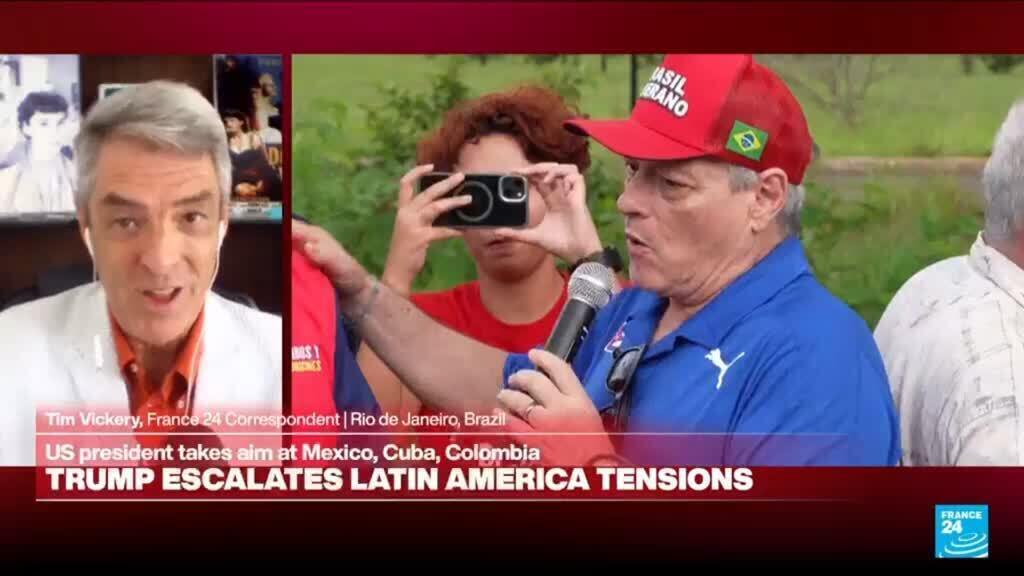
Bogotá, Colombia — Tensions between the United States and Colombia have surged to a dangerous new level after U.S. President Donald Trump threatened military action against President Gustavo Petro's government, accusing him of fueling the cocaine trade. In a defiant response, the former guerrilla fighter declared he would take up arms to defend his country, raising fears of regional instability following the recent U.S. capture of Venezuelan President Nicolás Maduro.
The exchange unfolded on January 5, 2026, just days after the U.S. operation that removed Maduro on January 3. Speaking to reporters aboard Air Force One, Trump escalated his rhetoric, stating that a military operation against Colombia "sounds good to me." He described the South American nation as "very sick, too, run by a sick man, who likes making cocaine and selling it to the United States, and he's not going to be doing it very long," in an apparent reference to Petro. The comments came amid Trump's broader push against drug cartels and leftist governments in Latin America, building on the U.S. intervention in Venezuela.
Petro, Colombia's first left-wing president elected in 2022, fired back swiftly on social media platform X. "I swore not to touch a weapon again ... but for the homeland I will take up arms again," he wrote, invoking his past as a member of the M-19 urban guerrilla group in the 1980s. Petro, who demobilized with M-19 in 1990 and later entered politics, defended his administration's anti-narcotics policies, arguing that excessive U.S. force could result in civilian deaths and a resurgence of guerrilla violence. "We are implementing a strategy against narcotics that prioritizes health over war," he stated, warning of the risks of military overreach.
The verbal sparring has Colombia on high alert, with officials preparing for potential unrest and a new wave of refugees from neighboring Venezuela. Maduro's ouster has already destabilized the border region, where millions of Venezuelans have fled economic collapse and political repression under his 11-year rule. Colombian authorities fear that any U.S. action in Bogotá could trigger violence from dissident factions of the Revolutionary Armed Forces of Colombia (FARC) or the National Liberation Army (ELN), groups that have long exploited the porous 1,400-mile border for drug trafficking and arms smuggling.
Historical Context and U.S.-Colombia Ties
Colombia and the U.S. have a complex relationship rooted in decades of cooperation against narcotraffickers. Under the 2000 Plan Colombia initiative, Washington provided billions in aid to combat cartels like those once led by Pablo Escobar, helping reduce violence but leaving deep social scars. Petro, however, has shifted toward crop substitution programs for coca farmers and criticized militarized approaches as ineffective and harmful.
Trump's threats mark a sharp departure from recent U.S. policy. During his first term (2017-2021), Trump designated Venezuela's Maduro as illegitimate and supported opposition leader Juan Guaidó, but stopped short of direct military intervention. The 2026 U.S. capture of Maduro—details of which remain classified—appears to signal a more aggressive stance in Trump's second administration, which began in January 2025. Analysts note that Colombia's role as the world's top cocaine producer, with U.N. estimates of 230,000 hectares under coca cultivation in 2024, remains a flashpoint.
Petro's background adds volatility. As a young Marxist in the 1970s and 1980s, he fought with M-19, which kidnapped a presidential candidate and stormed the Palace of Justice in 1985, resulting in over 100 deaths. His 1990 demobilization oath—"not to touch a weapon again"—has now been symbolically revoked, evoking memories of Colombia's 50-year civil war that killed over 260,000 people and displaced millions.
Regional Fallout and Preparations
Latin American leaders have expressed alarm. Brazil's President Luiz Inácio Lula da Silva called for dialogue, while the Organization of American States scheduled an emergency session. In Colombia, security forces are bolstering patrols along the Venezuelan border, where 2.8 million Venezuelans already reside under temporary protected status. Humanitarian groups warn of a potential refugee surge if violence erupts, straining resources in a country still recovering from COVID-19 and peace process setbacks.
Colombia’s military chief, General Helder Giraldo, downplayed immediate threats but affirmed readiness to defend sovereignty. "We respect our allies but will protect our institutions," he said in a televised address. Economically, the peso dipped 3% against the dollar on January 5, reflecting investor jitters.
As of January 6, 2026, no further U.S. actions have been announced, but the rhetoric has isolated Petro internationally. Trump allies in Congress have pushed for sanctions, citing Petro's overtures to Venezuela and criticism of U.S. "imperialism."
Outlook: Brink of Crisis or Diplomatic Reset?
The standoff risks broader geopolitical ripples, potentially drawing in China and Russia—Maduro allies with interests in Venezuelan oil—or reigniting proxy conflicts in the Andes. Diplomatic channels remain open; U.S. Secretary of State Marco Rubio is reportedly urging de-escalation. For Colombia, the crisis underscores the fragility of its democracy amid drug wars and migration pressures.
Whether this devolves into confrontation or cools through backchannel talks will shape Latin America's stability for years. Bogotá's preparations signal no illusions: the homeland Petro once fought for now faces its sternest test since the FARC peace accord of 2016.
(Word count: 712)