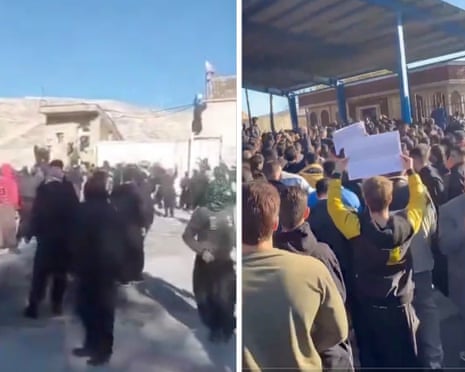

Civil Unrest Intensifies in Iran's Kurdish Regions as Authorities Deploy Force Amid Government Statements
TEHRAN, Iran — Protests in Iran's Kurdish-majority regions have escalated into violent clashes with security forces, with demonstrators accusing authorities of lethal crackdowns, even as the Iranian Foreign Ministry has publicly expressed support for "ongoing protests" in the country. The unrest, which began on January 2, 2026, marks a high-severity episode of civil disturbance, highlighting deepening ethnic and political tensions in the Islamic Republic.
According to reports, Iranian security forces have used significant force to disperse protesters in Kurdish areas, prompting cries of "They are killing us" from those on the ground. The demonstrations, centered in provinces such as Kurdistan and West Azerbaijan, appear to stem from longstanding grievances over economic hardship, cultural suppression, and demands for greater autonomy. Eyewitness accounts describe tear gas, baton charges, and live ammunition being deployed against crowds, leading to an undetermined number of casualties and arrests.
The Iranian Foreign Ministry's stance adds a layer of complexity to the situation. On January 2, officials issued statements backing the protests, framing them as a legitimate expression of public sentiment amid broader national challenges. This unusual position from a government body typically aligned with suppression efforts suggests internal divisions or a strategic pivot, though details remain sparse. It contrasts sharply with the on-the-ground response from security apparatus, which has intensified operations to restore order.
Escalation and Immediate Impacts
The Guardian reported on January 7 that the crackdown has been particularly severe in Kurdish strongholds like Sanandaj and Mahabad, where protests have disrupted daily life, closed businesses, and prompted school shutdowns. Protesters, many waving Kurdish flags and chanting against central government policies, have clashed with riot police in running battles through city streets. Local activists claim dozens have been injured or detained, with some alleging extrajudicial killings, though official figures have not been released by Tehran.
Internet blackouts in affected areas have hampered real-time reporting, a tactic frequently employed by Iranian authorities during unrest to control information flow. Social media footage, smuggled out via VPNs, shows burning barricades, injured civilians, and security forces in anti-riot gear advancing on crowds. "The authorities are not distinguishing between peaceful demonstrators and militants," one anonymous protester told reporters, echoing the sentiment captured in the headline-grabbing phrase "They are killing us."
No official death toll has been confirmed, but human rights groups monitoring the situation from abroad, including Amnesty International and Human Rights Watch, have called for independent investigations. These organizations noted similarities to previous flare-ups, urging the international community to press Iran for restraint.
Historical Context and Background
Iran's Kurdish population, estimated at 10-12 million or about 10-15% of the country's 89 million people, has long chafed under Tehran’s centralized rule. The Kurds inhabit a rugged border region spanning northwestern Iran, adjacent to Kurdish areas in Iraq, Turkey, and Syria, fueling aspirations for cultural rights, language education, and political representation.
This latest unrest echoes the 2022 nationwide protests sparked by the death of Mahsa Amini, a Kurdish woman detained by morality police. Those demonstrations, the most widespread since the 1979 Islamic Revolution, began in Kurdish cities and spread across Iran, resulting in over 500 deaths according to UN estimates. Economic woes exacerbated by U.S. sanctions, inflation rates exceeding 40%, and youth unemployment have provided fertile ground for recurring dissent.
The Kurdish regions have been flashpoints before: in 2019, protests over fuel price hikes turned deadly here first, and separatist groups like the Kurdistan Free Life Party (PJAK) have occasionally exploited grievances for armed actions. Tehran's response has historically blended coercion with promises of development projects, though implementation has been inconsistent.
The Foreign Ministry's endorsement of protests is unprecedented in recent memory. Typically, spokespeople like Nasser Kanaani denounce unrest as foreign-orchestrated "riots." This shift could signal regime efforts to co-opt dissent—perhaps distinguishing between "approved" rallies and "subversive" ones—or internal power struggles ahead of anticipated leadership transitions.
International Reactions and Outlook
Global powers have reacted cautiously. The European Union expressed "deep concern" over reports of excessive force, while Turkey, which faces its own Kurdish insurgency via the PKK, monitored developments warily. The U.S. State Department reiterated calls for human rights respect, linking the unrest to Iran's broader isolation post-nuclear deal collapse.
As of January 7, protests persist despite the crackdown, with no signs of immediate resolution. Analysts suggest the Foreign Ministry's support might aim to delegitimize hardline suppression narratives abroad, but sustained violence risks broader escalation, potentially drawing in ethnic minorities like Baluchis or Azeris.
Iranian state media has downplayed the events, portraying them as isolated incidents quelled by vigilant forces. President Ebrahim Raisi's administration, facing economic headwinds and regional proxy conflicts in Gaza and Yemen, will likely prioritize stability. However, failure to address root causes—poverty, discrimination, and repression—could prolong the unrest, testing the regime's resilience ahead of the 2025 parliamentary elections' aftermath.
The situation remains fluid, with rights monitors urging de-escalation to prevent a repeat of 2022's nationwide upheaval. For now, Iran's Kurdish regions stand as a stark reminder of simmering discontent in a nation grappling with internal fractures.
(Word count: 712)






