
Civil Unrest Grips Parts of India: Protests in West Bengal and Uttar Pradesh Highlight Political Frictions
New Delhi, India – Recent outbreaks of civil unrest in West Bengal and Uttar Pradesh have underscored deepening political divisions ahead of key electoral battles, with demonstrators clashing with authorities over allegations of central government overreach and controversial policy schemes. In West Bengal, Chief Minister Mamata Banerjee spearheaded a protest against the Enforcement Directorate (ED), while in Uttar Pradesh, student activists from the National Students' Union of India (NSUI) rallied against the VB-GRAMG scheme, prompting heightened security measures.
The protests in West Bengal began on January 9, 2026, when Mamata Banerjee, leader of the Trinamool Congress (TMC), led a significant public demonstration against the ED. Banerjee accused the central government, led by the Bharatiya Janata Party (BJP), of misusing federal investigative agencies to target opposition figures ahead of upcoming elections. The medium-severity unrest intensified the state's political landscape, drawing large crowds and raising concerns about electoral fairness. This event reflects ongoing tensions between the TMC-led state government and New Delhi, where Banerjee has repeatedly claimed that agencies like the ED, CBI, and Income Tax Department are being weaponized for political gain.
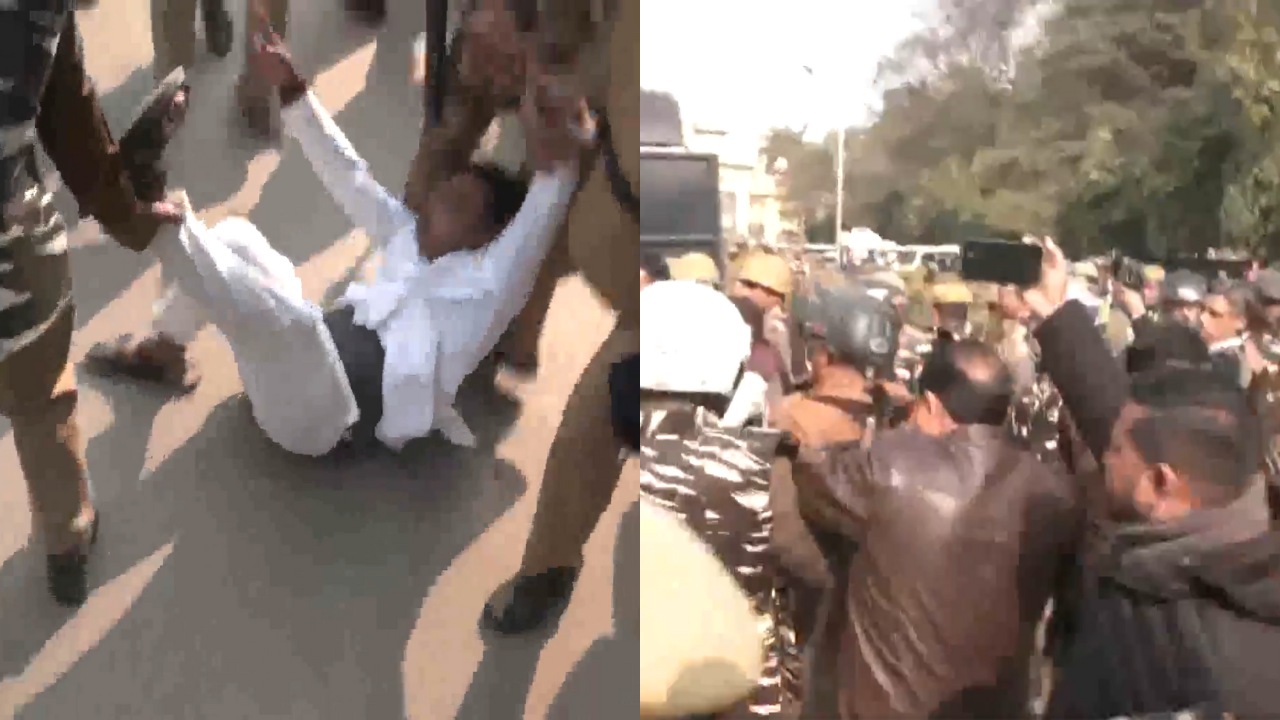
In a parallel development, Uttar Pradesh witnessed student-led protests on January 11, 2026, organized by NSUI, the student wing of the Indian National Congress. Demonstrators across the state, including in major cities like Lucknow and Varanasi, opposed the VB-GRAMG scheme, which protesters linked to threats against the Mahatma Gandhi National Rural Employment Guarantee Act (MGNREGA). The "Save MGNREGA" marches highlighted fears that the new scheme could undermine rural employment guarantees, a cornerstone welfare program providing 100 days of waged work annually to rural households.
In Lucknow, security forces detained several NSUI workers during the demonstrations, while Varanasi saw unprecedented security arrangements around Prime Minister Narendra Modi's public outreach office. Police and paramilitary forces were deployed to maintain order, reflecting the sensitivity of the location amid the planned marches. The Times of India reported that these measures were taken in anticipation of potential escalations, with authorities on high alert to prevent disruptions.
These incidents occur against a backdrop of charged political atmosphere in both states. West Bengal, governed by the TMC since 2011, has been a hotspot for protests involving central agencies. The ED, under the Finance Ministry, investigates money laundering and has summoned several TMC leaders in recent years, including Banerjee's close aides, fueling accusations of vendetta politics. Banerjee's rally on January 9 amplified these claims, positioning the protest as a defense of democratic norms ahead of the 2026 state assembly elections, where the BJP aims to challenge TMC's dominance.
In Uttar Pradesh, the BJP holds power under Chief Minister Yogi Adityanath, and the VB-GRAMG scheme—details of which remain contentious—appears tied to rural development initiatives. MGNREGA, enacted in 2005, has been a vital safety net for millions, guaranteeing employment and acting as a political flashpoint. NSUI's actions align with the Congress party's broader opposition narrative against perceived dilutions of welfare programs by the ruling coalition. The protests in Varanasi, Modi's home constituency and a BJP stronghold, added symbolic weight, occurring near his outreach office.
Authorities in both states have urged restraint, with no major injuries or widespread violence reported as of January 11. However, the deployment of forces signals concerns over escalation. Political analysts note that such unrest often peaks pre-election, serving as mobilization tools for opposition parties.
Broader context reveals a pattern of civil demonstrations across India, driven by economic grievances, policy disputes, and institutional trust issues. The Supreme Court has previously examined allegations of agency misuse, mandating guidelines for probe independence, though enforcement remains debated. MGNREGA's budget has fluctuated under the Modi government, with enhancements in wages but criticisms over implementation gaps.
As these events unfold, they spotlight India's polarized federal structure, where state-central relations strain under electoral pressures. With West Bengal's polls looming and Uttar Pradesh's rural voters pivotal nationally, the protests could influence voter sentiment. Officials continue monitoring, emphasizing peaceful expression while prioritizing public safety.
(Word count: 612)