
Civil Unrest Escalates in Paris: Louvre Staff Strike Persists Amid Farmers' Tractor Protests
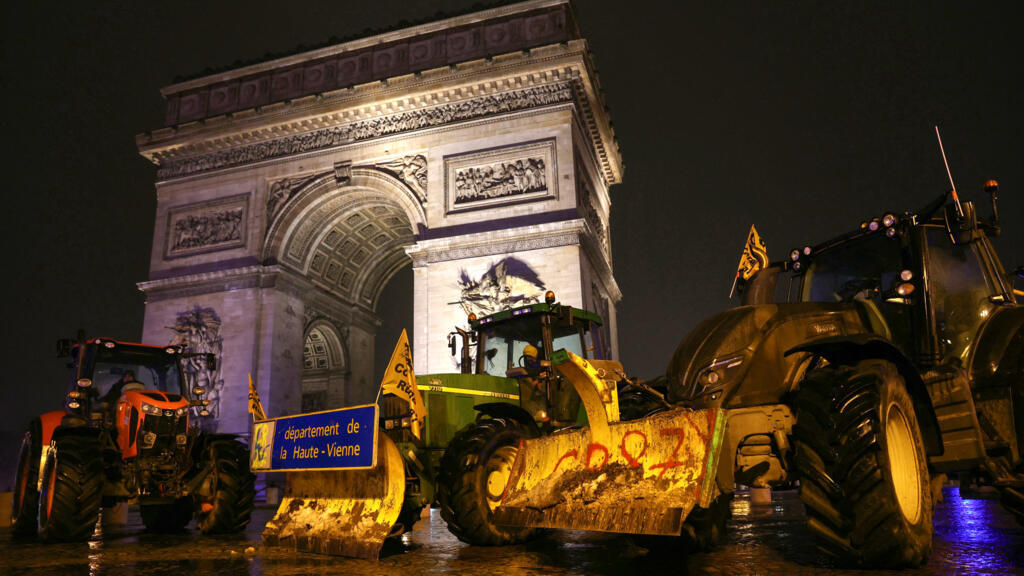
Paris, France – Ongoing labor disputes and agricultural protests have converged on the French capital this week, disrupting iconic landmarks and highlighting deep-seated tensions over working conditions and trade policies. As Louvre Museum staff extended their strike into its fourth day on January 8, 2026, French farmers escalated their demonstrations by driving tractors into central Paris, reaching the Eiffel Tower in a show of defiance against EU trade deals and government handling of livestock diseases.
The Louvre strike, which began on January 5, 2026, at 14:34 GMT, centers on deteriorating work conditions for museum employees. Union representatives have cited chronic understaffing, excessive workloads, and insufficient resources amid surging post-pandemic visitor numbers as key grievances. As a result, the world's most visited museum has remained only partially open, with many galleries inaccessible and reduced operating hours. Officials reported that while some exhibits continue to welcome visitors under limited capacity, the action has significantly impacted tourism, a vital sector for Paris. This is not the first such disruption at the Louvre; similar strikes occurred in 2023 over pay and conditions, reflecting broader challenges in France's cultural sector where public employees often resort to industrial action to demand reforms.
Simultaneously, French farmers intensified their campaign on January 8, bringing tractors into the heart of Paris for the first time in years. Protesters reached the Eiffel Tower, with additional convoys en route to the city, voicing fury over the European Union's proposed free trade agreement with the Mercosur bloc—comprising Brazil, Argentina, Paraguay, and Uruguay—and the French government's response to a cattle disease outbreak. The Mercosur deal, negotiated since 1999 but facing renewed scrutiny, would open EU markets to tariff-free imports of South American beef, poultry, and sugar, which farmers argue would undercut local producers already strained by high input costs, climate challenges, and regulatory burdens.
The cattle disease issue exacerbates these concerns. French authorities have mandated culls of infected herds to contain the spread, prompting accusations of heavy-handed measures that threaten livelihoods without adequate compensation. "We're not against trade, but against unfair competition that destroys our farms," one farmer told France 24 during the convoy. Demonstrations have included road blockades across rural France in recent weeks, echoing the 2019-2020 farmer protests that pressured the government into subsidies and regulatory pauses.
Background on France's Protest Culture
France has a long history of civil unrest as a primary mechanism for public grievance, rooted in its republican traditions and strong union movements. The Louvre action fits into a pattern of cultural sector strikes; in 2022-2023, museum workers nationwide walked out over pension reforms and inflation-adjusted wages. Agricultural protests are equally recurrent: the 2019 "yellow vest"-inspired farmer blockades forced concessions on pesticide bans and trade protections, while opposition to Mercosur dates back to initial talks. The deal, provisionally agreed in 2019, stalled due to environmental concerns—particularly Amazon deforestation linked to expanded agribusiness—but gained momentum post-2024 EU elections amid pushes for economic recovery.
Current tensions coincide with France's presidency under Emmanuel Macron, whose administration has navigated EU trade policy amid domestic agricultural lobbies. The government has pledged €1 billion in aid for farmers affected by disease controls and promised Mercosur safeguards, but protesters demand outright rejection of the pact. Police presence around Paris landmarks has been heightened, with no major clashes reported as of January 8, though disruptions to traffic and tourism are mounting.
Broader Implications and Outlook
These parallel actions underscore intersecting pressures on France's economy: tourism contributes €60 billion annually, while agriculture employs 2.5% of the workforce but anchors rural communities. The Louvre's partial closure risks financial losses estimated in millions daily, compounded by farmers' blockades affecting supply chains for Paris markets. EU officials, including Trade Commissioner Valdis Dombrovskis, have reiterated that Mercosur includes sustainability clauses, but ratification requires approval from all 27 member states, where France holds significant sway.
As of Thursday evening, the Louvre strike showed no signs of abating, with unions scheduling talks for next week. Farmers vowed to maintain pressure, planning further actions unless concessions are made. Paris authorities urged calm, emphasizing dialogue amid the Olympic legacy of enhanced protest management protocols. The convergence of these events signals potential for wider unrest if unresolved, testing France's social contract in the new year.
(Word count: 682)