
China's AI Arms Race: Geopolitical Implications of Technological Self-Reliance in 2026
Introduction: The Dawn of Digital Sovereignty
In the shadowed arena of 21st-century geopolitics, China's relentless pursuit of technological self-reliance in artificial intelligence (AI) and military applications is birthing a new doctrine: digital sovereignty. This concept, at its core, refers to a nation's ability to control its own digital infrastructure, data flows, algorithms, and hardware ecosystems without undue foreign influence—effectively insulating its strategic capabilities from external chokepoints. Unlike traditional notions of sovereignty tied to territory or resources, digital sovereignty weaponizes technology as a pillar of national power, allowing Beijing to dictate terms in an increasingly bifurcated global order. In the escalating US-China AI rivalry, this shift is reshaping alliances and heightening risks across the Asia-Pacific.
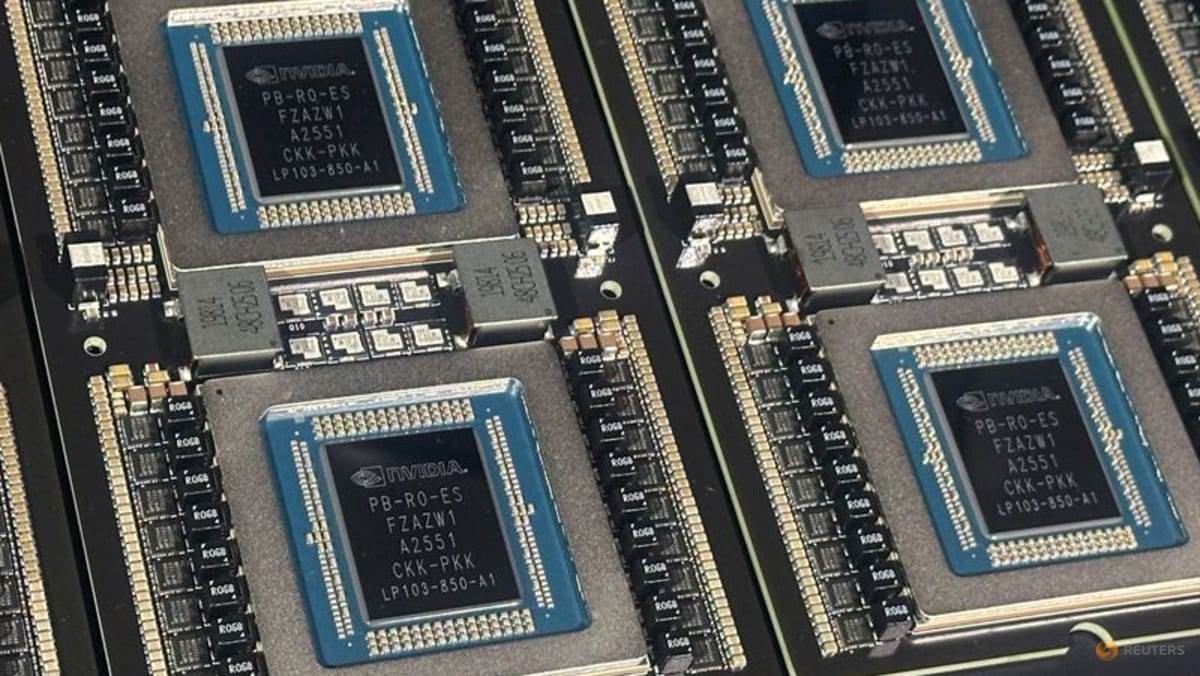
Recent events underscore this shift. On January 14, 2026, China imposed a ban on imports of Nvidia's advanced H200 AI chips, a direct riposte to U.S. export controls that have long sought to curb Beijing's AI ascent. This move came amid revelations of the People's Liberation Army (PLA) unveiling AI-assisted aerial refueling technology, just days after a U.S. military tanker crash highlighted vulnerabilities in Western systems. Coupled with military drills around Taiwan on January 8 and a PLA drone flight near Pratas Island on January 18, these developments signal a pivot from reactive defense to proactive technological dominance.
This article uniquely dissects how China's self-reliance drive is forging "digital sovereignty" as a geopolitical tool, intersecting tech bans, military innovations, and the reshaping of international norms. It moves beyond broad narratives of U.S.-China rivalry or soft power plays, zeroing in on alliance fractures and norm-setting in contested domains like the South China Sea and Taiwan Strait. We structure our deep dive as follows: tracing historical roots, mapping the current landscape, delivering original analysis on self-reliance's double-edged nature, projecting future trajectories, and concluding with pathways forward. Amid these tensions, markets reflect the strain—S&P 500 (SPX) at $661, down 1.4% in 24 hours, and Taiwan Semiconductor Manufacturing Co. (TSM) at $340, off 1.9%—as investors grapple with supply chain risks tied to Taiwan and AI chip flows. For broader context on Asian stability threats, see our analysis on North Korea's Profiteering from Global Conflicts: A New Threat to Asian Stability.
At stake are not just silicon wafers or code, but the human futures of millions: from Taiwanese families eyeing the skies during drills to semiconductor workers in Hsinchu facing export limbo. This tech arms race humanizes geopolitics, reminding us that behind headlines lie lives reshaped by algorithms and alliances.
Historical Roots: Tracing China's Path to Tech-Driven Geopolitics
China's embrace of digital sovereignty is no overnight epiphany but a culmination of decades-long military modernization, accelerated by U.S.-led tech restrictions. The January 2026 timeline crystallizes this evolution: On January 8, Beijing launched expansive military drills encircling Taiwan, echoing the 1995-1996 Taiwan Strait Crisis when missile tests rattled global markets and prompted U.S. carrier deployments. Yet, 2026's exercises incorporated AI-driven simulations, marking an escalation from kinetic displays to tech-infused deterrence. These Taiwan Strait tensions exemplify the broader US-China tech war's impact on regional security.
January 9 brought dual milestones: China announced a doubling of J-35 stealth fighter production, building on the J-20 program that has seen over 300 units rolled out since 2017, per Stockholm International Peace Research Institute (SIPRI) data. Simultaneously, the revival of the Cross-Strait Political Forum—a dormant dialogue mechanism—signaled Beijing's hybrid approach: coercive military posturing paired with political overtures, reminiscent of the 2008-2016 Ma Ying-jeou era's brief thaw before Xi Jinping's assertive turn.
The Nvidia H200 ban on January 14 fits a trajectory of U.S.-China trade wars. U.S. Entity List restrictions since 2018 have blacklisted Huawei and others, spurring China's "Made in China 2025" initiative, which aimed for 70% domestic semiconductor self-sufficiency by 2025—a target now at 40-50% per Semiconductor Industry Association estimates, but surging in AI chips via firms like Huawei's Ascend series. Historical parallels abound: the 1980s U.S. CoCom export controls on Soviet tech mirrored today's CHIPS Act (2022), which allocated $52 billion to onshore U.S. production, yet inadvertently fueled Beijing's resolve.
This pattern reveals a shift from reactive defense—post-1991 Gulf War analyses that exposed PLA backwardness—to proactive dominance. The 2015 Military-Civil Fusion strategy integrated commercial AI into defense, yielding tools like the Sharp Sword drone lineage, precursors to 2026's Pratas Island incursions. Globally, this self-reliance narrative influences alliances: Europe's Huawei 5G bans (e.g., UK's 2020 decision) fragmented the transatlantic front, while Belt and Road tech transfers to 150+ nations embed Chinese standards, subtly exporting digital sovereignty norms.
Humanizing this history, consider the Taiwanese engineer whose career pivoted from Nvidia collaborations to domestic fabs, or the PLA pilot training on AI simulators born from import bans—stories of adaptation amid existential pressures. Such personal narratives underscore the human stakes in China's AI self-reliance push.
Current Landscape: Innovations and Restrictions Shaping Alliances
Today's battlefield is digital, where China's innovations clash with restrictions, fracturing alliances. The PLA's AI-assisted aerial refueling tech, disclosed post-U.S. tanker crash, leverages machine learning for precision in contested airspace, potentially extending J-35 range by 30-50% based on analogous U.S. KC-46 data. This timing—amid Trump's postponed Xi summit over Taiwan threats—suggests calibrated signaling: Beijing's Turkish-language messaging that "there's no reason for war to continue" (likely referencing Middle East flares) positions China as a peacemaker, even as it readies preemptive strikes on U.S. F-35 bases. For deeper insights into mediation dynamics, explore Qatar's Geopolitical Chessboard: Mastering Mediation Amid Rising Iran Tensions.
Nvidia's adaptations—Beijing approving H200 sales while tweaking Groq chips for compliance—highlight cat-and-mouse games. China's H200 ban paradoxically spurs workarounds, with domestic alternatives like Biren Tech's chips filling gaps, per Canalys reports showing China's AI server market growing 30% YoY to $10 billion in 2025.
These moves rift alliances. U.S. partners like Japan and Philippines expanded security pacts on March 12, 2026, amid Taiwan drills, while Trump's delay—viewed by Beijing as "disrespectful"—cools détente hopes. Original analysis here reveals tech as alliance litmus: Europe's mixed Huawei stances (Germany's partial bans) contrast Asia's hedging, with Vietnam boosting U.S. ties post-South China Sea clashes. Beijing's March 15 call for Middle East ceasefire, amid its Iran-Israel dilemma, underscores tech leverage—AI surveillance exports to Gulf states counter U.S. influence. Check the Global Risk Index for real-time assessments of these escalating South China Sea tensions and beyond.
For communities, this means Filipino fishermen dodging PLA drones near Pratas, or Nvidia engineers in Shanghai navigating bifurcated supply chains—geopolitics' human toll.
Original Analysis: The Double-Edged Sword of Self-Reliance
China's self-reliance is a double-edged sword: empowering military deterrence while risking isolation. Benefits are stark: AI refueling enhances South China Sea projection, where Pratas drone flights on January 18 assert claims over 90% of contested waters, per Asia Maritime Transparency Initiative maps. Domestic innovation booms—R&D spending hit 2.55% of GDP ($450 billion) in 2025, CSIS data shows—boosting startups like SenseTime, now rivaling U.S. facial recognition accuracy at 99.8%.
Yet risks loom. Economic isolation threatens: U.S. bans since 2022 shaved 5-10% off China's GDP growth projections (IMF estimates), with TSM's dominance (54% global foundry share) leaving Beijing vulnerable—January drills correlated with TSM's 1.9% plunge. Militarily, overreliance on unproven domestic chips could falter in prolonged conflicts; SIPRI notes PLA's 2,000+ combat aircraft lag U.S. quality.
Societally, self-reliance ignites domestic fervor—youth unemployment at 15% finds outlets in tech patriotism—but invites backlash: U.S. alliances like AUKUS (2021) now eye AI pacts, potentially encircling China. In the South China Sea, AI-altered dynamics empower island-building (3,200 acres added since 2013), deterring claimants but escalating accidents—human lives as collateral.
This unique lens on digital sovereignty reveals norm-shaping: China's AI ethics push at UN forums challenges Western standards, fostering a parallel order. This analysis highlights why China's PLA AI advancements are pivotal in the global AI arms race.
Catalyst AI Market Prediction
The World Now Catalyst AI engine forecasts market ripples from these tensions:
- SPX: Predicted - (medium confidence) — Geopolitical escalation triggers risk-off flows; historical precedent: 2019 Saudi attacks (-2% SPX). Key risk: de-escalation rebound.
- TSM: Predicted - (low confidence) — Asia tensions spill into semis; precedent: 2019 India-Pakistan (-1.5% TSM). Key risk: Taiwan supply hits.
- CNY: Predicted - (low confidence) — EM weakness from geo risks; precedent: 2019 India-Pak (-0.5% CNY). Key risk: PBOC intervention.
- JPY: Predicted + (low confidence) — Safe-haven amid Asia risks; precedent: 2019 airstrikes (+1% JPY).
Predictions powered by Catalyst AI — Market Predictions. Track real-time AI predictions for 28+ assets.
Future Projections: What Lies Ahead in China's Geopolitical Tech Play
By 2027, AI integration could ignite a "tech cold war": U.S. export curbs formalize into a "tech embargo era" by 2028, per Brookings simulations, disrupting $500 billion global chip chains. Escalations loom—PLA AI swarms in Taiwan simulations predict 20% faster response times, risking miscalculations.
Economically, broader restrictions hit: TSM output could drop 15% if invaded (RAND estimates), spiking SPX volatility. Diplomatically, China may pivot to non-Western alliances—deepening BRICS AI sharing with Russia/India, mediating South China Sea via tech aid, reshaping norms unpredictably.
Optimistically, innovations enable conflict mediation, as March 2026 Middle East calls suggest. Yet, human costs mount: refugee flows from flashpoints, innovation stifled by silos. Looking ahead, these trends in China's digital sovereignty could redefine global tech governance.
What This Means: Implications for Global Stakeholders
This evolving landscape of China's AI self-reliance carries profound implications for businesses, policymakers, and investors worldwide. For semiconductor firms like Nvidia and TSM, bifurcated supply chains demand diversified strategies to mitigate US-China tech war risks. Governments must balance export controls with collaborative AI standards to prevent a fragmented digital world. Investors should monitor the Global Risk Index for volatility signals tied to Taiwan Strait tensions and PLA innovations. Ultimately, prioritizing multilateral dialogues over isolationism offers the best path to harnessing AI's potential without geopolitical fallout.
Conclusion: Navigating the New Geopolitical Frontier
China's digital sovereignty—forged in 2026's chip bans, drills, and AI unveilings—redefines geopolitics, uniquely blending self-reliance with alliance realignments and norm battles. This double-edged paradigm demands balanced responses: multilateral AI governance forums, not escalatory bans, to avert isolation.
Opportunities persist—joint climate AI could bridge divides. As technology eclipses tanks, the world must prioritize human-centric norms, lest digital fortresses entomb global prosperity. Forward: a multipolar tech order beckons, where cooperation tempers rivalry.