
Geopolitics Germany: NATO and Top Republicans Question US Troop Withdrawal
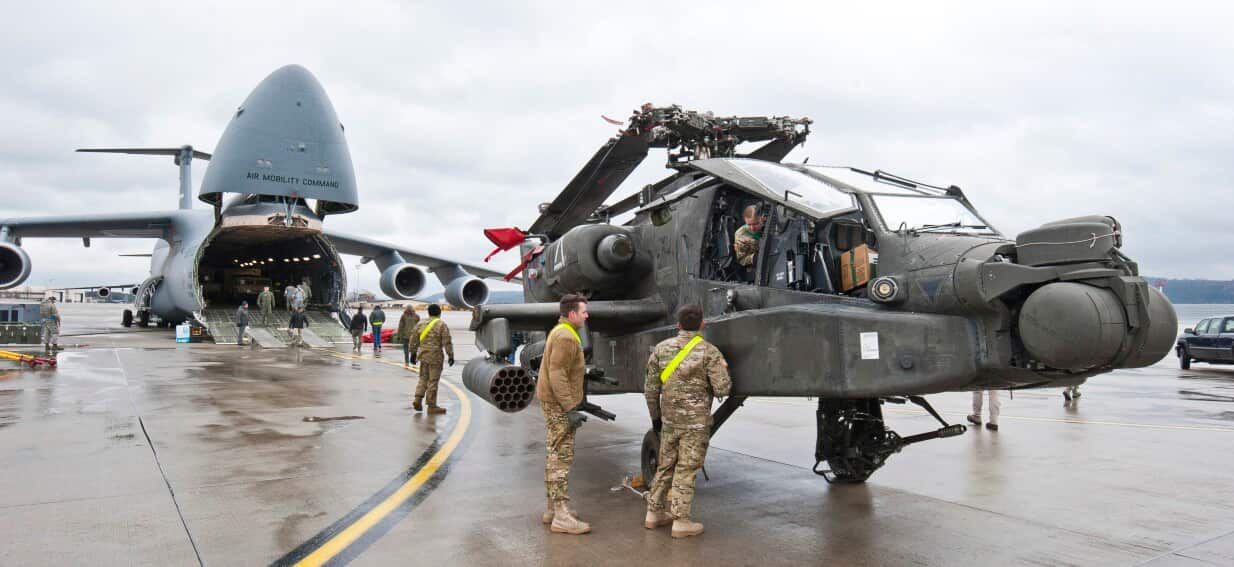
NATO and top Republicans are questioning the US announcement of troop withdrawal from Germany.[1][2][3] In the context of geopolitics Germany, this development has drawn immediate attention from international alliance partners and prominent figures within the United States, highlighting potential shifts in military posture and alliance dynamics.[1][2][3] The US decision to proceed with a reduction in its troop presence has elicited concerns centered on strategic implications, with NATO raising queries as part of broader conversations on American military commitments in Europe.[1][2][3] Top Republicans have echoed these doubts, underscoring a rare alignment of transatlantic and domestic skepticism toward the planned changes.[1][2][3] Meanwhile, Germany's foreign minister has signaled readiness for the adjustment, noting ongoing dialogues within NATO frameworks.[3]
US Troop Withdrawal Announcement
The United States has formally announced a troop withdrawal from Germany, marking a notable adjustment in its overseas military footprint.[3] This decision, as reported across international outlets, represents the initial US move prompting widespread reactions.[3] Coverage from sources such as SBS Australia explicitly frames the announcement as the catalyst for subsequent questioning by NATO and top Republicans, emphasizing the timing and context of the disclosure.[3] In geopolitical terms, such announcements typically signal policy recalibrations, and here it has immediately positioned Germany at the center of discussions on force posture.[3] The brevity of the official reveal—focused on the withdrawal itself—has left room for interpretation regarding scale, timeline, and motivations, yet the core fact remains: the US is initiating a drawdown of troops stationed in Germany.[3] This action aligns with the key elements reported, where the announcement serves as the foundational event triggering allied and political responses.[3] Authoritative reporting underscores that this is not an isolated policy shift but one integrated into ongoing evaluations of military presence, though specifics beyond the declaration itself are confined to the announcement's confirmation.[3] The implications for regional security architectures are evident in the immediate backlash, but the section's focus remains on the US decision as the originating point of contention.[3]
Reactions from NATO
NATO has voiced questions regarding the US troop withdrawal from Germany, positioning itself as a central stakeholder in evaluating the ramifications for collective defense.[1][2][3] Reports from Bangkok Post and The Straits Times highlight NATO's direct interrogation of the move, framing it within discussions on the broader US military presence in Europe.[1][2] This reaction suggests an alliance-wide deliberation on how reduced American forces might affect operational readiness and deterrence postures.[1][2][3] SBS Australia's coverage reinforces this by noting NATO's scrutiny alongside the announcement, indicating coordinated alliance-level concerns.[3] In the sphere of geopolitics Germany, NATO's response carries weight, as it reflects institutional priorities tied to burden-sharing and forward deployment strategies.[1][2][3] The questioning is not portrayed as outright opposition but as probing inquiries essential to alliance cohesion, drawing from the consistent reporting across these sources.[1][2][3] Such reactions underscore NATO's role in monitoring unilateral decisions by member states, particularly those involving host nations like Germany.[1][2] The alignment of multiple international publications—spanning Asia and Australia—on NATO's stance amplifies the perceived gravity, suggesting global observation of alliance dynamics.[1][2][3] Detailed analysis of the coverage reveals a pattern: NATO's involvement is proactive, embedded in ongoing dialogues that could shape future burden-sharing agreements.[1][2][3]
Concerns from Top Republicans
Top Republicans are raising significant concerns about the US troop withdrawal from Germany, aligning their critique with NATO's inquiries.[1][2][3] Coverage from Bangkok Post and The Straits Times explicitly identifies these prominent US political figures as questioning the strategic wisdom of the move.[1][2] This domestic pushback, reported consistently, points to worries over diminished American influence in Europe and potential signals of retrenchment.[1][2][3] SBS Australia's reporting ties the Republicans' stance directly to the announcement, portraying it as part of a broader chorus of doubt.[3] In US political discourse, such interventions from top Republicans often highlight national security priorities, emphasizing the value of maintaining robust overseas deployments.[1][2][3] Their concerns amplify the transatlantic dimension, creating a convergence of allied and partisan skepticism.[1][2] The sources depict this as a pointed challenge, where Republicans are not merely noting the withdrawal but actively questioning its merits amid geopolitical tensions.[1][2][3] This reaction draws authority from the outlets' focus on "top Republicans," implying leadership-level figures whose voices carry influence in policy debates.[1][2] The parallel with NATO's queries suggests a unified front on the need for transparency and consultation before implementation.[1][2][3]
Germany's Response
Germany's foreign minister has stated that Berlin is prepared for a reduction in US troops and is actively discussing the matter with NATO bodies.[3] This position, as detailed in SBS Australia's reporting, conveys a stance of pragmatic readiness amid the unfolding developments.[3] The foreign minister's comments frame Germany as proactive, engaging alliance mechanisms to address the withdrawal's implications.[3] In this context, Berlin's preparedness mitigates perceptions of surprise, positioning the nation as a collaborative partner in recalibrating military arrangements.[3] Discussions with NATO bodies indicate multilateral coordination, ensuring that any troop reductions align with collective security needs.[3] This response contrasts with the questioning from NATO and Republicans by emphasizing acceptance and dialogue, yet it remains tethered to the US announcement.[3] The foreign minister's articulation—"prepared" for the reduction—signals domestic and diplomatic alignment, potentially smoothing alliance frictions.[3] Coverage highlights this as a key counterpoint, where Germany's engagement underscores its central role in hosting US forces.[3]
Overview of Key Stakeholders
The involvement of NATO, top Republicans, and Germany forms a comprehensive picture of stakeholders responding to the US troop withdrawal announcement.[1][2][3] NATO's questioning integrates alliance-wide perspectives on military presence, as noted across all sources.[1][2][3] Top Republicans contribute domestic US scrutiny, mirroring international concerns and amplifying calls for strategic review.[1][2][3] Germany's foreign minister adds a host-nation viewpoint, affirming preparedness and NATO consultations.[3] In geopolitics Germany, this triad of reactions illustrates interconnected dynamics: alliance interrogation, political challenge, and bilateral coordination.[1][2][3] Bangkok Post and The Straits Times emphasize the shared theme of questioning, while SBS Australia incorporates Germany's measured response.[1][2][3] Collectively, these stakeholders highlight tensions between unilateral decisions and multilateral imperatives.[1][2][3] The coverage portrays a balanced yet critical engagement, where each party's input shapes the narrative around the withdrawal.[1][2][3] This overview reveals no isolated reactions but a networked response, with potential for influencing policy trajectories.[1][2][3]
What to watch next: Ongoing discussions between Germany and NATO bodies regarding the US troop reduction could clarify implementation details and alliance adjustments.[3]