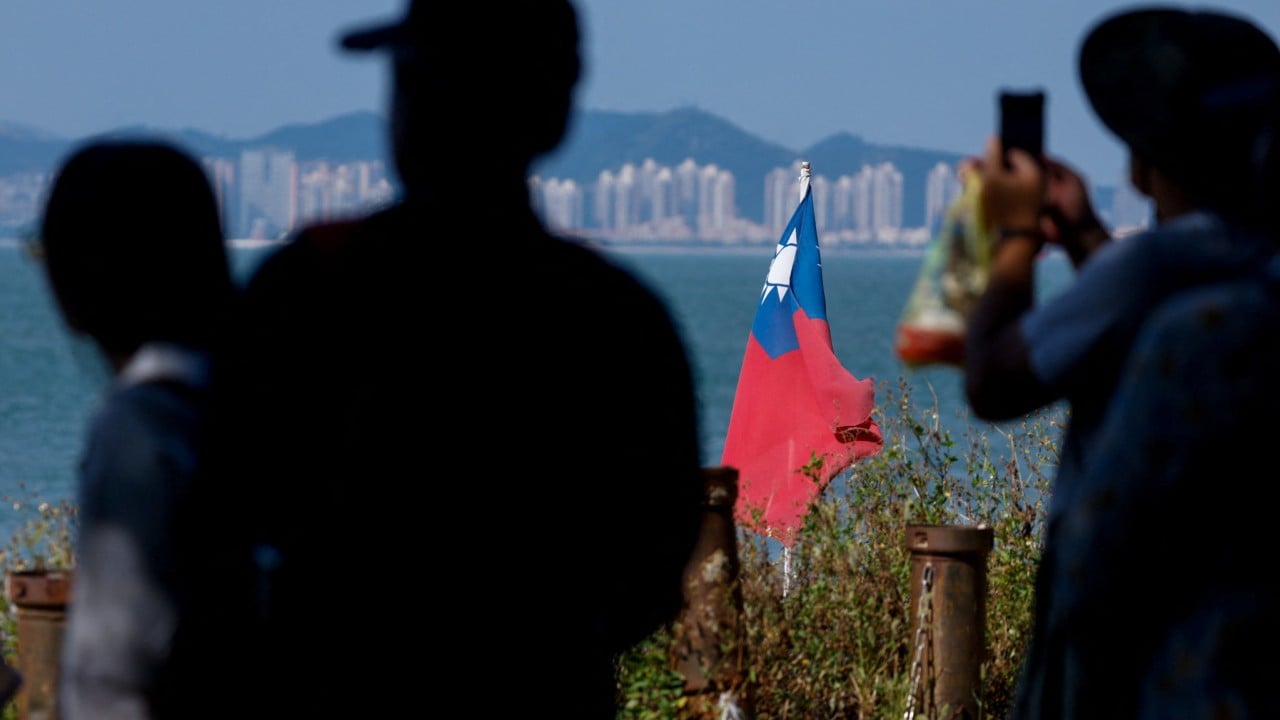

China Signals Cross-Strait Dialogue While Warning of Japan's Nuclear Potential Amid Regional Tensions
Beijing, January 9, 2026 – In a week marked by contrasting geopolitical maneuvers, China is engaging in talks to revive a key political forum with Taiwan's opposition Kuomintang (KMT) party, even as it issues stark warnings about Japan's potential to rapidly develop nuclear weapons, citing former U.S. President Joe Biden's private communications.
The developments, reported on Friday, highlight Beijing's dual-track approach: fostering dialogue across the Taiwan Strait while amplifying security concerns with Tokyo, a close U.S. ally. The cross-strait initiative could signal a modest thaw in relations dormant since 2016, while the nuclear assessment underscores ongoing frictions over regional security, Taiwan contingencies, and broader East Asian power dynamics.
Revival of Cross-Strait Forum in Final Talks
Reports indicate that China's Communist Party (CCP) and Taiwan's KMT are nearing agreement to resurrect the Cross-Strait Political Forum, a three-day inter-party event suspended nine years ago amid heightened tensions. According to Taiwan's China Times newspaper, cited by the South China Morning Post (SCMP), the forum is slated to commence in Beijing on January 27 if finalized.
The platform, designed to boost party-to-party communication and cross-strait exchanges, last convened in 2016 before its halt under Taiwan's then-DPP President Tsai Ing-wen, whose independence-leaning stance clashed with Beijing's unification goals. The KMT, traditionally more amenable to engagement with the mainland, has long advocated such channels despite its minority status in Taiwan's legislature following the 2024 elections won by DPP's Lai Ching-te.
If held, this would mark the first such gathering in a decade, potentially easing rhetoric after years of military drills and diplomatic standoffs. Analysts note it aligns with Beijing's strategy of cultivating ties with pro-engagement factions in Taipei, bypassing the DPP government. "The forum could facilitate exchanges on economic and cultural issues," the SCMP report suggests, though it stops short of predicting breakthroughs on sovereignty disputes.
China Highlights Japan's Nuclear Threat in Official Report
In parallel, China released an official report on Thursday assessing Japan's nuclear capabilities, framing Tokyo as a latent threat in the region. The document claims Japan "may already have produced weapons-grade plutonium in secret" and possesses "the technological and economic capabilities to achieve nuclear armament in a short period of time."
Central to the report is a reference to Biden's direct message to President Xi Jinping, disclosed by the former U.S. leader in an interview, stating Japan could acquire nuclear weapons "virtually overnight." This revelation, per the SCMP, amplifies Beijing's narrative of Japan as a proliferator risk, especially amid disputes over Taiwan and the Senkaku/Diaoyu Islands.
Japan maintains its plutonium stockpile—estimated at over 45 tons, enough for thousands of warheads—is for civilian energy purposes under International Atomic Energy Agency safeguards. However, China's report arrives against a backdrop of Tokyo's military buildup, including record defense spending and deepened U.S. alliances under the Quad framework.
Background: Navigating Strait and Island Flashpoints
Cross-strait relations have fluctuated since Taiwan's democratization in the 1990s. The KMT-CCP forums emerged in the early 2010s under President Ma Ying-jeou, promoting trade and tourism that peaked at over 10 million mainland visitors annually. Suspension in 2016 coincided with Tsai's election and Beijing's "one country, two systems" push, rejected by Taipei. Recent PLA incursions—over 1,700 warplane crossings into Taiwan's air defense zone in 2025 alone—contrast with this diplomatic overture.
Sino-Japanese ties, strained since World War II, have nuclear undertones dating to Japan's post-Fukushima energy pivot. Tokyo's non-NPT nuclear latency has long irked Beijing, particularly as Japan bolsters missile defenses and hosts U.S. forces eyeing Taiwan scenarios. Biden's 2023-2024 remarks on proliferation risks echoed U.S. concerns over alliance stability, now repurposed in Chinese state media.
These events unfold as the U.S. transitions post-2024 elections, with incoming administrations scrutinizing Indo-Pacific commitments. China's actions may test red lines: outreach to KMT could provoke DPP accusations of interference, while Japan rhetoric risks escalation ahead of planned military exports scrutiny.
Outlook: Mixed Messages in a Tense Neighborhood
The forum's potential revival offers a low-stakes venue for dialogue, possibly yielding people-to-people gains amid economic interdependence—mainland China absorbs 40% of Taiwan's exports. Yet, without DPP inclusion, its impact remains symbolic.
Conversely, the nuclear report could stiffen Beijing's stance on dual-use exports and technology transfers to Japan, fueling an arms race perception. Tokyo has dismissed similar claims, vowing adherence to its pacifist constitution, but regional neighbors like South Korea watch closely.
As 2026 begins, these moves reflect China's calibrated balancing act: selective engagement southward, deterrence eastward. Observers await January 27 for confirmation of the forum, while Japan's response to the report may clarify if rhetoric translates to policy shifts.
(Word count: 712)






