
China Pursues Diplomatic Outreach Amid Regional Tensions: Cross-Strait Talks and South Korea Summit Signal Potential Thaw
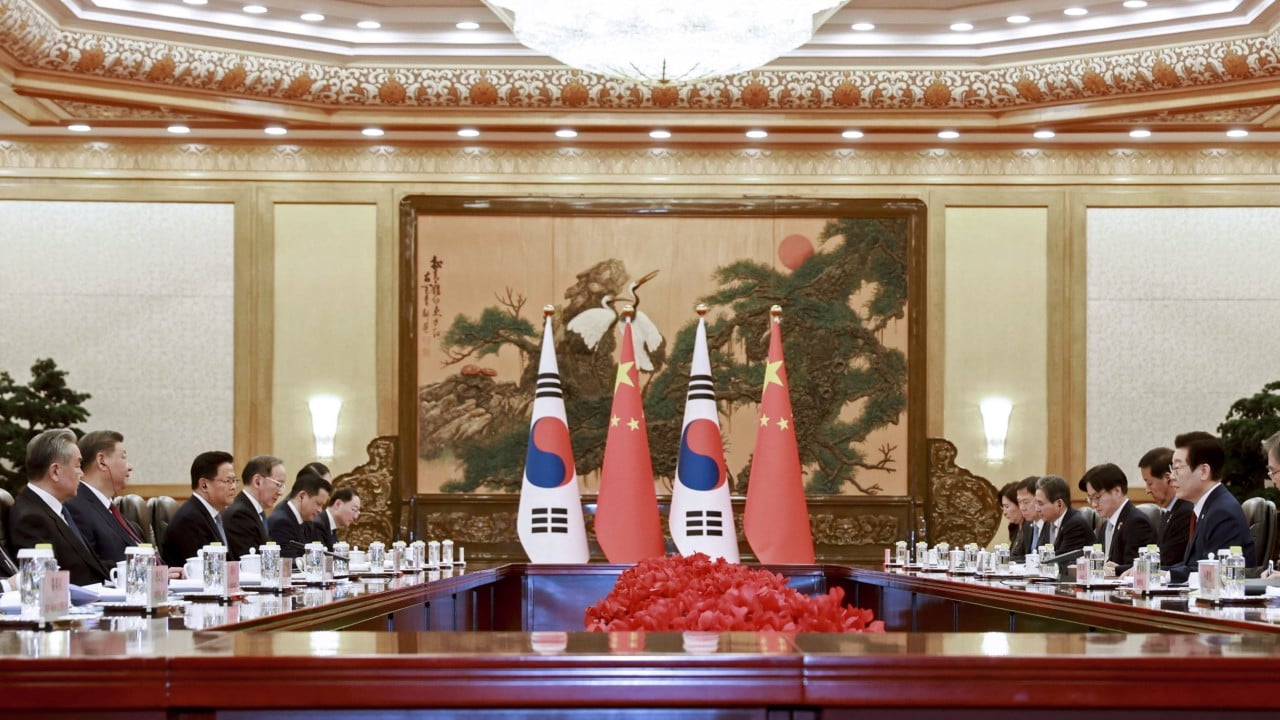
Beijing, January 10, 2026 – In a pair of notable geopolitical developments, China's Communist Party has entered talks with Taiwan's Kuomintang (KMT) to revive a cross-strait political forum aimed at boosting communication and exchanges, while Chinese President Xi Jinping hosted South Korean President Lee Jae-myung for a summit that emphasized restoring bilateral ties but yielded little progress on the thorny issue of North Korea.
The revival of the Cross-Strait Political Forum, which began discussions on January 9, represents a medium-severity diplomatic initiative rated for its potential to ease longstanding tensions across the Taiwan Strait. The forum, historically a platform for dialogue between the Chinese Communist Party (CCP) and the KMT—Taiwan's main opposition party—seeks to foster people-to-people and political exchanges at a time when official cross-strait relations remain strained under Taiwan's Democratic Progressive Party (DPP) administration led by President Lai Ching-te.
This move comes just days after Xi's high-stakes meeting with Lee in Beijing on Monday, January 5, as reported by the South China Morning Post (SCMP). The summit, held roughly nine weeks after their initial encounter, saw both leaders underscore support for one of Beijing's key diplomatic priorities—likely referring to regional stability and economic cooperation—while sidestepping substantive advances on Seoul's primary concern: North Korea's nuclear ambitions and provocative actions. Lee declared 2026 as the "year for the full restoration of South Korea-China relations," signaling optimism for mending ties frayed by previous disputes over U.S. missile defense systems like THAAD and broader U.S.-China rivalry.
Details of the Cross-Strait Initiative
Talks to resurrect the Cross-Strait Political Forum mark a targeted outreach to the KMT, which has long advocated for pragmatic engagement with the mainland despite Beijing's insistence on the "One China" principle. Such forums have precedent; similar mechanisms operated during the presidency of KMT's Ma Ying-jeou (2008-2016), facilitating direct flights, trade deals, and high-level summits like the 2015 Xi-Ma meeting in Singapore—the first between leaders of the two sides since 1949.
Current discussions, initiated amid ongoing military drills by the People's Liberation Army (PLA) near Taiwan, could provide a low-key channel for de-escalation. Analysts note that with the DPP viewing such forums skeptically as concessions to Beijing, the KMT's involvement underscores partisan divides in Taiwan's politics. No official confirmation of a revival date has been announced, but the timing—early in 2026—aligns with Beijing's broader strategy to counter U.S. influence in the Indo-Pacific.
South Korea Summit: North Korea Overshadows Progress
The Xi-Lee summit highlighted divergent priorities. While both nations affirmed commitment to economic interdependence—China remains South Korea's largest trading partner—the North Korean issue loomed large as the "elephant in the room." Pyongyang's recent missile tests and reported advancements in solid-fuel technology have heightened Seoul's security concerns, yet the talks produced no breakthroughs. Xi's remarks, as partially detailed in reports, reiterated China's stance on denuclearization through dialogue, a position Seoul views as insufficient given Beijing's historical reluctance to pressure its ally.
Lee's bold proclamation of 2026 as a restoration year reflects domestic pressures in South Korea, where progressive leadership under his administration seeks to balance ties with Washington and Beijing. The visit included discussions on supply chain resilience, cultural exchanges, and climate cooperation, but observers described outcomes as symbolic rather than transformative.
Background and Regional Context
Cross-strait relations have deteriorated since the DPP's 2016 electoral victories, with Beijing ramping up "gray zone" tactics including airspace incursions and economic coercion. The KMT, securing significant seats in Taiwan's legislature, positions itself as a bridge-builder, appealing to business interests favoring mainland markets.
Meanwhile, China-South Korea dynamics have fluctuated. Relations soured post-2016 over THAAD deployment, leading to Chinese boycotts of Korean goods. Recent U.S.-China trade frictions and the Ukraine war have prompted Seoul to diversify, yet economic realities—bilateral trade exceeding $300 billion annually—necessitate engagement. North Korea's provocations, including over 30 missile launches in 2025, complicate this, as Beijing wields leverage as Pyongyang's primary economic lifeline.
These events unfold against a backdrop of U.S. President-elect transitions and ASEAN summits, where China pushes its Global Security Initiative. Taiwan's semiconductor dominance adds strategic weight to cross-strait stability.
Outlook: Incremental Diplomacy Ahead
While neither development promises immediate shifts, they indicate China's proactive diplomacy in its neighborhood. The cross-strait talks could expand if KMT gains traction ahead of future elections, potentially stabilizing the strait. The South Korea summit sets a tone for 2026 cooperation, though North Korea's unpredictability remains a wildcard.
Stakeholders will watch for follow-through: concrete forum agendas from Beijing and Taipei, or joint statements from Seoul and Beijing on Pyongyang. In an era of great-power competition, these steps underscore Beijing's preference for "win-win" rhetoric amid persistent flashpoints.
(Word count: 728)