China Navigates Regional Tensions with Taiwan Military Drills and South Korea Summit

Latest from X
China Navigates Regional Tensions with Taiwan Military Drills and South Korea Summit
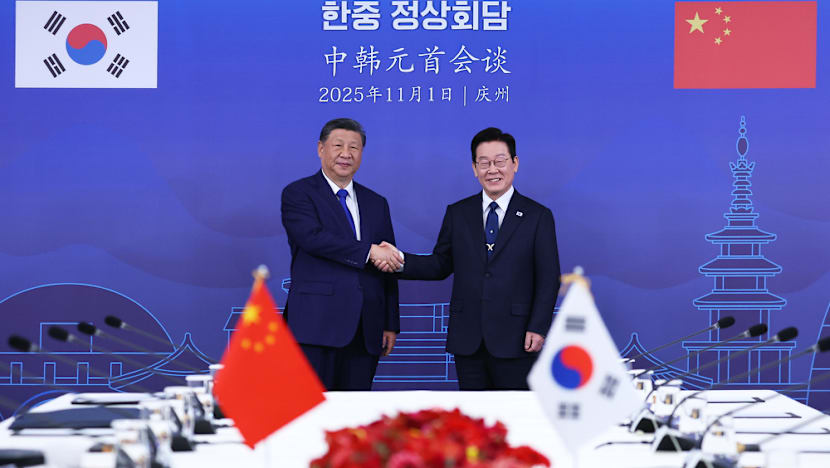
Beijing, January 4, 2026 – China finds itself at the center of heightened geopolitical activity in East Asia, with the recent completion of large-scale military maneuvers near Taiwan and a significant diplomatic engagement with South Korea. As tensions simmer over Taiwan, a self-ruled island claimed by Beijing as part of its territory, Chinese President Xi Jinping is hosting South Korean President Lee Jae Myung for a pivotal summit in Beijing, signaling efforts to bolster regional alliances amid complex dynamics.
Military Maneuvers Near Taiwan Conclude
On December 31, 2025, China announced the successful conclusion of its latest military exercises near Taiwan, an operation that underscored ongoing frictions in the Taiwan Strait. The drills, which included simulations of air superiority and long-range strikes according to posts found on X, are seen as a demonstration of Beijing's military capabilities and a warning to both Taiwan and external powers supporting the island’s autonomy. While specific details of the maneuvers remain undisclosed by official sources, their timing—just days before the new year—aligns with a pattern of intensified Chinese military activity in the region.
This latest exercise follows a series of similar operations in 2025, with posts on X referencing drills like "Justice Mission 2025" starting around December 29. Such actions have consistently drawn concern from Taiwan and its allies, particularly the United States and Japan, who view them as provocative. Beijing, however, maintains that these maneuvers are necessary to safeguard its territorial integrity and counter what it describes as separatist movements in Taiwan.
South Korean President Lee’s Visit to Beijing
Amidst this backdrop of military posturing, South Korean President Lee Jae Myung arrived in Beijing on January 4, 2026, for a four-day state visit and his second summit with President Xi Jinping. This marks the first visit by a South Korean leader to China in six years, highlighting the significance of the engagement. According to Channel News Asia, Lee’s trip comes less than a week after China’s recent military drills near Taiwan, though the South Korean delegation appears intent on focusing on bilateral cooperation rather than regional conflicts.
The summit, which began after Lee’s arrival as reported by Reuters, aims to strengthen ties between Beijing and Seoul at a time of shifting regional alliances. Analysts suggest that China is keen to deepen relations with South Korea amid rising tensions with Japan over Taiwan and broader strategic competition with the United States. Key discussion points are expected to include economic partnerships, North Korean denuclearization efforts, and promoting stability on the Korean Peninsula, especially following recent missile tests by Pyongyang.
Background: A Region on Edge
The Taiwan Strait remains one of the most volatile flashpoints in global geopolitics. China considers Taiwan a breakaway province and has not ruled out the use of force to achieve reunification, a stance reiterated by Xi Jinping in his New Year’s Eve speech on December 31, 2025, as reported by The Guardian. Meanwhile, Taiwan continues to assert its democratic independence, bolstered by international support and military aid from the United States.
Simultaneously, China’s relationship with South Korea is shaped by a delicate balance. Seoul maintains strong security ties with Washington while seeking to avoid antagonizing Beijing, its largest trading partner. President Lee’s visit is seen as an effort to navigate these complexities, particularly as North Korea’s recent ballistic missile launches add another layer of uncertainty to the region, as noted in Reuters coverage.
Outlook: Balancing Power and Diplomacy
As China concludes its military maneuvers near Taiwan and engages in high-level diplomacy with South Korea, the coming days will likely reveal more about Beijing’s strategic priorities for 2026. While the military drills signal a firm stance on territorial claims, the summit with President Lee suggests a parallel effort to build diplomatic bridges and counterbalance tensions with other regional players.
For now, the international community watches closely. Taiwan remains on high alert, with its officials warning of potential further Chinese drills, as mentioned in posts on X. Meanwhile, South Korea’s engagement with China could set the tone for broader East Asian cooperation—or highlight the challenges of maintaining neutrality in an increasingly polarized geopolitical landscape. As these events unfold, the delicate interplay of military might and diplomatic dialogue will continue to shape the region’s future.
Track this story live
Live World Map
Monitor global events in real time with a live activity map and hotspot summaries.
Markets
Connect live events to Catalyst market signals across crypto, commodities, indices, and forex.
Geopolitical Risk
Live geopolitical risk index tracking conflict zones, sanctions, and global threat levels.
Original Sources
- •South Korean president lands in China, hoping to sidestep Taiwan tensions— Channel News Asia
- •Chine : La génération ou jamais pour attaquer Taïwan ?— 20 Minutes via GDELT
Editorial process: This article was synthesized from the original sources cited above using The World Now's AI editorial system, with byline accountability from our editorial team. We grade every story for source grounding, factual coherence, and on-topic match before publication. Read more about our editorial standards and contributors. Spot something inaccurate? Let us know.
Last updated: May 28, 2026






