
China Imposes Dual-Use Export Ban on Japan, Escalating Tensions Over Taiwan and Regional Security
Beijing, January 8, 2026 — China has enacted a ban on exports of dual-use goods to Japan, targeting items with both civilian and military applications, in a move that has intensified longstanding frictions between the two East Asian powers. The restriction, announced on January 7, is framed by Beijing as limited to military-related entities and does not impact ordinary civilian trade, according to China's Ministry of Commerce.
The ban comes amid heightened geopolitical strains linked to Taiwan and broader regional security concerns. Japan, a key U.S. ally, has voiced increasing alarm over China's military activities around Taiwan, including frequent incursions into surrounding airspace and waters. This latest measure underscores the precarious balance in Sino-Japanese relations, where economic interdependence coexists with deep-seated historical animosities and territorial disputes.
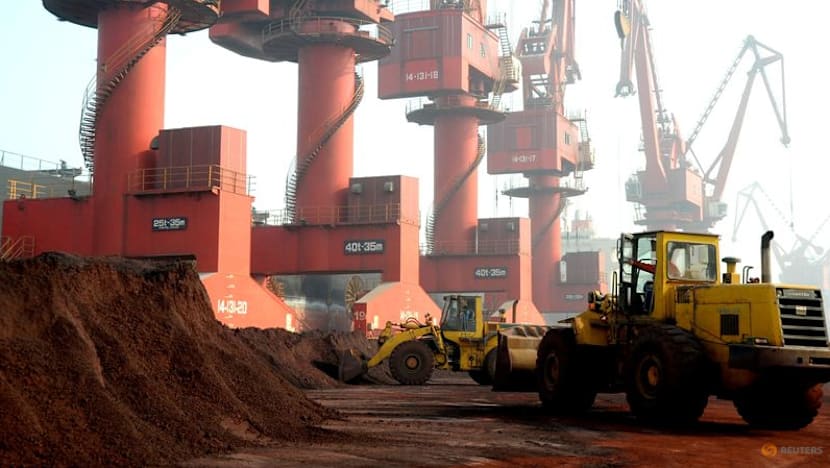
China's Ministry of Commerce clarified the scope of the export controls in a statement reported by Channel News Asia, emphasizing that "the ban on the export of items that have both civilian and military uses to Japan will only affect military firms." This reassurance aims to mitigate fears of broader economic fallout, given that bilateral trade between the two nations exceeded $300 billion in recent years, with Japan relying on China for critical components in electronics, machinery, and rare earth minerals.
The decision fits into a pattern of reciprocal measures in the region. Japan has previously imposed its own export controls on advanced semiconductor technology to China, citing national security risks, particularly in light of Beijing's assertive stance on Taiwan. Chinese state media and officials have accused Tokyo of interfering in China's internal affairs by strengthening military ties with the United States and participating in frameworks like the Quadrilateral Security Dialogue (Quad), which includes the U.S., Australia, and India.
Rekindled Rivalries at the Dawn of 2026
As detailed in a Newsmax analysis, China and Japan are "frenemies, trading partners and uneasy neighbors with a tortured, bloody history they still struggle to navigate," entering 2026 with renewed rhetorical clashes. The article highlights recurring flashpoints: disputes over the Senkaku/Diaoyu Islands in the East China Sea, Japan's historical role in World War II, and contemporary issues like Taiwan and nuclear capabilities in the region. These tensions have simmered for decades but have boiled over periodically, such as during naval standoffs and diplomatic protests.
The timing of the ban, just days into the new year, amplifies concerns. It follows a series of military exercises by the People's Liberation Army (PLA) near Taiwan and Japan's approval of record defense budgets, including acquisitions of long-range missiles capable of striking Chinese territory. U.S. officials have reaffirmed commitments to Japan's defense under the mutual security treaty, further irking Beijing.
Historical Context and Strategic Implications
Sino-Japanese relations have long been shaped by history. Japan's invasion of China during the 1930s and 1940s left scars that influence public opinion and policy today, with annual commemorations often sparking diplomatic rows. Postwar economic ties flourished, making China Japan's largest trading partner, but security divergences have grown sharper since the 2010s.
The East China Sea territorial dispute remains a core irritant. Both nations claim the Senkaku/Diaoyu Islands, leading to regular coast guard incursions. Taiwan adds another layer: Japan views the self-ruled island as vital to its southern security flank, while China insists on eventual reunification, by force if necessary. Recent PLA war games simulating blockades have prompted Japan to bolster its southwestern islands' defenses.
Dual-use export bans are a familiar tool in China's geopolitical arsenal. Beijing has employed similar restrictions against U.S. firms amid the ongoing technology trade war and against Lithuania over its Taiwan ties. For Japan, the impact could ripple through its defense industry, which sources components like avionics and sensors potentially affected by the controls.
Outlook Amid Uncertainty
Neither side has signaled immediate escalation beyond rhetoric. China's ministry has stressed the civilian trade exemption, suggesting an intent to preserve economic links. Japan has yet to issue an official response to the ban as of January 8, but analysts anticipate diplomatic protests through channels like the annual foreign ministers' talks.
The move risks further alignment between Japan and the U.S., potentially accelerating Japan's military normalization and regional alliances. With global supply chains already strained, disruptions—even targeted ones—could affect industries from semiconductors to automotive manufacturing.
As 2026 unfolds, this export ban exemplifies the fragile détente in East Asia, where economic stakes temper but do not erase security rivalries. Stakeholders will watch closely for Japan's countermeasures and any U.S. involvement, amid hopes that dialogue prevails over confrontation.
(Word count: 682)






