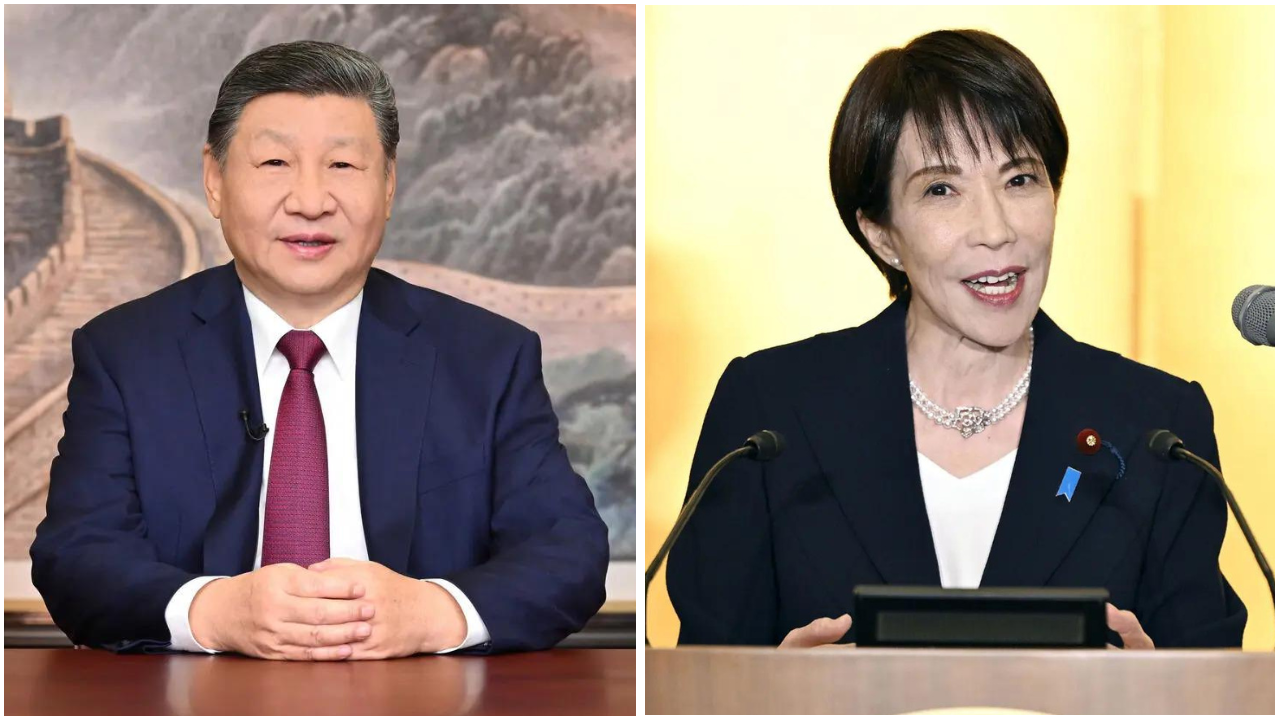

China Heightens Regional Tensions with Export Ban on Japan After Completing Taiwan Military Drills
Beijing, January 7, 2026 – China has announced the successful completion of military maneuvers near Taiwan, just days before imposing a ban on exports of dual-use goods to Japan, citing national security concerns linked to escalating tensions over the Taiwan Strait. The moves underscore Beijing's firm stance on its territorial claims amid growing involvement from regional powers.
The People's Liberation Army (PLA) wrapped up its latest military exercises around Taiwan on December 31, 2025, describing them as a success in enhancing operational readiness. These drills, conducted in proximity to the self-ruled island, are part of a pattern of increased Chinese military activity in the region, which Beijing frames as responses to perceived provocations by Taiwan and its allies.
Just one week later, on January 6, 2026, China's Ministry of Commerce issued an immediate ban prohibiting the export of dual-use goods to Japan—items with both civilian and potential military applications that could bolster Tokyo's defense capabilities. According to reports from multiple outlets, the restriction targets technologies and materials that might enhance Japan's military power, with Beijing explicitly warning of legal consequences for any organizations or individuals violating the order, regardless of their country or region.
The Times of India reported that the ban follows "recent critical remarks from Japan regarding potential military intervention in the Taiwan Strait," signaling a direct retaliation. Japan's government has repeatedly voiced concerns over China's assertiveness toward Taiwan, including statements supporting possible defensive actions in the strait if Beijing were to launch an invasion. Associated Press noted the ban's focus on preventing enhancements to Japan's military, while Channel News Asia emphasized the universal liability for violations, underscoring the measure's broad enforcement.
This sequence of events marks a sharp escalation in the China-Japan row, intertwining Taiwan's status with bilateral trade and security dynamics. Dual-use goods, regulated under international frameworks like the Wassenaar Arrangement, include semiconductors, advanced materials, and software that could support missile systems or surveillance technologies—critical for modern militaries.
Background on Taiwan Strait Tensions
China views Taiwan as an inseparable part of its territory and has not ruled out the use of force for reunification, a position reiterated by President Xi Jinping in multiple speeches. Since 2022, Beijing has intensified military drills around the island, particularly following high-profile visits by U.S. officials, such as House Speaker Nancy Pelosi's trip that year, which prompted large-scale exercises simulating a blockade.
Japan, located just 110 kilometers from Taiwan at its closest point, has deepened its security ties with Taipei. Tokyo's 2022 National Security Strategy designated Taiwan's stability as vital to Japan's own, prompting increased defense spending and joint exercises with the United States. Recent Japanese comments, including from Prime Minister Fumio Kishida's administration, have affirmed that a Taiwan contingency could impact Japan's southern islands, potentially drawing it into conflict.
The export ban fits into China's broader toolkit of economic coercion, similar to previous restrictions on Australia and Lithuania over political disputes. Japan relies on China for key supply chains in electronics and rare earths, though it has been diversifying amid U.S.-led efforts like the CHIPS Act to reduce dependencies.
Regional and Global Reactions
As of January 7, neither Tokyo nor Washington has issued an official response to the ban, but analysts anticipate diplomatic protests. Japan's Ministry of Economy, Trade and Industry is reportedly assessing impacts on industries like semiconductors, where China supplies critical components.
The U.S., through the State Department, has long criticized China's military activities near Taiwan as destabilizing, with recent Biden administration statements reaffirming commitments under the Taiwan Relations Act to provide defensive arms. Indo-Pacific allies, including Australia and South Korea, are monitoring developments closely, given the potential for supply chain disruptions.
China's Foreign Ministry defended the maneuvers and ban as "legitimate measures to safeguard sovereignty," per state media, while accusing Japan of interfering in internal affairs.
Outlook Amid Rising Stakes
These developments occur against a backdrop of global geopolitical shifts, including the U.S. presidential transition and ongoing conflicts in Ukraine and the Middle East, which have strained international attention. The export ban could strain Japan-China trade, valued at over $300 billion annually, and prompt further decoupling in strategic sectors.
Experts caution that while the maneuvers were routine in scale compared to 2022-2024 exercises, the timing with the Japan ban suggests coordinated signaling. Diplomatic channels remain open—the two nations held vice-ministerial talks in December 2025—but sustained tensions risk miscalculation in the densely trafficked Taiwan Strait.
As Beijing marks the completion of its drills and enforces the new restrictions, the Asia-Pacific region braces for potential ripples, with stakeholders urging restraint to prevent economic fallout from spiraling into broader confrontation.
(Word count: 712)






