
China Completes Military Maneuvers Near Taiwan as Regional Tensions Simmer into 2026
Beijing, January 6, 2026 – China has announced the successful completion of military maneuvers conducted near Taiwan, underscoring persistent strains in the Taiwan Strait just as the new year begins. The drills, which commenced on December 31, 2025, at 12:58 GMT, represent a medium-severity escalation in displays of military readiness amid longstanding territorial disputes.
The People's Liberation Army (PLA) wrapped up the exercises without providing detailed specifics on their scope or objectives in official statements. However, such maneuvers are typically framed by Beijing as routine operations to safeguard national sovereignty and respond to perceived provocations. Taiwan's Ministry of National Defense has historically monitored these activities closely, often reporting on the deployment of warships, aircraft, and missile forces encircling the island. This latest completion aligns with a pattern of intensified PLA activity in the region, including large-scale drills simulating blockades and invasions that have become more frequent since 2022.
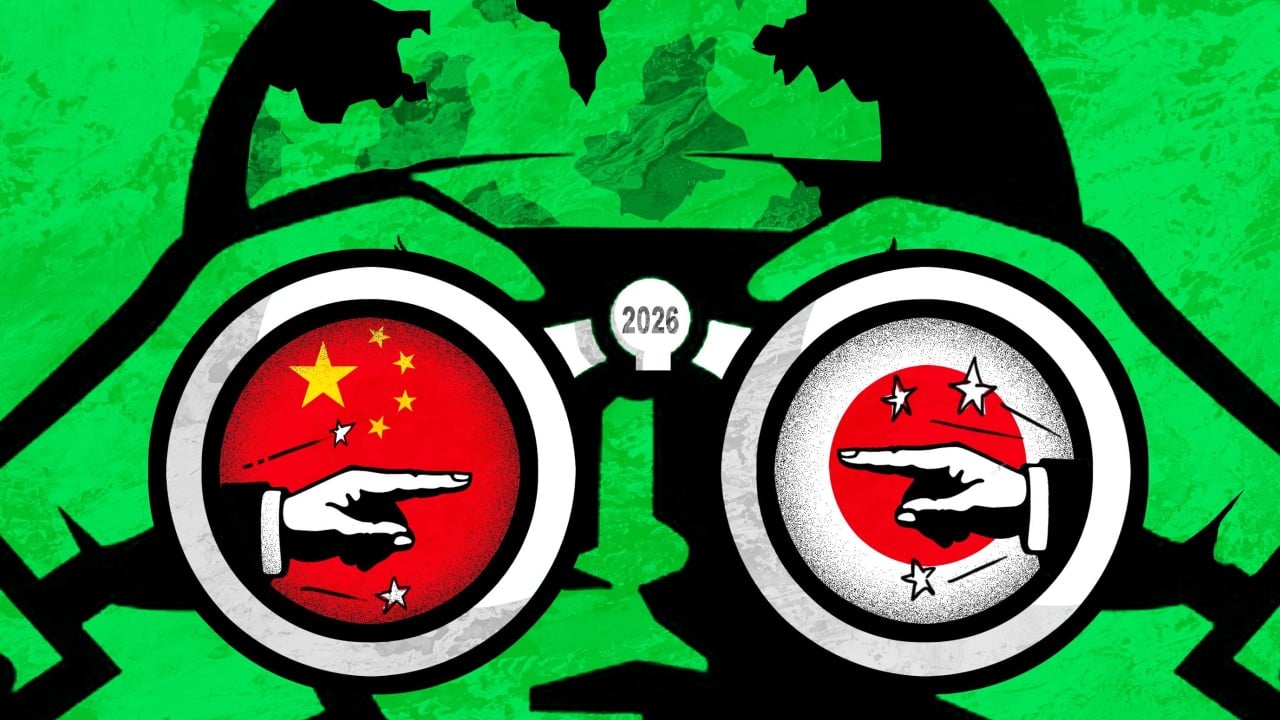
The timing of the maneuvers, spanning the transition from 2025 to 2026, coincides with broader geopolitical pressures on China from U.S. treaty allies in the Indo-Pacific. As outlined in recent analysis from the South China Morning Post (SCMP), Beijing is navigating strategic challenges posed by Japan and South Korea. The SCMP report, published on January 6, 2026, highlights how "China finds itself grappling with strategic pressures fuelled by two US treaty allies at its doorstep." It notes that near the end of 2025, longstanding China-Japan frictions—rooted in wartime history and territorial disputes—intensified as Tokyo pursued record military budgets and advanced weaponry acquisitions.
Escalating Dynamics in the Taiwan Strait
China views Taiwan as an inseparable part of its territory, a stance reiterated in official communications following the drills. The maneuvers follow a series of similar exercises, including those triggered by high-profile visits to Taipei by U.S. officials and Taiwan President Lai Ching-te's international engagements. In real-time tracking, these operations often involve live-fire drills in the Taiwan Strait and surrounding waters, with the PLA Eastern Theater Command overseeing coordination.
Taiwanese authorities have responded with vigilance, scrambling jets and ships to counter incursions into its air defense identification zone (ADIZ). Data from Taiwan's defense ministry indicates that PLA aircraft crossed the median line of the strait over 1,000 times in 2025 alone, a record high that normalizes gray-zone tactics short of outright conflict.
The completion announcement comes against a backdrop of U.S. commitments under the Taiwan Relations Act, which mandates defensive arms sales to the island. Recent U.S. approvals for advanced weaponry, including F-16 upgrades and HIMARS systems, have drawn Beijing's ire, prompting vows of countermeasures.
Broader Regional Pressures: China-Japan Fault Lines
The SCMP analysis delves into parallel tensions with Japan, framing 2026 as a pivotal year. Historically fraught ties, burdened by Japan's wartime occupation of China (1931-1945) and unresolved disputes over the Senkaku/Diaoyu Islands, have seen renewed friction. Tokyo's defense spending reached 8.7 trillion yen (about $57 billion) in fiscal 2025, the highest ever, funding hypersonic missiles, long-range strike capabilities, and closer interoperability with U.S. forces.
"China and Japan have never fully resolved the decades-old grudges of their wartime history and territorial disputes," the SCMP piece states, pointing to incidents near the end of 2025 that heightened alert levels. Japanese patrols in the East China Sea have increased, mirroring PLA activities around Taiwan and raising risks of miscalculation.
South Korea, another U.S. ally, adds to the equation with its own military modernization, though the SCMP series focuses primarily on the Sino-Japanese dynamic in its first installment.
Historical Context and Strategic Implications
Tensions over Taiwan trace back to the Chinese Civil War, when Nationalist forces retreated to the island in 1949, establishing the Republic of China government. Beijing's "One China" principle clashes with Taipei's de facto independence, fueled by U.S. strategic ambiguity.
Japan's role has evolved post-World War II, with its pacifist constitution amended to enable collective self-defense. The U.S.-Japan alliance, formalized in 1960, now extends to regional contingencies, including potential Taiwan scenarios, as affirmed in 2021 joint statements.
Outlook Amid Uncertainty
As 2026 unfolds, the completion of these Taiwan maneuvers signals continuity in China's assertive posture, while Japan's military buildup portends sustained rivalry. Analysts anticipate further drills and diplomatic sparring, with economic interdependencies—China remains Japan's largest trading partner—acting as a restraint. International observers, including the U.S. Indo-Pacific Command, continue to monitor for de-escalation signals, but the convergence of flashpoints suggests a volatile year ahead in East Asia.
(Word count: 612)






