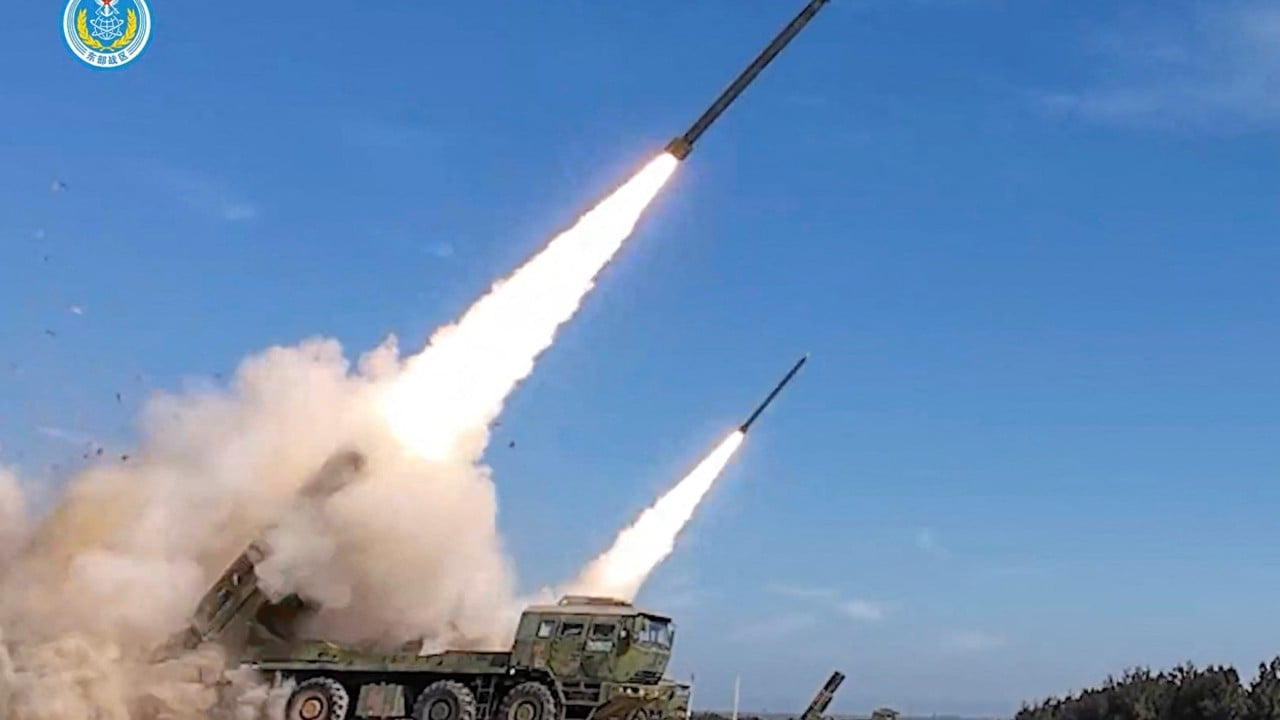

China Completes Military Drills Near Taiwan Amid Diplomatic Engagement with South Korea
As tensions continue to simmer in the Taiwan Strait, China has announced the successful completion of extensive military maneuvers near Taiwan, coinciding with an upcoming visit from South Korean President Lee Jae Myung to Beijing for a significant summit with President Xi Jinping. These developments signal a complex interplay of military posturing and diplomatic efforts in the region.
On December 31, 2025, the People's Liberation Army (PLA) concluded a series of large-scale military exercises dubbed "Justice Mission 2025," which included live-fire drills and simulations aimed at blockading Taiwan’s key ports. These drills, characterized by their intensity and scale, are viewed as a direct response to the increasing military support Taiwan receives from the United States, including recent arms packages, and Japan's willingness to intervene in the event of an invasion (France 24).
Chinese officials have framed these military exercises as necessary for safeguarding national sovereignty and as a stern warning against "separatist forces" in Taiwan and "external interference" from foreign powers. Song Tao, head of Beijing’s Taiwan Affairs Office, reiterated Beijing's commitment to peaceful reunification with Taiwan but emphasized a readiness to act against perceived threats (South China Morning Post).
Diplomatic Engagement with South Korea
In parallel to these military developments, President Xi Jinping is set to host President Lee in Beijing starting January 2, 2026. This summit marks a continuation of efforts by China to strengthen ties with South Korea amid ongoing tensions between China and Japan, particularly over issues related to Taiwan and regional security concerns (France 24).
The meeting comes at a pivotal moment as both nations navigate their relationships with major powers in the region. Analysts suggest that strengthening ties with South Korea is part of China's broader strategy to enhance its influence in Northeast Asia, particularly as relations with Japan have become strained over Taiwan and security dynamics.
Context and Implications
The military drills around Taiwan are not unprecedented; they follow a pattern of increasing military activities by China in the region since 2022, raising fears of potential conflict. Charles Parton, a senior associate fellow at the Royal United Services Institute, noted that while China's capability to invade Taiwan is significant, such capability does not necessarily equate to an imminent invasion (France 24).
As China engages in military posturing, the visit from the South Korean president indicates that Beijing is also keen on maintaining and enhancing its diplomatic relationships. The dual approach of military readiness and diplomatic engagement reflects the complexities of the geopolitical landscape in East Asia, where historical grievances and modern security concerns continue to shape interactions among regional powers.
Conclusion
The recent military maneuvers near Taiwan and the upcoming summit between China and South Korea highlight the delicate balance of power in East Asia. As tensions remain high, the international community will be closely monitoring these developments for signs of escalation or potential breakthroughs in diplomatic relations. The interplay between military might and diplomatic dialogue will significantly influence the future stability of the Taiwan Strait and the broader region.






