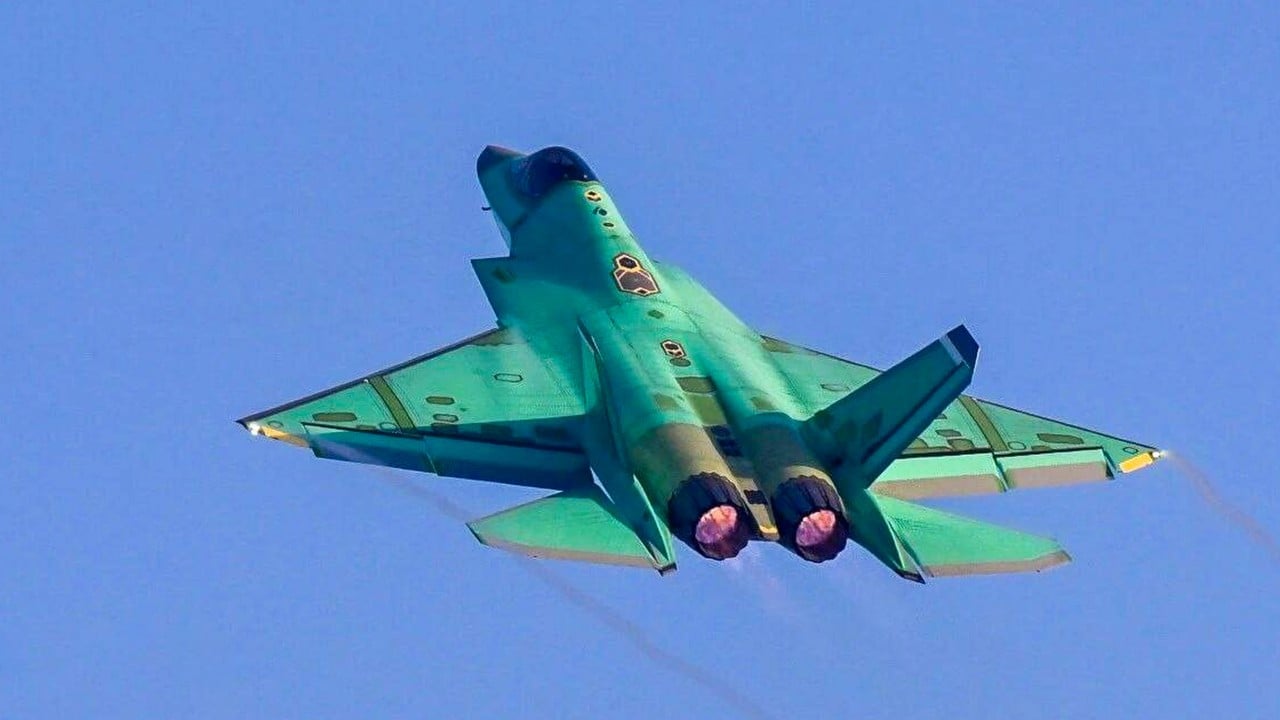

China Boosts Stealth Fighter Production as Tensions with Japan Escalate Over Export Ban
Beijing/Shenyang, January 9, 2026 – China has signaled a major expansion of its military aviation capabilities while simultaneously imposing restrictions on exports to Japan, underscoring deepening geopolitical frictions in East Asia amid disputes over Taiwan and regional security.
In a high-profile move early this week, Shenyang Aircraft Corporation (SAC), a key subsidiary of the state-owned Aviation Industry Corporation of China (AVIC), released a video showcasing its J-35 stealth fighter jet during its first flight of the year. The footage, captured at SAC's airfield in Liaoning province, depicts a green-coated J-35 roaring down the runway, highlighting the manufacturer's operational readiness and ambitions. SAC announced plans to double its warplane production capacity within the next three to five years, a pledge that reflects Beijing's accelerated push toward military modernization.
The J-35, a fifth-generation stealth fighter designed primarily for carrier-based operations, represents a cornerstone of China's efforts to enhance its naval air power. Developed by SAC, the aircraft is seen as a competitor to advanced Western jets like the U.S. F-35 Lightning II. This production ramp-up comes at a time when China is expanding its aircraft carrier fleet, including the Fujian, its third and most advanced carrier, which entered sea trials in 2024. The announcement aligns with broader trends in China's defense industry, where state-backed firms have invested heavily in automation, supply chain resilience, and technological innovation to close gaps with global leaders.
Simultaneously, China has escalated economic measures against Japan by banning exports of dual-use goods—items with both civilian and military applications—to the U.S. ally. The restriction, imposed earlier this week on January 7, heightens longstanding tensions rooted in territorial disputes, historical grievances, and competing visions for regional security. Japan, a key partner in the U.S.-led alliances countering Chinese influence, has bolstered its own defenses in response to Beijing's growing assertiveness around Taiwan and the East China Sea.
Reports indicate that diplomatic and economic strains between the two nations reached a new pitch by the end of the week, with trade and security issues at the forefront. The export ban follows a pattern of targeted restrictions China has employed in recent years, similar to measures against Australia and Lithuania amid geopolitical spats. Dual-use goods often include advanced electronics, materials, and software critical for industries ranging from semiconductors to aerospace, potentially disrupting Japanese supply chains.
Background on Sino-Japanese Relations and China's Military Buildup
China and Japan have a fraught history marked by territorial disputes over the Senkaku/Diaoyu Islands, competition in the South China Sea, and divergent stances on Taiwan, which Beijing claims as its territory. Japan has increased defense spending to record levels, aiming for 2% of GDP by 2027, and deepened security ties with the U.S., including joint exercises and technology sharing. Tensions spiked in 2025 following Chinese military drills near Taiwan and Japanese lawmakers' visits to the island.
China's military aviation sector has seen rapid growth under President Xi Jinping's directive to achieve a "world-class" armed force by mid-century. SAC, based in Shenyang, has a track record of producing advanced jets like the J-15 carrier fighter and J-16 multirole aircraft. The J-35's prominence in the video release—timed for the Lunar New Year period—serves as both a domestic morale booster and a message to regional adversaries. Analysts note that doubling production could mean scaling from dozens to over 100 aircraft annually, bolstering the People's Liberation Army Air Force (PLAAF) and Navy Aviation.
The export ban adds another layer to this dynamic. While specifics on affected goods remain limited, such measures are enforced through China's export control regime, updated in 2020 to safeguard national security. Japan has previously faced Chinese ire over its support for Taiwan and restrictions on semiconductor exports, creating a tit-for-tat cycle.
Regional Implications and Outlook
These developments occur against a backdrop of U.S.-China strategic competition, with Washington urging allies like Japan, South Korea, and Australia to diversify supply chains away from Beijing. The J-35 production pledge could accelerate China's power projection in the Indo-Pacific, potentially shifting the balance in scenarios involving Taiwan or the Philippine Sea.
As tensions simmer, both nations face economic interdependence—bilateral trade exceeded $300 billion in 2024—complicating outright confrontation. Tokyo is likely to seek U.S. support and explore alternative suppliers, while Beijing may frame the export curbs as defensive. International observers will watch for responses from Quad partners and ASEAN states, as well as any impact on global aviation markets.
No immediate military escalation has been reported, but the convergence of military flexing and economic coercion signals a volatile start to 2026 in East Asia. Diplomatic channels remain open, though strained, offering a narrow path to de-escalation.
(Word count: 712)






