
Caracas Streets Fill with Pro-Maduro Protesters Demanding Release from U.S. Amid Escalating Tensions
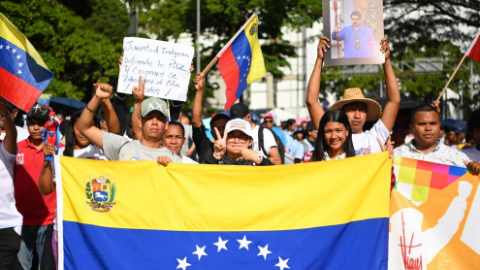
Caracas, Venezuela – Thousands of demonstrators gathered in the Venezuelan capital on January 4, 2026, for an anti-U.S. rally protesting what participants described as aggressive U.S. actions against the country, including the apparent detention of President Nicolás Maduro. The event, rated as medium severity by conflict monitoring groups, highlighted significant public discontent and underscored deepening bilateral frictions between Caracas and Washington.
The rally, which began around 7:43 a.m. GMT, saw crowds assembling in key areas of Caracas to voice opposition to perceived U.S. interference. According to reports from Xinhua, the demonstration specifically demanded the immediate release of Maduro by the United States, framing the gathering as a unified call for sovereignty amid what organizers called foreign aggression. Protesters carried signs and chanted slogans rejecting U.S. policies, expressing solidarity with Maduro's government. No immediate reports of violence emerged from the event, though it reflected broader civil unrest dynamics in the polarized nation.
This protest marks a notable escalation in public mobilization since early 2026, coming shortly after unconfirmed reports of U.S. military or covert operations targeting Venezuelan leadership. The Xinhua coverage, published on January 9, emphasized the rally's focus on Maduro's release, portraying it as a spontaneous outpouring of national support for the long-serving socialist leader. Event trackers classified it under civil unrest with medium severity, indicating organized dissent without widespread disruption or casualties at the time of initiation.
Mounting U.S.-Venezuela Tensions
The rally occurs against a backdrop of decades-long animosity between Venezuela and the United States. Relations have deteriorated since Hugo Chávez's rise in 1999, with the U.S. imposing escalating sanctions on Maduro's government starting in 2017 over allegations of human rights abuses, corruption, and electoral fraud. The Trump administration's 2019 recognition of opposition leader Juan Guaidó as interim president intensified the rift, leading to asset freezes and oil export restrictions that crippled Venezuela's economy.
By 2025, hyperinflation, mass migration—over 7.7 million Venezuelans had fled by UN estimates—and contested elections further strained the situation. Maduro's re-election in July 2024, widely criticized internationally as fraudulent, prompted renewed U.S. measures, including bounties on Maduro and his allies. The rally's reference to "U.S. attacks" aligns with Venezuelan state media narratives alleging CIA-backed coups and now, potentially, direct intervention resulting in Maduro's detention. While details remain sparse, the January 4 event suggests a narrative of U.S. overreach resonating with Maduro's base, particularly among working-class supporters in Caracas barrios.
Historically, Caracas has been a hotspot for both pro- and anti-government protests. Opposition rallies in 2017 and 2019 drew millions demanding Maduro's ouster, often met with security force crackdowns resulting in over 100 deaths per Human Rights Watch records. Pro-Maduro counter-demonstrations, backed by loyalist groups like the colectivos, have similarly filled streets, reinforcing the government's narrative of external threats. This latest rally fits into that pattern, potentially signaling renewed mobilization by chavistas amid leadership uncertainty.
Broader Context of Venezuelan Instability
Venezuela's civil unrest has evolved through economic collapse and political deadlock. Once Latin America's richest nation due to vast oil reserves, it now grapples with a GDP shrunk by over 75% since 2013, per IMF data. Food and medicine shortages have fueled periodic unrest, including the 2014-2017 protest wave that left hundreds dead. Recent years saw relative calm after partial sanctions relief under Biden-Harris negotiations in 2023, but 2024's disputed vote reignited divisions.
The anti-U.S. rally also coincides with regional dynamics. Allies like Russia, China, and Iran have provided economic lifelines—China via oil-for-loans deals totaling $60 billion historically—while Brazil and Colombia monitor border tensions. The U.S., under a potential new administration post-2024 elections, has maintained a "maximum pressure" stance, with recent congressional resolutions condemning Maduro's rule.
International observers, including the UN and OAS, have documented over 18,000 arbitrary detentions since 2014, mostly opposition figures, balancing claims of government repression against accusations of U.S. regime-change efforts. The January 4 demonstration, while pro-government, underscores how external factors amplify domestic polarization.
Outlook for Stability
As of January 9, 2026, no further large-scale unrest has been reported following the Caracas rally, but the medium-severity classification suggests potential for escalation if Maduro's status remains unresolved. Government spokespeople have yet to comment officially on the protest's scale, while opposition voices dismissed it as regime-orchestrated theater.
Analysts warn that prolonged uncertainty over leadership could spark dual-front unrest: pro-Maduro forces clashing with emboldened opposition. Diplomatic channels, including UN-mediated talks, may intensify, but historical precedents—like failed 2021 negotiations—cast doubt on quick resolutions. For now, the rally serves as a barometer of resilient support for Maduro's camp amid Venezuela's enduring crisis, with global eyes on whether U.S. actions presage broader intervention.
(Word count: 712)