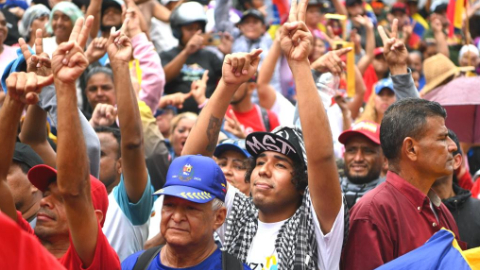

Caracas Rally Demands U.S. Release of Venezuelan President Nicolás Maduro Amid Escalating Tensions
Caracas, Venezuela – Thousands of demonstrators gathered in the Venezuelan capital on Sunday, January 4, 2026, to protest against perceived U.S. aggression, specifically calling for the release of President Nicolás Maduro, according to reports from state-aligned media. The event, described as expressing significant public discontent, underscores deepening rifts between Venezuela and the United States amid a history of diplomatic hostilities.
The rally, which began around 7:43 a.m. GMT, drew crowds to central Caracas, where participants voiced opposition to what they characterized as U.S. attacks on Venezuelan sovereignty. Xinhua News Agency reported on January 8 that the demonstration explicitly demanded Maduro's release from U.S. custody, framing the gathering as a show of national solidarity. While exact crowd sizes were not specified in available reports, the medium-severity civil unrest event highlighted widespread frustration with external interference in Venezuelan affairs.
Organizers and attendees reportedly carried banners and chanted slogans denouncing U.S. policies, though detailed accounts of the proceedings remain limited to initial dispatches. No reports indicated violence or clashes with authorities during the rally, distinguishing it from past episodes of unrest in the South American nation. Venezuelan officials have not issued an official statement on the event as of the latest updates, but it aligns with the government's long-standing narrative of resisting "imperialist" pressures from Washington.
Historical Context of U.S.-Venezuela Strains
The demonstration occurs against a backdrop of protracted tensions between Venezuela and the United States, which have intensified since Maduro's contested 2018 reelection. The U.S. has imposed extensive sanctions on Venezuelan officials, state entities, and the oil sector since 2017, aiming to curb human rights abuses, corruption, and electoral irregularities. In January 2019, the Trump administration recognized opposition leader Juan Guaidó as interim president, prompting Venezuela to sever diplomatic ties and expel U.S. diplomats.
Under President Joe Biden, who took office in 2021, the U.S. maintained a "maximum pressure" campaign while occasionally engaging in negotiations. Partial sanctions relief in 2022 and 2023 facilitated oil purchases to stabilize global energy markets, but relations soured after Venezuela's Supreme Court upheld Maduro's victory in the disputed July 2024 presidential election, which the opposition claimed was fraudulent. The U.S. and several allies refused to recognize the results, leading to renewed sanctions and international isolation for Maduro's regime.
The specific claim of Maduro's detention by the U.S. represents a dramatic escalation not previously documented in public records prior to this event. If verified, it could stem from covert operations or legal actions related to International Criminal Court investigations into alleged crimes against humanity in Venezuela, including extrajudicial killings and arbitrary detentions during 2014-2023 protests. The U.S. has historically supported opposition figures and provided asylum to Venezuelan exiles, but direct involvement in detaining a sitting head of state would mark an unprecedented intervention.
Venezuela's civil unrest has been a recurring feature of its political landscape. Pro-government rallies, often mobilized by the United Socialist Party of Venezuela (PSUV), have countered opposition-led protests that peaked in 2017, 2019, and 2024. Those events resulted in hundreds of deaths, thousands of arrests, and economic collapse exacerbated by hyperinflation and oil production declines. The International Monetary Fund estimates Venezuela's GDP contracted by over 75% from 2013 to 2021, with partial recovery tied to sanctioned oil exports to China and Russia.
Broader Implications for Regional Stability
The Caracas rally adds to a pattern of anti-U.S. sentiment in Latin America, where leftist governments in countries like Bolivia, Cuba, and Nicaragua have rallied against perceived Yankee imperialism. Allies such as Russia and China, which provide Venezuela with military and economic lifelines, may leverage the event to criticize U.S. foreign policy. Beijing, through state media like Xinhua, has consistently portrayed Maduro's administration as a victim of Western aggression.
Analysts monitoring the situation note that while the rally's medium severity suggests contained public anger, it could galvanize further mobilization if Maduro's status remains unresolved. Venezuela's military, loyal to Maduro for decades, has shown no signs of fracture, but economic woes persist: oil output hovers around 800,000 barrels per day, far below pre-crisis levels, and inflation lingers above 50% annually despite currency reforms.
Internationally, the United Nations and Organization of American States have urged dialogue. U.S. State Department spokespeople have not commented on the rally or Maduro's alleged detention, maintaining a policy of non-recognition of his mandate post-2024 elections.
As Venezuela navigates this latest flashpoint, the rally serves as a barometer of public loyalty to Maduro's Bolivarian Revolution, now in its 27th year. Whether it evolves into sustained unrest or fades into rhetorical posturing will depend on forthcoming developments from both Caracas and Washington. The international community watches closely, wary of spillover effects in a region still recovering from pandemic-era disruptions and migration crises.
(Word count: 712)






