
Caracas Protesters Demand U.S. Release Maduro Amid Reports of Anti-American Demonstrations
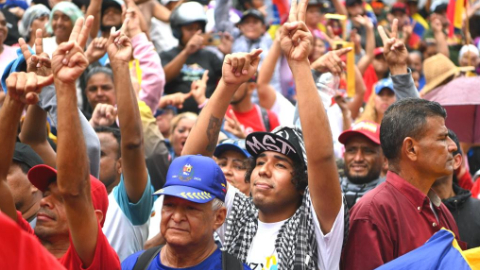
Caracas, Venezuela – Demonstrators gathered in the Venezuelan capital on Sunday, January 4, 2026, to protest what they described as U.S. attacks, voicing strong public discontent and specifically calling for the release of President Nicolás Maduro from U.S. custody, according to reports from state-aligned media.
The rally, classified as a medium-severity civil unrest event, began at approximately 7:43 a.m. GMT and highlighted escalating tensions between Venezuela and the United States. Participants in Caracas rallied against perceived U.S. aggression, framing their action as a defense of national sovereignty. Xinhua News Agency reported on the demonstration four days later, on January 8, noting that protesters explicitly demanded Maduro's release by the U.S., signaling a focal point of outrage amid broader anti-American sentiment.
Details on the scale of the rally remain limited in available reports, but it underscores ongoing friction in bilateral relations. The event occurred against a backdrop of Venezuela's polarized political landscape, where public gatherings often reflect deep divisions between government supporters and opposition forces. While Xinhua described the action as a collective demand for Maduro's freedom, it aligns with the event's characterization as an expression of significant public discontent toward U.S. policies.
Escalating U.S.-Venezuela Tensions
The protest fits into a long history of strained U.S.-Venezuela relations, exacerbated by economic sanctions, diplomatic disputes, and allegations of authoritarianism under Maduro's leadership. Maduro, who assumed the presidency in 2013 following the death of Hugo Chávez, has faced international criticism over disputed elections, human rights concerns, and a severe economic crisis that has driven mass migration—over 7.7 million Venezuelans have fled the country since 2014, according to United Nations estimates.
The U.S. has imposed progressively stringent sanctions since 2017, targeting Maduro's government, military officials, and state oil company PDVSA in response to what Washington describes as election fraud, corruption, and repression. In 2019, the U.S. recognized opposition leader Juan Guaidó as interim president, leading to a prolonged standoff. Relations briefly thawed in 2022-2023 with partial sanctions relief in exchange for electoral commitments, but tensions reignited over issues like oil exports to Iran and Russia, and Venezuela's claims on Guyana's Essequibo region.
Recent developments leading to the rally's trigger—specifically, reports of "U.S. attacks" and Maduro's purported detention—remain unverified in Western media but have been amplified by Venezuelan state outlets and allies like China. Xinhua's coverage, published shortly after the event, positions the demonstration as a patriotic response, though independent verification is scarce. No U.S. officials have publicly confirmed any military action or custody of Maduro as of January 8, 2026.
Broader Context of Civil Unrest in Venezuela
Venezuela has a history of mass protests, often met with security force responses. The 2014 and 2017 demonstrations against Maduro's economic policies resulted in dozens of deaths and thousands of arrests, according to human rights groups like Human Rights Watch. More recently, 2024 elections—widely contested—sparked street clashes, with the opposition claiming victory for Edmundo González while Maduro was declared the winner by the National Electoral Council.
This latest rally appears pro-government in nature, contrasting with opposition-led unrest. Its medium severity rating suggests contained disruption without widespread violence or infrastructure damage, distinguishing it from higher-intensity events. However, it risks fueling further polarization, especially if tied to unconfirmed claims of external interference.
International observers, including the United Nations and European Union, have long urged dialogue in Venezuela. China, a key Maduro ally providing loans and oil purchases, has consistently criticized U.S. sanctions as "illegal." Russia and Iran similarly support Caracas, forming a geopolitical counterweight.
Outlook Amid Uncertainty
As of January 8, 2026, the rally's immediate aftermath shows no reports of escalation, but it serves as a barometer for public mood amid rumors of Maduro's status. Venezuelan authorities have not issued official statements on the demonstration, per available sources. The U.S. State Department has historically dismissed such rallies as regime-orchestrated propaganda.
The event highlights Venezuela's vulnerability to external shocks, compounded by hyperinflation, shortages, and reliance on oil revenues—down 99% from pre-crisis peaks due to sanctions and mismanagement, per World Bank data. Diplomatic channels remain open but fraught, with potential for mediation from Brazil or Colombia.
For The World Now, this civil unrest event underscores the fragility of stability in Latin America's most oil-rich nation. Further developments, including confirmation of Maduro's situation, could dictate whether protests intensify or subside.
(Word count: 612)