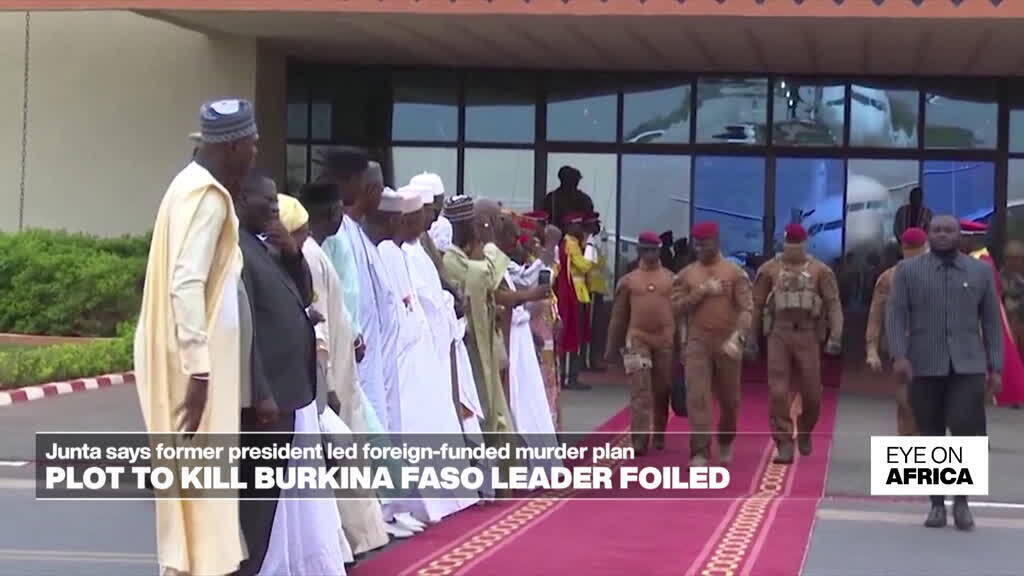

Burkina Faso Junta Thwarts Alleged Assassination Plot Against Leader Traoré, Accuses Ivory Coast of Funding
Ouagadougou, Burkina Faso — Burkina Faso's military junta announced on January 7, 2026, that it had foiled a plot to assassinate its leader, Captain Ibrahim Traoré, marking what authorities described as "yet another attempt at destabilisation." The government has pointed the finger at neighboring Ivory Coast, alleging that funds from the West African nation were channeled to support the scheme.
The announcement came amid heightened security concerns in the West African nation, which has been grappling with a protracted jihadist insurgency and political instability since a series of coups in recent years. According to a France 24 report aired on the evening of January 7, Burkinabe officials claimed to have intercepted the plot before it could be executed, though specific details on the perpetrators, methods, or evidence linking Ivory Coast were not immediately disclosed in public statements.
Burkina Faso's junta, led by Traoré since he seized power in a September 2022 coup, has frequently accused external actors of meddling in its affairs. The military government has positioned itself as a bulwark against foreign influence and terrorism, often framing internal and external threats as interconnected efforts to undermine national sovereignty. This latest claim fits into a pattern of such accusations, including previous allegations against France and other regional players.
Context of Instability in the Sahel
Burkina Faso sits at the epicenter of the Sahel region's jihadist violence, where groups affiliated with al-Qaeda (primarily Jama'at Nasr al-Islam wal-Muslimin, or JNIM) and the Islamic State (Islamic State in the Greater Sahara, or ISGS) have waged a deadly insurgency since 2015. The conflict has displaced over two million people, killed thousands, and prompted multiple military takeovers as juntas promised to restore security.
Traoré's regime has extended its transitional rule multiple times, most recently delaying elections until 2029, citing the security crisis. Jihadist attacks have intensified, with major assaults on military bases, villages, and convoys. In 2024 alone, violence in the Sahel claimed over 10,000 lives across Burkina Faso, Mali, and Niger, according to the Armed Conflict Location & Event Data Project (ACLED). Burkina Faso accounts for the majority of fatalities, with rural northern and eastern provinces serving as jihadist strongholds.
The alleged assassination plot occurs against this backdrop of vulnerability. While the junta did not explicitly classify the scheme as terrorism in initial reports, its description as a "destabilisation attempt" echoes rhetoric used for jihadist operations and suspected foreign-backed subversion. Ivory Coast, a relatively stable economic hub in West Africa, has maintained diplomatic ties with Burkina Faso but has faced criticism from Sahel juntas for hosting opposition figures and aligning with Western powers.
Tensions between Burkina Faso and Ivory Coast have simmered for months. Abidjan has hosted Burkinabe exiles opposed to the junta, and there have been unverified reports of cross-border intrigue. Neither Ivory Coast nor international bodies like the Economic Community of West African States (ECOWAS) had issued a response to the accusations as of January 7 evening.
Broader Regional Dynamics
The Sahel's juntas—Burkina Faso, Mali, and Niger—have formed the Alliance of Sahel States (AES) in 2023, withdrawing from ECOWAS and pivoting toward Russia for security support, including Wagner Group mercenaries (now rebranded as Africa Corps). This shift has strained relations with coastal neighbors like Ivory Coast, Ghana, and Nigeria, who fear spillover jihadism and junta-inspired coups.
United States policy in the region adds another layer. On the same day as the Burkina announcement, reports emerged that Washington added Nigeria and over 20 other African countries to its visa bond list, a measure aimed at curbing overstay risks but signaling broader scrutiny of migration from instability-hit areas.
Burkina Faso's security forces have claimed successes against insurgents, including large-scale offensives in 2025 that reclaimed territory. However, human rights groups like Human Rights Watch have documented massacres by pro-junta militias, exacerbating ethnic tensions and potentially fueling recruitment for extremists.
Outlook Amid Ongoing Threats
The foiled plot underscores the precarious security environment facing Traoré's government. While details remain sparse, the accusation against Ivory Coast could escalate diplomatic friction, potentially leading to border closures or ECOWAS sanctions discussions. Analysts note that such claims often serve to rally domestic support and deflect from governance challenges.
As Burkina Faso battles both jihadist terrorism and political intrigue, the international community watches closely. The United Nations and European Union have called for inclusive dialogue, but junta leaders prioritize military solutions. With no confirmed perpetrators named, the incident highlights the opaque nature of counterterrorism efforts in the region.
For now, Captain Traoré remains in power, but the junta's narrative of external threats reinforces its grip amid a conflict that shows no signs of abating. Regional stability hinges on addressing root causes like poverty, climate stress, and governance failures, even as immediate dangers persist.
(Word count: 682)






