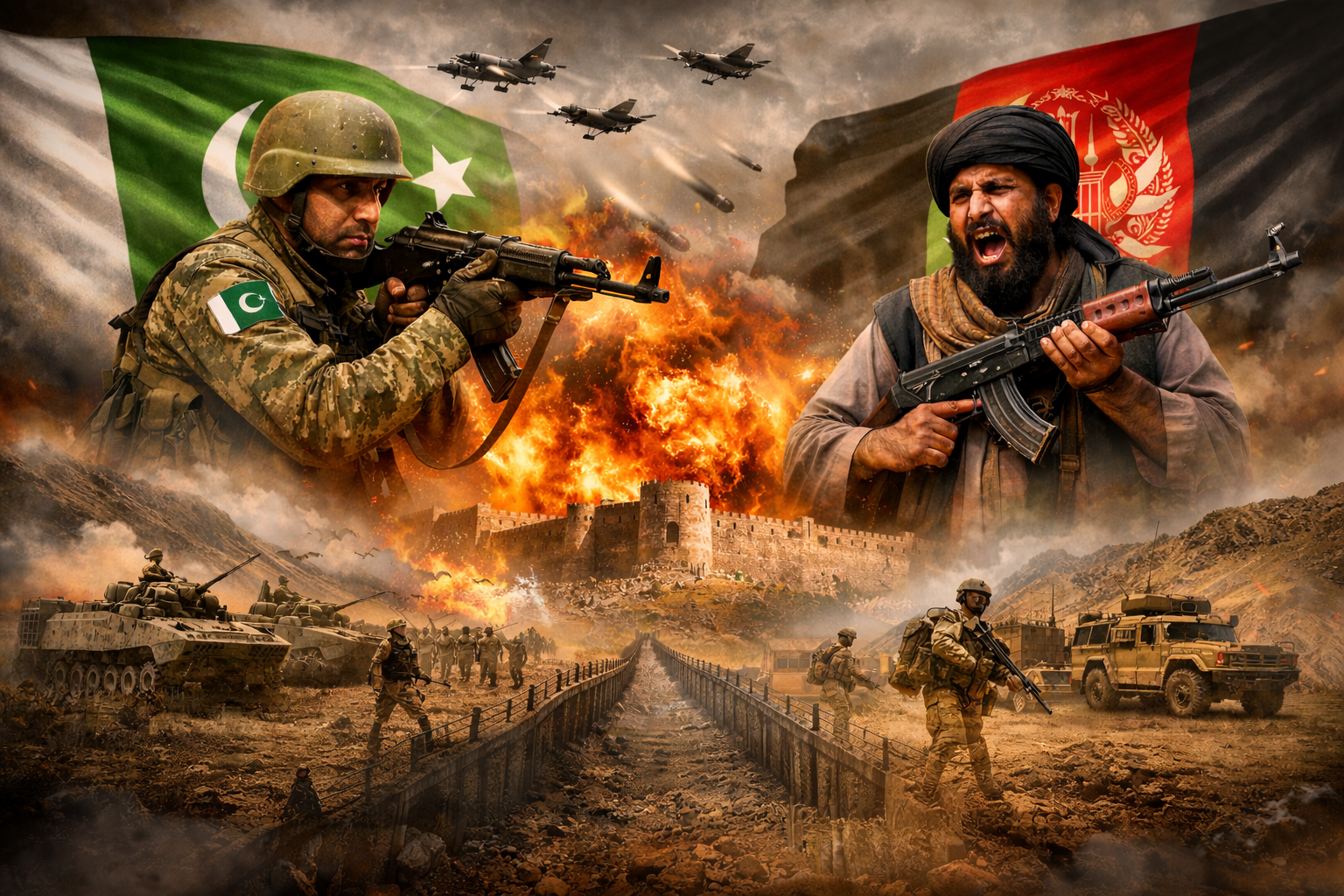

Aftermath of the Latest Airstrikes: A Shift in Taliban Strategy and Regional Alliances
What's Happening
On February 22, 2026, Pakistan launched airstrikes in Afghanistan's Nangarhar province, targeting Taliban-linked militants following a surge in cross-border attacks. Four days later, on February 26, Pakistan escalated with additional border strikes, directly hitting Taliban installations in response to intensified militant incursions. Confirmed reports indicate at least 40 Taliban fighters killed, with strikes damaging command posts and logistics hubs near the porous Durand Line.
Immediate aftermath has seen Afghan civilians in border areas voicing outrage over collateral damage, including civilian casualties in Nangarhar villages. Local insurgent groups, such as the Tehrik-i-Taliban Pakistan (TTP) splinter factions, have praised the strikes as a "wake-up call," vowing closer coordination with the Afghan Taliban to counter Pakistani incursions. Taliban spokesmen confirmed the losses but denied operational disruption, framing the attacks as unprovoked aggression.
Context & Background
The Durand Line, drawn in 1893 as a British colonial border between Afghanistan and undivided India, has long fueled animosity, rejected by Afghan leaders as artificial and tribal-dividing. This "graveyard of empires" legacy—evident in Soviet and U.S. failures—intersects with Pakistan-Taliban clashes dating to the 1990s, when Islamabad backed the Taliban against rivals.
Recent strikes echo 2018-2021 patterns, when Pakistan bombed TTP safe havens post-ceasefire breakdowns. The February timeline—Nangarhar strike on 2/22, followed by 2/26 retaliatory barrages—reignites these grievances, with Taliban propaganda invoking Durand Line "invasions" to rally Pashtun support across the border.
Why This Matters
These airstrikes are catalyzing a Taliban strategic pivot from defensive postures to asymmetric retaliation, emphasizing decentralized cells to evade air power. Facing Pakistan's superior F-16-enabled strikes, the Taliban may deepen ties with TTP and other Durand-straddling insurgents, forming ad-hoc alliances for joint raids. This reshapes regional dynamics: Pakistan's actions risk alienating Kabul further, potentially pushing Taliban outreach to Iran (via anti-Pakistan proxies) and India (seeking arms to counterbalance Islamabad).
The unique angle here is the strikes' accelerator effect on Taliban adaptation—shifting from static border defenses to networked insurgency, exploiting historical grievances to legitimize escalation. For stakeholders, this heightens risks to CPEC routes and refugee flows, undermining post-2021 Taliban governance claims.
What People Are Saying
Social media erupts with reactions. Afghan Twitter user @NangarharVoice (12K followers) tweeted: "Pak drones kill our kids over imaginary lines—Taliban must unite tribes now! #DurandLineGenocide" (5.2K likes). TTP-affiliated @BorderMujahid posted: "Islamabad's bombs forge stronger bonds—Taliban brothers, revenge together" (3.8K retweets). Pakistani analyst @StratPK noted: "Necessary preemption, but expect blowback" (2.1K likes). UNAMA condemned civilian deaths, urging de-escalation.
What to Watch
Expect Taliban retaliatory strikes on Pakistani border posts within weeks, escalating to suicide bombings in Quetta or Peshawar. Watch for alliance signals: overt TTP-Taliban pacts or Iranian arms flows via Herat. India may quietly bolster anti-Pakistan proxies, altering South Asia's security calculus. Internal Afghan stability hangs in balance—if Taliban pivots succeed, governance fractures; failure invites ISKP gains.
This is a developing story and will be updated as more information becomes available.
(Word count: 612)






