

33 Countries Record Hottest July as Western Europe Sets June-July Heat Record
July 2026 was the hottest July on record for at least 33 countries, with Western Europe recording its hottest combined June and July amid persistent heat, drought, wildfires and low river levels.
Record Heat in Western Europe
Western Europe’s June-July average temperature reached 21.62C, 2.79C above the long-term average and exceeding the 2022 record, driven by persistent high-pressure systems. [2] The Copernicus Climate Change Service reported that the region experienced its hottest June and July on record this summer. [2] This reflected the exceptional persistence of heat so far this summer, according to the European Union’s climate change monitor. [2] July 2026 was the third consecutive month of exceptional heat in Western Europe, bringing the combined temperature for June and July to a new record for the region. [2] Persistent high-pressure systems trapped heat over Western Europe. [2] The extreme temperatures also amplified widespread drought. [2] As soils dry out, they lose their ability to provide natural cooling, allowing heat to build more readily. [2] This is a clear example of how climate change is intensifying heat extremes with heat and drought increasingly reinforcing one another. [2] Soil moisture was significantly lower than during the 2022 drought. [2]
Global July Temperature Records
At least 33 countries experienced their hottest July in recorded history, affecting around 900 million people. [5] Anomalies reached 3.8C above average in France and over 2C in the Sahel. [5] The differences from average July temperatures were notably large. [5] In France the July 2026 reading stood 3.8 degrees above the long-term average. [5] In the Sahel region of central Africa temperatures ran more than two degrees above average despite smaller usual variations. [5] July temperatures were record high in Europe and Africa as well as in Central America and the northern part of North America. [5] Temperatures are being raised by the El Niño weather phenomenon that began in June and is expected to peak later in the year. [5] El Niño this year may be the strongest on record. [5] Rapidly accelerating climate change is adding to the effect. [5] The Copernicus data and computer models underpin the analysis by news agency AFP. [5]
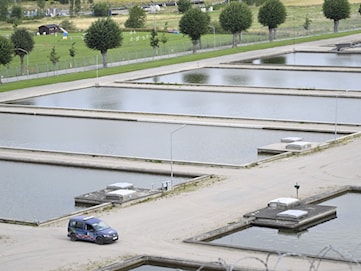
Warm water threatens Sweden's drinking water supply amid record European heat and drought. — Source: radiosweden
Drought, Low Rivers and Wildfires
France and Spain set drought records that fueled major wildfires, including a 42,000-hectare fire in Gironde that forced over 220,000 evacuations and a 44,000-hectare fire near Madrid. [2] France and Spain also registered record levels of drought. [2] A megafire burned nearly 42,000 hectares and forced the evacuation of more than 220,000 people in southwestern France’s Gironde department in late July. [2] Spain’s largest wildfire in recent history scorched almost 44,000 hectares in Avila province near Madrid. [2] Several rivers experienced exceptionally low water levels, including the Seine, Rhine and Danube. [2] The low flows affected water supplies and irrigation and led Hungary and Slovenia to operate their only nuclear power plants at reduced capacity. [2] The report warned that large fires can send smoke high into the atmosphere, allowing it to travel thousands of kilometres and affect air quality in other countries. [2] The Copernicus Climate Change Service said levels of soil moisture were significantly lower than in July 2022 when the last severe drought gripped Western Europe. [2]
Threats to Drinking Water
Warm lake and river water in Sweden is increasing bacteria levels, threatening drinking-water treatment as 70 percent of the country’s supply comes from surface sources. [4] Warm water in Sweden’s lakes and rivers could become a serious threat to drinking water production as the climate gets warmer. [4] As water temperatures rise, they can contain more bacteria and microorganisms. [4] That means water treatment plants may need more chemicals or longer biological treatment processes to produce drinking water. [4] Around 70 percent of Sweden’s drinking water comes from lakes or rivers. [4] The Swedish Expert Council on Climate Adaptation has highlighted the issue. [4]
Severe Thunderstorms and Flash Flooding in Kansas
Local flash flooding from thunderstorms occurred in Johnson County, Kansas, with 2-3 inches of rain already fallen and up to 0.5 inches more possible, alongside a severe thunderstorm producing 60 mph winds. [1] [3] At 621 AM CDT, Doppler radar indicated the strongest storms and heaviest rain rates have ended. [1] Between 2 and 3 inches of rain have fallen with the storms this morning. [1] Additional rainfall amounts up to 0.5 inches are possible in the warned area as rain slowly ends. [1] Flash flooding is ongoing or expected to begin shortly. [1] The hazard is flash flooding caused by thunderstorms. [1] The source is radar indicated. [1] The impact includes flash flooding of small creeks and streams, urban areas, highways, streets and underpasses. [1] At 546 AM CDT, a severe thunderstorm was located over southeastern Johnson County, KS, and is nearly stationary. [3] The hazard includes 60 mph wind gusts. [3] The source is radar indicated. [3] The impact includes expected damage to roofs, siding, and trees. [3] Locations impacted include Overland Park, Belton, Raymore, Spring Hill, Peculiar, Stilwell, and Bucyrus. [3] This includes Interstate 49 between mile markers 170 and 176. [3]
Sea Surface Temperatures and Outlook
The highest recorded July sea surface temperatures outside polar regions were noted, with the average at 20.96C, slightly higher than the previous record of 20.89C in 2023. [2] The Copernicus Climate Change Service also said the highest sea surface temperatures on record outside the polar regions were recorded in July. [2] The average sea surface temperature was 20.96C, slightly higher than the previous record of 20.89C in 2023. [2] Persistent high-pressure systems trapped heat over Western Europe while the extreme temperatures amplified widespread drought. [2] As soils dry out they lose their ability to provide natural cooling, allowing heat to build more readily. [2] This is a clear example of how climate change is intensifying heat extremes with heat and drought increasingly reinforcing one another. [2]
What to watch next: The Copernicus Climate Change Service noted that the highest sea surface temperatures on record outside the polar regions were recorded in July, while experts described how heat and drought are reinforcing one another under accelerating climate change. [2]






