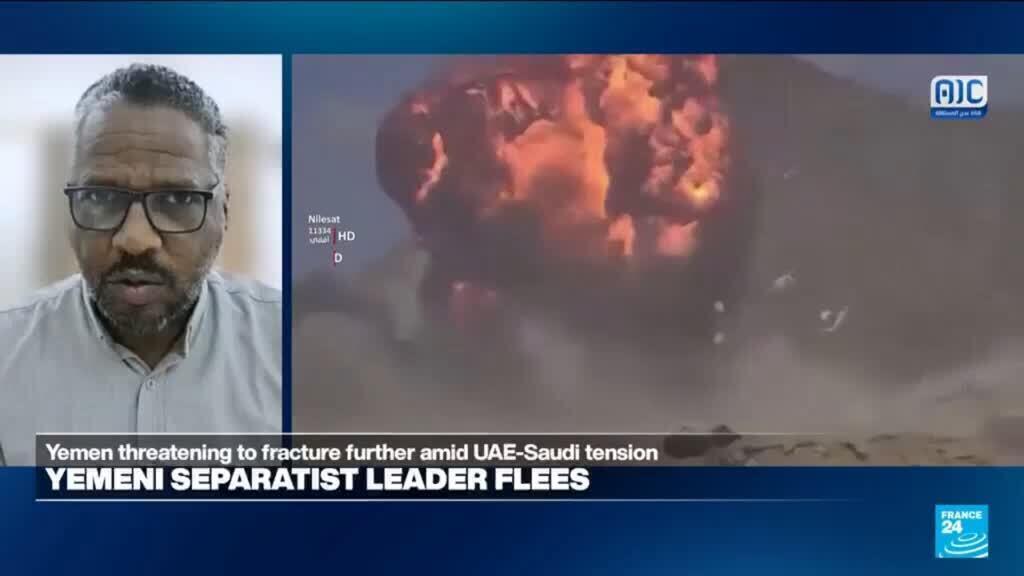

Yemen Separatist Leader Aidarous al-Zubaidi Flees to UAE as Treason Charges and Bombings Escalate Southern Tensions
Aidarous al-Zubaidi, head of the UAE-backed Southern Transitional Council (STC), has fled to the United Arab Emirates following accusations of high treason, intensifying political and military frictions in southern Yemen amid the country's protracted civil war.
The dramatic developments unfolded on January 7, 2026, when al-Zubaidi, a key member of Yemen's Presidential Leadership Council (PLC), was removed from his position after allegedly attempting to seize significant territory in southern Yemen and pushing toward outright independence. According to reports, he refused to attend crucial talks in Riyadh, prompting a swift backlash from the Saudi-led coalition supporting Yemen's internationally recognized government. Coalition forces subsequently bombed areas in al-Zubaidi's home province, further destabilizing the already volatile region.
France 24's coverage highlights the severity of the crisis, featuring analysis from Dr. Ghazali Babiker, Head of NGO Mehad's Yemen Mission. Babiker described the situation as "very challenging," underscoring a profound "lack of stability and security" that has plagued Yemen for over a decade. The expert's insights come amid reports of escalating violence between separatist forces loyal to al-Zubaidi and government-aligned troops, raising fears of a new front in Yemen's multifaceted conflict.
Al-Zubaidi's flight to the UAE marks a significant rupture in Yemen's fragile power-sharing arrangements. The STC, which he has led since 2017, controls much of southern Yemen, including the strategic port city of Aden, the country's temporary capital. Backed by the UAE as a counterweight to both Houthi rebels and the Saudi-supported government, the separatists have long advocated for southern independence, citing historical grievances from Yemen's 1990 unification. His ouster from the PLC—formed in 2022 to replace the powers of President Abdrabbuh Mansur Hadi—signals a potential realignment in anti-Houthi alliances.
Background: Yemen's Decade-Long Civil War
Yemen's conflict traces back to 2014, when Houthi rebels, a Zaidi Shia movement from the north, seized the capital Sanaa and ousted the government of President Hadi. This sparked a Saudi-led intervention in 2015, backed by a coalition including the UAE, aimed at restoring Hadi's administration. The war has since evolved into a complex proxy battleground, with Iran supporting the Houthis, Saudi Arabia and the UAE backing rival factions, and al-Qaeda in the Arabian Peninsula exploiting the chaos.
The PLC, chaired by Rashad al-Alimi, was established under the Saudi-brokered Riyadh Agreement of 2019, which sought to integrate the STC into a unified anti-Houthi front. Al-Zubaidi joined the council in 2022, but tensions persisted over southern autonomy. Recent clashes in Aden and Abyan provinces underscore longstanding divides: separatists accuse the government of marginalizing the south, while Riyadh and its allies view STC ambitions as a threat to national unity.
The UAE's role adds another layer of complexity. Although Abu Dhabi withdrew most combat forces in 2019, it has continued supporting the STC through training, funding, and airstrikes. Al-Zubaidi's refuge in the UAE could strain UAE-Saudi relations, which have cooled since the war's early years due to diverging strategies—Riyadh prioritizing Houthi defeat, while the UAE focuses on securing southern ports and countering Iranian influence.
Escalating Violence and Humanitarian Fallout
The bombings in al-Zubaidi's home province—believed to be Abyan or adjacent areas—followed his refusal to engage in Riyadh-mediated dialogue. Reports indicate separatist forces clashed with coalition-backed troops, with unconfirmed casualties mounting. This comes as Yemen grapples with one of the world's worst humanitarian crises: over 18 million people require aid, per United Nations figures, exacerbated by Houthi disruptions to Red Sea shipping since late 2023.
Dr. Babiker's interview on France 24 emphasized the human cost, noting how political infighting hampers aid delivery and perpetuates insecurity. "The lack of stability affects every aspect of life," he stated, pointing to displacement, famine risks, and stalled peace processes.
Outlook: Fragile Ceasefire at Risk
No immediate resolution is in sight. Saudi Arabia has urged de-escalation, but al-Zubaidi's treason charges—levied by the PLC—could lead to his formal arrest warrant if he returns. The UAE has not commented officially, but analysts anticipate it may double down on STC support, potentially fragmenting the anti-Houthi coalition further.
A U.S.- and UN-brokered truce since April 2022 has held unevenly, with sporadic fighting. However, Houthi advances, including drone attacks on Saudi oil facilities and recent Red Sea disruptions, have renewed calls for unified opposition. Al-Zubaidi's exile risks tipping southern Yemen into open conflict, complicating efforts to end the war that has killed over 377,000 people, according to UN estimates.
As Riyadh pushes for talks, the international community watches closely. The European Union and United States have reiterated support for Yemen's unity government, while aid agencies warn of catastrophic consequences if factional strife intensifies.
(Word count: 712)






