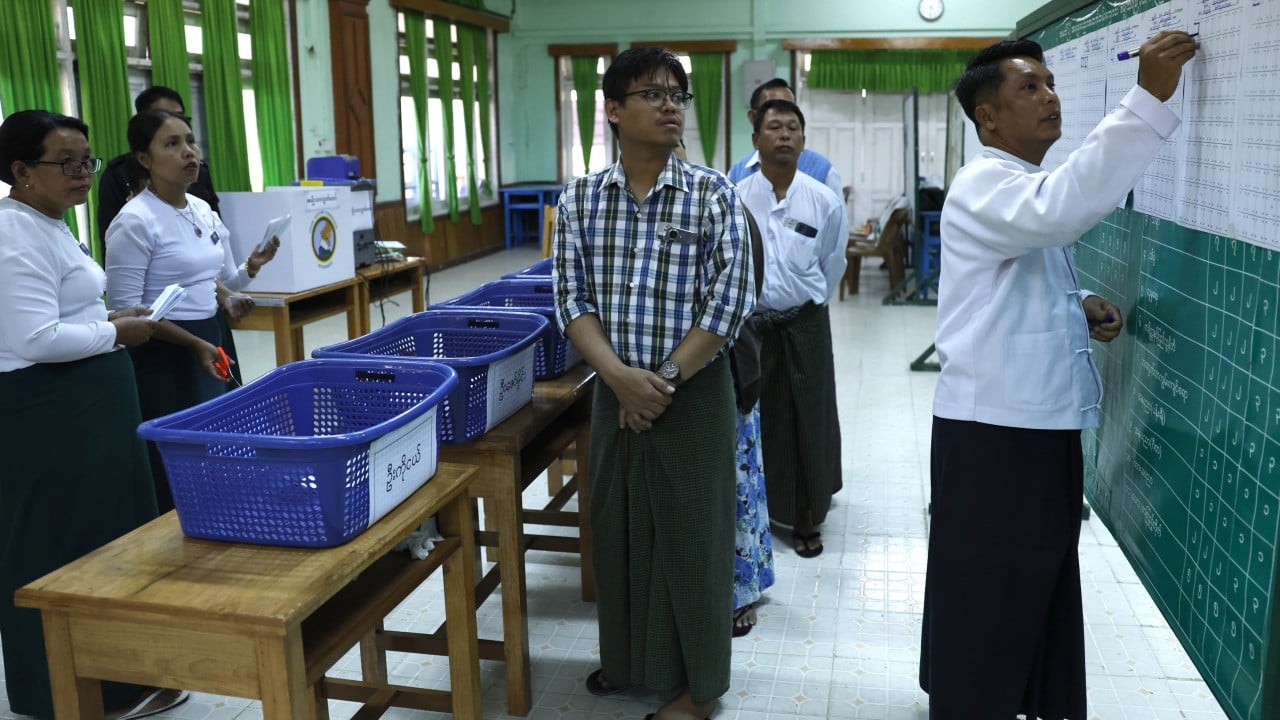

Widespread Condemnation as Myanmar's Elections Face Allegations of Fraud
In a stark continuation of Myanmar's political turmoil, the first phase of elections held under the military junta has concluded with widespread condemnation, characterized by accusations of being a sham. The results, which indicate a significant victory for the junta's pro-military party, have sparked outrage both domestically and internationally, as many view the electoral process as a façade for the military's grip on power.
As reported by official state media, the military-backed party secured an astonishing 90% of the lower house seats in the initial voting phase, which commenced on January 2, 2026. This electoral exercise is part of a phased approach that the junta claims will eventually restore democracy to the nation, following the military coup in February 2021 that ousted the democratically elected government and plunged the country into civil conflict.
"The military junta's elections are a complete farce," said a spokesperson for the National Unity Government (NUG), a shadow government formed by ousted lawmakers and pro-democracy activists. "These elections do not reflect the will of the people and only serve to legitimize military rule." The NUG has been at the forefront of resistance against the junta, advocating for democracy and human rights amidst the ongoing civil war that has seen widespread violence and instability.
The elections have been marred by allegations of intimidation, voter suppression, and a lack of genuine democratic processes. Observers and critics have pointed out that the conditions under which these elections were held are far from free and fair. The junta has restricted media coverage and limited access to independent election monitors, raising further concerns about the validity of the electoral process.
The international community has reacted with skepticism. Several governments and human rights organizations have issued statements condemning the elections as illegitimate. "These elections cannot be considered a legitimate expression of the people's will," said a spokesperson for Amnesty International. "They are merely a tool for the junta to maintain its grip on power and further entrench its abuses."
The military's claims of returning to democracy are viewed with deep cynicism by many Myanmar citizens, who continue to suffer the consequences of the junta's brutal crackdown on dissent. Since the coup, the country has been embroiled in a civil war, with various ethnic armed groups and pro-democracy forces engaging in violent clashes against the military. This environment of conflict and unrest has further alienated the military from the populace.
In the wake of the election results, protests have erupted in several cities, with citizens expressing their anger and frustration over the ongoing military rule. Demonstrators have called for the international community to impose stricter sanctions on the junta and support the pro-democracy movement.
Background
Myanmar's political landscape has been tumultuous since the military seized power, leading to a significant deterioration of human rights and civil liberties. The National League for Democracy (NLD), the party that won a landslide victory in the 2020 elections, was effectively dismantled by the military junta, which justified its actions by alleging widespread electoral fraud—a claim that has been widely discredited.
The ongoing civil conflict has led to thousands of deaths and the displacement of millions. The military's response to dissent has included violent crackdowns, arbitrary detentions, and widespread human rights abuses, further complicating the situation in the country.
Conclusion
As Myanmar navigates this precarious political landscape, the outcome of the elections and the junta's continued hold on power signal a troubling future for democracy and human rights in the nation. The international community's response will be critical in determining the next steps for Myanmar as it grapples with the dual challenges of governance and civil unrest. With voices of dissent growing louder, the potential for further escalation remains a pressing concern for both the country and the region.






