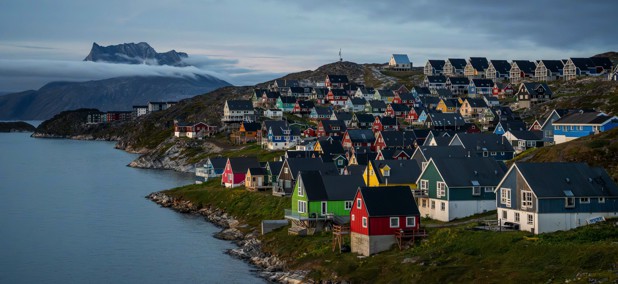

White House Signals Military Option in Push for Greenland Control, Drawing Danish and European Backlash
Washington/Torshavn — The Trump administration has reignited debate over U.S. control of Greenland, with White House officials stating that military action remains "always an option" to secure the strategically vital Arctic territory from Denmark, prompting sharp rebukes from European leaders and a rare note of caution from within the Republican Party.
The controversy escalated on January 6, 2026, when White House Press Secretary Karoline Leavitt described acquiring Greenland — an autonomous Danish territory — as an "important foreign policy goal," according to Defense One. This followed remarks from President Donald Trump, who indicated he was "exploring ways" for the United States to assume control of the world's largest island, explicitly noting that military force was on the table. "President Donald Trump is exploring ways for the United States to take control of Greenland, with military force 'always an option,' the White House said on Tuesday," France 24 reported, highlighting the potential strain on relations with NATO ally Denmark.
Newsmax echoed the White House stance, quoting officials as saying the "U.S. military is always an option" amid rejections from a series of European leaders. The comments cap a week of provocative rhetoric that began on January 4, when Katie Miller, wife of Trump adviser Stephen Miller, posted an image on social media depicting Greenland overlaid with a U.S. flag and the caption "SOON." Denmark expressed irritation over the post, which appeared to hint at territorial ambitions and fueled perceptions of U.S. expansionism in the Arctic.
The White House's muscular posture comes as President Trump, in his second term, revisits a signature idea from his first administration. In 2019, Trump publicly floated the idea of purchasing Greenland from Denmark, calling it a "large real estate deal" essential for national security due to its mineral resources, geostrategic location, and potential Arctic sea routes opened by climate change. Denmark's then-Prime Minister Mette Frederiksen dismissed the proposal as "absurd," leading Trump to cancel a planned state visit. The U.S. maintains a significant presence on the island through Pituffik Space Base (formerly Thule Air Base), established during the Cold War for missile warning and space surveillance, underscoring longstanding American interests.
European responses have been swift and unified. France 24 noted the comments as "raising tensions with NATO ally Denmark," while Newsmax reported a chorus of rejections from unspecified European leaders. Danish officials have not issued a formal statement on the latest developments but have historically defended Greenland's sovereignty, with the island's government emphasizing self-determination under the 2009 Self-Government Act. Greenland's population of around 56,000 is predominantly Inuit and relies heavily on Danish subsidies, complicating any independence push amid U.S. overtures.
Within the U.S., the rhetoric has exposed fissures. Senate Majority Leader John Thune (R-S.D.) pushed back forcefully, stating on January 6 that using the military to seize Greenland is "not under serious consideration." Thune dismissed remarks from a "top White House adviser" — likely referencing Leavitt or others close to Trump — as the administration advances a "muscular foreign policy agenda," per Newsmax. Thune's intervention highlights potential congressional resistance, given Senate confirmation requirements for major military actions and treaties.
Background on Greenland's Strategic Value
Greenland's allure for global powers has intensified with melting Arctic ice, revealing vast deposits of rare earth minerals critical for electronics and renewable energy technologies — resources China currently dominates. Its position between North America and Europe makes it pivotal for missile defense and emerging shipping lanes. The U.S. has invested heavily in the base, which tracks ballistic missiles and supports NASA's ice sheet monitoring. Russia and China have also ramped up Arctic activities, with Chinese research stations and Russian naval patrols, framing U.S. interest as a counter to adversaries.
Trump's revival of the issue aligns with his administration's emphasis on energy independence and great-power competition. However, legal experts note that forcible annexation would violate international law, including the UN Charter, and risk alienating NATO partners at a time of heightened transatlantic tensions over Ukraine aid and trade.
Outlook Amid Escalating Rhetoric
As of January 7, 2026, no concrete actions beyond statements have emerged, but the White House's language has set a confrontational tone. Diplomatic channels remain open, with Denmark likely to leverage NATO forums for reassurance. Thune's remarks suggest internal checks, potentially steering the debate toward negotiations or economic incentives rather than coercion.
The episode underscores broader geopolitical shifts in the Arctic, where climate change is reshaping alliances. Stakeholders will watch for Greenlandic Inuit leaders' response, as any U.S. bid hinges on local consent amid calls for greater autonomy from Copenhagen.
(Word count: 712)






