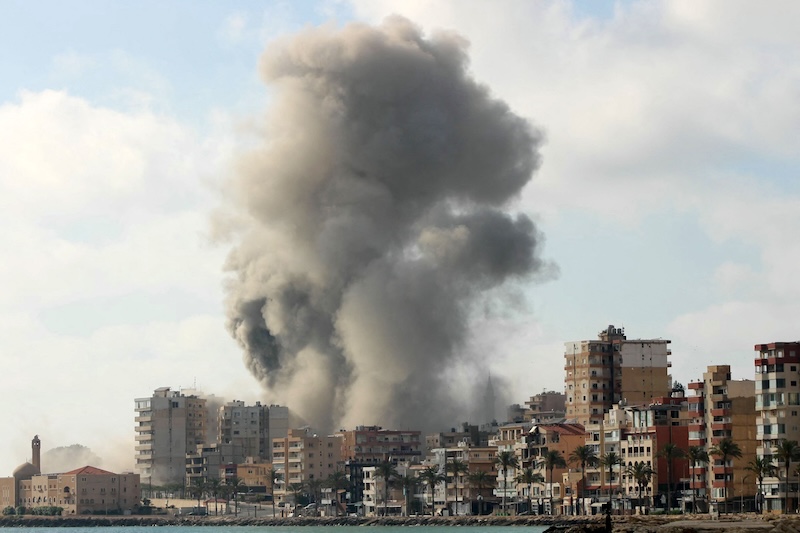
War in Iran Costs $25 Billion, Pentagon Official Reports
The United States’ war in Iran has cost $25 billion so far, according to a senior Pentagon official.[1] This figure, provided on Wednesday, represents the first official estimate of the military’s price tag for the conflict.[1] As the war in Iran continues, its financial toll is drawing attention amid broader economic disruptions, including the closure of the Strait of Hormuz, which is disrupting the global energy order and may redefine how the global economy functions.[2] Rising jet fuel prices due to the war are affecting European airlines' summer holiday plans and could lead to shortages if the conflict continues.[3] Asia is facing an oil shock that is altering its role as a driver of global growth,[4] while the UK is particularly exposed to economic woes and potential unrest as the war persists.[5]
Overview of War Costs
The financial burden of the United States’ war in Iran has reached a significant milestone, with a senior Pentagon official disclosing that the conflict has cost $25 billion to date.[1] This estimate, shared on Wednesday, marks the inaugural official figure from the Pentagon regarding the military expenditures tied to the ongoing operations.[1] The disclosure comes at a critical juncture, as the war's costs accumulate rapidly and highlight the scale of resources being committed to the effort.
In detailing the expenditure, the Pentagon official's statement underscores the direct fiscal impact on U.S. military budgeting.[1] The $25 billion figure encapsulates a range of costs, including operational deployments, logistics, and sustainment activities associated with the war in Iran.[1] Such revelations provide transparency into the economic dimensions of modern conflicts, where prolonged engagements can strain national treasuries. The timing of this announcement is noteworthy, occurring just six months before mid-term elections, during which Trump’s Republicans may face challenges in retaining their House majority.[1]
Democrats have seized on the escalating costs as a point of contention, potentially influencing voter sentiment in the lead-up to the elections.[1] The senior official's comments serve as a benchmark for future assessments, allowing policymakers and analysts to track incremental spending as the war progresses. This official estimate sets the stage for congressional debates over supplemental funding requests and long-term budgetary adjustments necessitated by the war in Iran.[1] As the conflict endures, these costs are likely to rise, prompting closer scrutiny of fiscal accountability within the Department of Defense.
The Pentagon's acknowledgment also reflects the broader logistical demands of conducting operations in the region, where supply chains and personnel rotations contribute substantially to the tally.[1] By providing this concrete number, the U.S. government has initiated a public accounting that could inform strategic decisions moving forward. The $25 billion spent thus far illustrates the high stakes involved, both militarily and economically, in the U.S. commitment to the war.[1]
Global Economic Impacts
The war in Iran is exerting profound effects on the world economy, primarily through the closure of the Strait of Hormuz, a pivotal development described as a rupture in the post-1970s energy order.[2] According to analysis from The New Arab, this closure carries consequences that may redefine how the global economy functions.[2] The Strait of Hormuz, through which a substantial portion of global oil transits, has been rendered impassable due to the conflict, triggering widespread disruptions in energy supplies and trade flows.[2]
This "long shock," as characterized in the reporting, signals a fundamental shift away from the energy stability that has underpinned economic growth since the 1970s oil crises.[2] The post-1970s era saw the establishment of diversified supply routes and pricing mechanisms to mitigate such vulnerabilities, but the current war has upended those arrangements.[2] Global markets are now grappling with uncertainty, as alternative pathways cannot fully compensate for the lost capacity through the strait, leading to volatility in commodity prices and supply chain interruptions.[2]
The implications extend beyond immediate energy shortages, potentially altering investment patterns, inflation trajectories, and growth forecasts worldwide.[2] Businesses reliant on stable fuel costs are reassessing operations, while governments contemplate emergency measures to secure reserves. The war's persistence amplifies these effects, turning a regional conflict into a catalyst for systemic economic reconfiguration.[2] As noted, the closure marks not just a temporary halt but a potential harbinger of enduring changes in how nations approach energy security and interdependence.[2]
{IMAGE_2}
Effects on Aviation and Fuel Prices
European airlines are confronting their most severe challenge since the Covid-19 pandemic, driven by the war in Iran and its upward pressure on jet fuel prices.[3] The US-Israel war on Iran has significantly disrupted travel through the Middle East, casting uncertainty over the summer holiday season.[3] Jet fuel prices have surged nearly 84 percent since the conflict began on February 28, buffeting carriers that depend on affordable and reliable supplies.[3]
Despite this spike, many airlines have managed to mitigate the immediate financial hit through hedging strategies, which have tamed costs in the short term.[3] Hedges—financial instruments that lock in fuel prices ahead of time—have provided a buffer, allowing operators to maintain schedules without drastic fare hikes.[3] However, this protection is not indefinite, and as hedges expire, the full brunt of elevated prices will become evident.[3]
The reporting from Dawn highlights a growing concern over potential shortages if the war does not conclude soon.[3] “There is a risk th[at shortages could materialize],” underscoring the vulnerability of aviation to prolonged disruptions in the region.[3] Summer holiday plans, which typically see peak demand for flights to popular destinations, are now under threat, with airlines weighing cancellations, route adjustments, or surcharges.[3] The Middle East's role as a transit hub amplifies the issue, as rerouting flights increases operational costs and reduces efficiency.[3]
Carriers are monitoring the situation closely, balancing profitability with service continuity amid the war's fallout.[3] The 84 percent rise in jet fuel costs since late February illustrates the intensity of the pressure, comparable to pandemic-era shocks but rooted in geopolitical conflict rather than health restrictions.[3] If unresolved, these dynamics could lead to broader industry contractions, affecting jobs, tourism, and related sectors.[3]
Oil Shock in Asia
Asia is experiencing an intensifying oil shock as the US-Israeli war on Iran drags on indefinitely, fundamentally challenging the region's economic trajectory.[4] Once hailed by the International Monetary Fund as the main driver of global growth, Asia now confronts 2026 as a major game-changer due to the hostilities.[4] Just two months of conflict in the Middle East have dramatically altered this outlook, thrusting the region into an oil shock nightmare that has only just begun.[4]
Reporting from Asia Times details how the prolonged war is exposing Asia's dependence on stable Middle Eastern supplies, with the indefinite continuation amplifying supply risks and price pressures.[4] The shift from being a growth engine to facing existential energy challenges marks a stark reversal, as higher costs filter through manufacturing, transportation, and consumer spending.[4] Tokyo, as a focal point in the analysis, exemplifies the broader Asian predicament, where import reliance heightens vulnerability.[4]
The war's extension beyond initial expectations has turned what might have been a temporary blip into a structural threat.[4] Asia's role in propelling global expansion is now in question, with the oil shock potentially curtailing investment and export momentum.[4] The two months of hostilities have already demonstrated the fragility, setting the stage for deeper repercussions if the conflict persists.[4] This nightmare scenario underscores the interconnectedness of regional economies with distant conflicts, forcing policymakers to reconsider diversification strategies.[4]
Consequences for the UK
The UK stands particularly badly exposed to the economic fallout from the war in Iran, with the likelihood of woes and unrest increasing as the conflict shows no sign of ending.[5] Al Jazeera's coverage emphasizes the nation's acute vulnerabilities, stemming from its energy import dependencies and exposure to global commodity swings.[5] As the war persists, these pressures are mounting, threatening stability across multiple fronts.[5]
Economic woes in the UK are being exacerbated by the disruptions, including elevated fuel costs and supply chain strains linked to the regional instability.[5] The absence of any clear resolution timeline heightens risks, potentially sparking inflationary spirals and reduced consumer confidence.[5] Unrest becomes a plausible outcome, as sustained hardships could fuel public discontent and social tensions.[5]
The UK's position is described as uniquely precarious, amplifying the war's ripple effects into domestic challenges.[5] Policymakers face dilemmas in balancing support for allies with safeguarding national interests amid the ongoing hostilities.[5] The persistent nature of the conflict ensures that these consequences deepen over time.[5]
Political Ramifications in the United States
The disclosure of the $25 billion cost for the war in Iran arrives against a charged domestic political backdrop, just six months before mid-term elections.[1] Trump’s Republicans are positioned for an uphill battle to maintain their House majority, with Democrats leveraging the expenditure as a rallying point.[1] This timing elevates the fiscal revelations, intertwining military commitments with electoral dynamics.[1]
The senior Pentagon official's statement provides ammunition for opposition critiques, framing the war's costs as emblematic of broader fiscal mismanagement.[1] As the first official estimate, it invites rigorous examination during campaign discourse, potentially swaying undecided voters.[1] Republicans must defend the strategic necessity while addressing concerns over sustainability.[1]
The convergence of war spending and election cycles underscores how international conflicts influence U.S. politics.[1] With the House majority in play, the $25 billion figure could catalyze debates on appropriations and oversight.[1]
What to watch next: Monitor Pentagon updates on escalating costs ahead of mid-term elections,[1] potential jet fuel shortages for European airlines if the war persists,[3] and signs of unrest in the UK as economic pressures build.[5]