
Venezuela Reports 100 Killed in Alleged US Military Strike, Claims Ouster of President Maduro
Caracas, Venezuela — Venezuelan officials have accused the United States of launching a deadly military operation over the weekend that killed at least 100 people and led to the ouster of President Nicolás Maduro, who sustained wounds in the attack. The incident, marked by multiple explosions and low-flying aircraft in the capital, has prompted a week of national mourning and heightened international tensions.
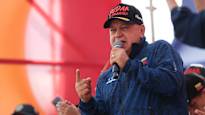
The events unfolded early on Saturday, January 3, 2026, when at least seven explosions rocked Caracas, with reports of low-flying aircraft observed over the city around 07:22 GMT. Venezuela's Interior Minister Diosdado Cabello confirmed the death toll at 100, describing the strike as a "US weekend attack" carried out "in cold blood." In statements reported by Finnish public broadcaster Yle and India's Times of India, Cabello indicated that the figure could rise as rescue and recovery efforts continue.
Cabello's remarks came amid claims that the operation directly resulted in Maduro's removal from power. Maduro, who has led Venezuela since 2013 following the death of Hugo Chávez, was reported wounded but alive, according to the Times of India. Venezuelan authorities have framed the strike as an act of aggression aimed at regime change, declaring a week of mourning to honor the victims.
In parallel developments, the United States has intensified its enforcement of long-standing sanctions on Venezuelan oil exports. US authorities seized two oil tankers linked to Venezuela, including one flying the Russian flag, as part of efforts to curb illicit shipments evading restrictions. These seizures underscore the economic pressure campaign that has defined US-Venezuela relations for years.
Details of the Caracas Explosions
Eyewitness accounts and official reports describe a chaotic scene in Caracas early on January 3. Low-flying aircraft were spotted overhead, followed by a series of at least seven explosions classified as critical in severity. The blasts targeted areas in the capital, though specific sites have not been detailed in available reports. Rescue operations have been ongoing, with Cabello warning of a potentially higher casualty count.
The Venezuelan government has pointed the finger squarely at the US, with Cabello's statements providing the most direct attribution. "At least a hundred people" were killed, he said, per Yle, in what officials portray as a premeditated assault. No independent verification of the death toll or the precise nature of the operation has been immediately available, and the US has not publicly commented on the allegations as of January 8.
Background on US-Venezuela Tensions
The alleged strike occurs against a backdrop of deep-seated animosity between Washington and Caracas. Maduro's government has faced US sanctions since 2017, primarily targeting its oil sector—the country's economic lifeline—over accusations of human rights abuses, electoral fraud, and corruption. The US ceased recognizing Maduro as legitimate president in 2019, backing opposition leader Juan Guaidó as interim president during a protracted political crisis.
Tensions escalated after Venezuela's disputed July 2024 presidential election, which Maduro claimed to have won amid widespread fraud allegations. The US and much of the international community rejected the results, imposing fresh sanctions. Russia, a key Maduro ally, has provided military and economic support, including oil shipments via flagged vessels—explaining the significance of the seized Russian tanker.
Venezuela's oil industry has been crippled by sanctions, hyperinflation, and mismanagement, leading to mass emigration and humanitarian crises. Over 7.7 million Venezuelans have fled since 2014, according to United Nations estimates. Any US military involvement, if confirmed, would mark a dramatic escalation from economic measures to direct action.
International Reactions and Outlook
As of January 8, reactions have been muted internationally. No major allies like Russia or China have issued formal statements on the strike, though the tanker seizure involving a Russian vessel could provoke Moscow's response. The US State Department has historically denied involvement in coup attempts but has not addressed these specific claims.
The ouster of Maduro—if substantiated—could reshape Venezuela's political landscape. An interim government or opposition-led transition remains unclear, with power vacuums historically leading to instability in the oil-rich nation. The week of mourning signals a period of national consolidation under remaining Chavista leadership, potentially including Cabello, a powerful figure in Maduro's United Socialist Party of Venezuela (PSUV).
Markets have reacted warily, with global oil prices ticking up slightly amid uncertainty over Venezuelan exports, which account for about 3% of world supply despite sanctions. Analysts will watch for US clarification, potential UN Security Council debates, and the fate of detained tanker crews.
This incident highlights the fragility of Venezuela's crisis, where economic warfare and political deadlock have long simmered. Further details on casualties, Maduro's status, and any US response are expected in the coming days.
(Word count: 682)






