

Venezuela Earthquake Death Toll Nears 4,500 as Spain Increases Aid
The Venezuela earthquake prompted Caritas Española to increase its funding to one million euros in support of the humanitarian emergency caused by the double earthquake that struck northern Venezuela on June 24, 2026, as the death toll approaches 4,500. [1]
Overview of the Double Earthquake
Two earthquakes of magnitude 7.2 and 7.5 shook several regions of Venezuela on June 24. [2] The events caused thousands of deaths and severe damage to hundreds of residential buildings. [2] The death toll from the disaster has risen to nearly 4,500 according to official figures, with almost 3,900 reported in one update and 6,462 in another. [2] The president in charge, Delcy Rodríguez, declared a national state of emergency. [2]
Humanitarian Response and International Aid
Cáritas Española has decided to increase to one million euros the funds allocated to respond to the humanitarian emergency caused by the double earthquake of June 24 in northern Venezuela. [1] It joins the team managing emergency care under the leadership of Cáritas Venezuela. [1] In the first weeks, the “Cáritas con Venezuela” campaign reached 5 million euros. [1] Rescue teams from countries around the world, including Spain, were sent. [2] The Spanish Minister of Foreign Affairs, European Union and Cooperation, José Manuel Albares, announced that a new repatriation plane would arrive in Spain with a total of 22 Spaniards along with other Venezuelan and European citizens. [2]
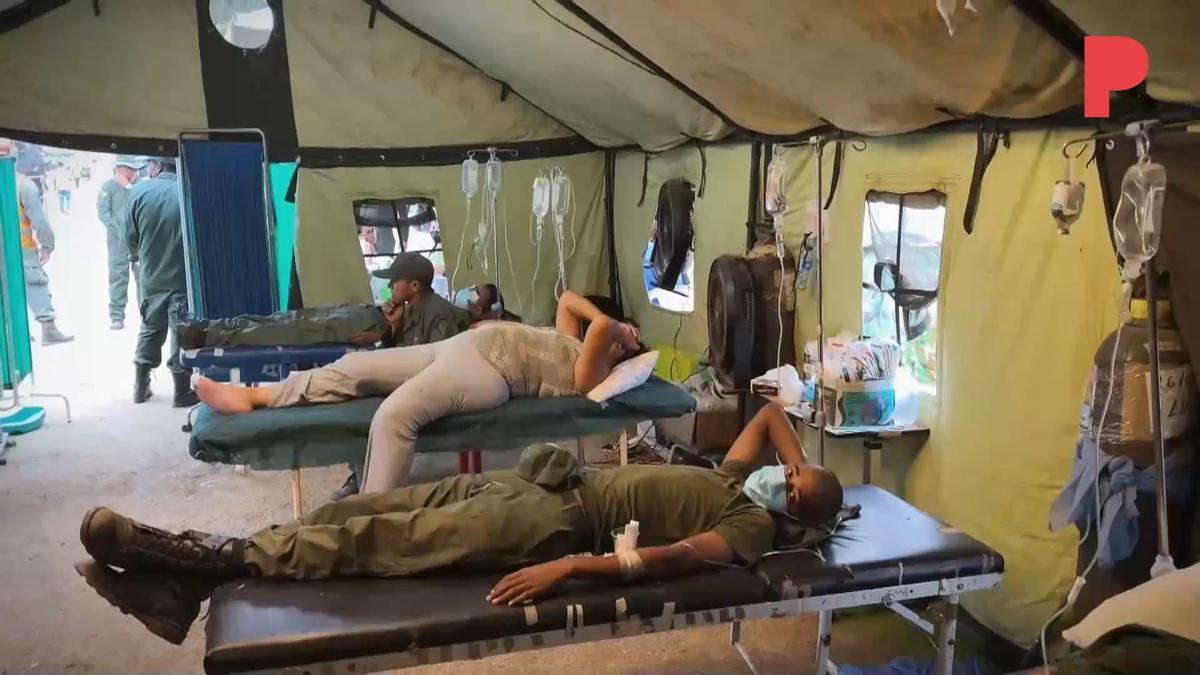
Rescue teams search rubble in northern Venezuela after the June 24 double earthquake. — Source: gdelt
Casualties and Ongoing Recovery Efforts
Venezuela faces its third week after the double earthquake of June 24, during which the first 200 homes are expected to be delivered as part of an ambitious plan to rehouse thousands of affected people while continuing debris removal and body identification. [2] The president in charge, Delcy Rodríguez, has supervised the recovery of vital infrastructure in northern Venezuela, the area most affected by the earthquakes recorded on June 24, which have claimed almost 3,900 dead. [2] This visit allowed evaluation of the work, concentrated around two fundamental axes: logistical evaluation and immediate attention on the ground. [2] She toured the municipality of Macuto, in the state of La Guaira, which was declared a disaster zone and militarized after the earthquakes. [2]
Aftershocks and Public Impact
A 3.9-magnitude tremor shook areas of northern Venezuela on July 10, without damage or casualties reported so far, but causing panic and building evacuations for safety. [2] The Venezuelan Foundation for Seismological Research indicated that the seismic movement was recorded at 10:53 local time at a depth of 5.5 kilometers, 10 kilometers northeast of Naiguatá, in the state of La Guaira, the most affected by the double earthquake of June 24. [2] Dozens of people descended from commercial buildings in Caracas after this new tremor. [2] Users on social networks reported evacuations in sectors such as La Candelaria, Los Ruices, Plaza Venezuela or Chacao in Caracas. [2] Rosmery Mujica, a young Venezuelan mother, explained that the accumulated tension from the country’s political and social situation means the earthquake has moved many things, like the straw that broke the camel’s back, leaving her and her two-year-old daughter unable to sleep due to nerves. [2]
Personal Stories and Related Incidents
In a funeral home in Caracas, Lenin Peña, Míster Universo Venezuela 2025, said goodbye on Sunday to his boyfriend, whose body he found after a seventeen-day search among the rubble of the building where they lived together in the devastated coastal region of La Guaira, which collapsed due to the double earthquake of June 24. [2] During the two weeks and three days that the search lasted, Peña shared real-time details on his Instagram account, where he also requested help and equipment such as an air hammer, a tow compressor and an electric plant to facilitate the mission. [2] The association Dignidad y Justicia has filed a lawsuit, which has been admitted for processing, claiming the detention of ETA member Luis María Olalde, 'Txistu', after his whereabouts became known when he was rescued from a building in Caracas after the earthquake of June 25. [2] The Committee for the Freedom of Political Prisoners of Venezuela denounced that prisoners from the Rodeo I prison, near Caracas, were beaten, wounded with pellets and asphyxiated with tear gas on Sunday to force them back into their cells after spending days in the courtyard following the double earthquake of June 24. [2]
What to watch next: Venezuelan authorities continue delivering the first 200 homes as part of the rehousing plan in the third week after the June 24 double earthquake while search and identification operations persist in La Guaira.



