United Kingdom Severe Weather Linked to More Than 2,700 Deaths in May and June Heatwaves
United Kingdom severe weather has been linked to more than 2,700 deaths in England and Wales during two record-breaking heatwaves in May and June, with new research attributing a significant share of those fatalities to human-induced climate change that intensified the events.
Heatwave Death Toll Estimate
More than 2,700 deaths across England and Wales have been linked to the unprecedented heatwaves in May and June according to new research. [1] There were 550 heat-related deaths between May 21 and 29, and nearly 2,200 people died between June 18 and 28, scientists estimated in the study published on Monday. [1] Researchers from Imperial College London, the Met Office and the London School of Hygiene and Tropical Medicine used weather data, climate models and studies on excess deaths during the extreme weather to arrive at their estimate. [1] The UK Health Security Agency said it would publish its official estimate of heat-related deaths in the coming weeks, based on death records from recent heatwaves. [1] At least 2,700 people could have died in England and Wales as a result of heatwaves that struck in May and June, according to a study released Monday. [2] Experts from Imperial College London, the Met Office and the London School of Hygiene and Tropical Medicine used weather data, climate models and studies on excess mortality during heatwaves to arrive at their estimate. [2] More than 2,700 people may have died from heat-related causes during the UK's exceptionally hot weather in May and June, experts' estimates suggest. [3] The figure, from a team at Imperial College London, the Met Office and the London School of Hygiene and Tropical Medicine, is based on what's known about the dangers of extreme heat. [3] The study estimates that around 550 people died as a result of the heat between May 21 and 29, and nearly 2,200 died between June 18 and 28 in England and Wales. [2] Of those, it's estimated that 42% died as a result of the extra heat caused by human-induced warming. [2] The study's models, while they are not a measure of observed mortality, help illustrate the scale of risk associated with extreme heat and the growing threat climate change poses to our wellbeing, said Lea Berrang Ford, head of UKHSA's Centre for Climate and Health Security. [2]
Record Temperatures and Heat Dome
The UK and much of Europe have already experienced two record-breaking heatwaves this year, with temperatures in England reaching 35.1C in May and 37.7C in June. [1] They were extreme heatwaves for the UK, and for all parts of Western Europe, and they’re particularly exceptional for the timing and how early in the year they occurred, said Mark McCarthy, the science manager at the Met’s climate attribution team. [1] The UK and most of Europe experienced two unprecedented heatwaves in May and June, with monthly records of 35.1°C and 37.7°C set in England, respectively. [2] They were extreme heatwaves for the UK, and for all parts of western Europe, and they're particularly exceptional for the timing and how early in the year they occurred, Mark McCarthy, science manager of the Met's climate attribution team, was quoted as saying in the study. [2] Most deaths will have occurred in the June heatwave, they say, the warmest June on record in England, when temperatures hit 37.7C at Lingwood, Norfolk, smashing the previous high of 35.6C set in 1957. [3] May temperatures, meanwhile, hit a new UK high of 35.1C at Kew Gardens on May 26, a significant increase on the previous high mark of 32.8C, which had been set back in 1922 and equalled in 1944. [3] Both heatwaves were caused by a heat dome, a stalled area of high pressure that trapped hot air over the region, say experts. [3] A rare red heat alert was issued for parts of England and Wales at the time, warning even healthy people of the significant risk to life. [3]

Over 2,700 heat-related deaths occurred in England and Wales during May and June heatwaves. — Source: thenewarab
Role of Climate Change
Scientists emphasised the role of climate change in making heatwaves more intense and frequent. [1] They estimated that maximum daytime temperatures were up to 4C higher than they would have been without global warming. [1] The authors emphasise the role of climate change, which is making heatwaves more intense and frequent. [2] They estimate that maximum daytime temperatures were 3°C to 4°C higher than they would have been without global warming. [2] The heat dome was made worse by human-induced climate change, the researchers say. [3] This has warmed the planet by around 1.4C since pre-industrial times and scientists believe it added between 3 and 4C to the maximum temperatures recorded in May and June. [3] Hot tropical nights added to the sweltering conditions, offering little respite. [3]
Vulnerability and Health Impacts
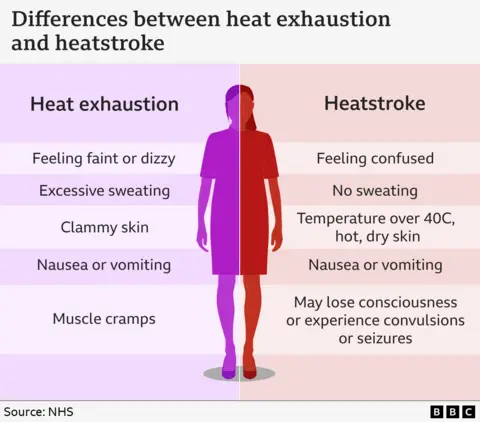
Lea Berrang Ford at UKHSA’s Centre for Climate and Health Security says the study released on Monday would help illustrate the scale of risk associated with extreme heat and the growing threat climate change poses to our wellbeing. [1] Heat puts immense physical strain on the body, made worse if you are dehydrated, with the heart pumping harder and faster to cool you off. [3] Babies and older people are among those most at risk of harm, as well as those with existing health conditions. [3] It can lead to more heart attacks, strokes and other potentially fatal emergencies. [3] Intense heat can affect anyone, including fit and healthy people, and is dubbed a silent killer because early symptoms are easily overlooked. [3] And when the hot air is very wet or humid, like it was in June, it's more difficult for the body to cool down through sweating. [3] Many UK homes are not built to cope, leaving people vulnerable to prolonged, high temperatures. [3]
Graph shows over 2700 heat-related deaths in England and Wales during May and June heatwaves. — Source: myjoyonline
Broader European Context
The research on heat-related deaths in the UK comes as data showed that more than 10,000 excess deaths were recorded across Europe during the heatwaves across the west of the continent in late June. [1] EuroMOMO, a network backed by the European Centre for Disease Prevention and Control and the World Health Organization, said most of those deaths were among people aged 65 and above, with 9,000 excess deaths reported in that age range. [1] Scientists pooled national mortality statistics from 27 European countries in June and concluded that, without other notable factors such as COVID-19 outbreaks, the heatwave is most likely to have contributed to the spike of 10,650 excess deaths between June 22 and 28. [1]
Preparedness and Future Risks
The Climate Change Committee, the body responsible for advising the British government on climate change, warned last year that the UK was not ready to deal with the consequences of climate change. [1] In a report published in May, it estimated that 92 percent of British homes could be too hot by 2050. [1] It said the government should set maximum temperature limits in the workplace, as well as invest in air conditioning for public buildings such as hospitals and schools in preparation for extreme weather. [1] The Climate Change Committee, the body responsible for advising the government on climate change, warned last year that the UK was not ready to deal with the consequences of climate change. [2] In a report published in May, it was estimated that 92 per cent of British homes could be too hot by 2050, and it was recommended that the government set maximum temperature limits in workplaces and invest in air conditioning for public buildings such as hospitals and schools. [2] Heatwaves are expected to become more frequent, more intense and longer-lasting the more greenhouse gases are emitted. [3] Some of the researchers believe, on current trajectories, heat-related deaths in parts of northern Europe could begin to rival cold-related ones within a couple of decades, though they stress that outcome depends heavily on how fast the world cuts climate emissions and how well countries adapt. [3]
What to watch next: Heatwaves could become more frequent on current trajectories, with experts noting that heat-related deaths in parts of northern Europe could begin to rival cold-related ones within a couple of decades depending on emissions cuts and adaptation measures.