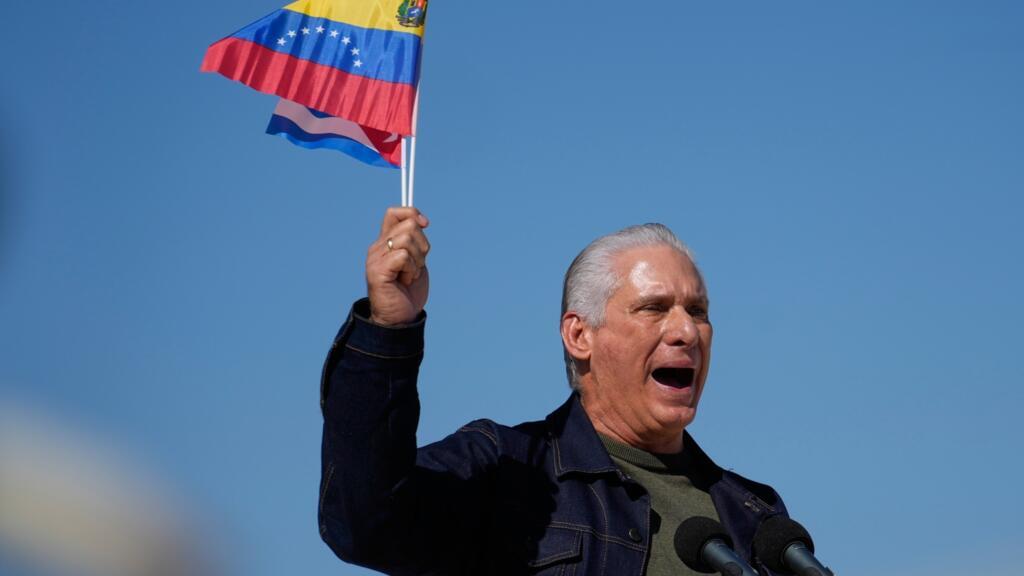
US Warns Cuba Over Venezuela Crisis as Havana Denounces 'State Terrorism'

Latest from X
US Warns Cuba Over Venezuela Crisis as Havana Denounces 'State Terrorism'
In a dramatic escalation of tensions in the Western Hemisphere, the United States has issued stark warnings to Cuba, linking Havana’s government to the collapse of Venezuela under Nicolás Maduro. Following the US capture of Maduro on January 3, 2026, President Donald Trump and Secretary of State Marco Rubio signaled that Cuba could face increased pressure from the administration. In response, Cuban President Miguel Díaz-Canel condemned the US actions as "state terrorism," highlighting the deepening geopolitical rift in the region.
The US operation to apprehend Maduro, described by officials as a decisive move against authoritarian regimes in Latin America, has sent shockwaves through the region. According to reports, Trump and Rubio have explicitly tied Cuba’s fate to that of Venezuela, suggesting that Havana’s long-standing support for Maduro’s regime could have consequences. Rubio, a longtime advocate for regime change in both Caracas and Havana, has reportedly implied that Cuba could be the administration’s next target, raising fears of further US intervention in the Caribbean.
Cuban President Díaz-Canel reacted swiftly on January 4, denouncing the US actions in Venezuela as an act of aggression. He warned that the loss of Venezuelan oil, a critical lifeline for Cuba’s already fragile economy, would exacerbate the island nation’s challenges. Cuba has relied heavily on subsidized oil shipments from Venezuela for decades, and the abrupt end to this arrangement could deepen energy shortages and economic hardship. Díaz-Canel’s characterization of the US operation as "state terrorism" underscores Havana’s defiance in the face of mounting pressure from Washington.
Regional and International Reactions
The US capture of Maduro has elicited a mixed response from world leaders. While some allies of the Trump administration have praised the move as a step toward restoring democracy in Venezuela, many in the Western Hemisphere have expressed concern over Washington’s unilateral actions. Critics argue that such interventions risk destabilizing the region further, with potential ripple effects on neighboring countries like Cuba.
Posts on X from verified accounts, including news outlets, reflect the heightened tensions surrounding Cuba’s role in the crisis. Several posts highlight Rubio’s statements tying Havana to Caracas, with warnings from the administration that Cuba should be “concerned” following Maduro’s apprehension. These online discussions underscore the perception that the Trump administration is prepared to expand its focus beyond Venezuela, potentially targeting Cuba’s communist regime next.
Background: Cuba-Venezuela Alliance and US Policy
The relationship between Cuba and Venezuela has been a cornerstone of anti-US sentiment in Latin America for over two decades. Since the late 1990s, under the leadership of Hugo Chávez and later Nicolás Maduro, Venezuela has provided Cuba with economic support, primarily through oil shipments, in exchange for political and security assistance from Havana. Cuban intelligence and military advisors have long been embedded in Venezuela, a fact often cited by US officials as evidence of Havana’s complicity in propping up authoritarian rule.
Under the Trump administration, US policy toward both nations has hardened. Marco Rubio, a Cuban-American with a personal stake in opposing Havana’s government, has been a vocal proponent of aggressive measures to dismantle the Cuba-Venezuela axis. His appointment as Secretary of State has amplified these efforts, with the recent operation in Venezuela seen as a precursor to broader regional actions. Rubio has previously stated that toppling Maduro could weaken Cuba’s regime by cutting off its economic lifeline, a strategy that appears to be gaining traction within the administration.
Economic Implications for Cuba
The potential loss of Venezuelan oil poses an immediate threat to Cuba’s economy, which has struggled under the weight of US sanctions, the COVID-19 pandemic, and internal mismanagement. Energy shortages have already led to widespread blackouts and fuel rationing on the island, and a complete cutoff of Venezuelan support could push the country into a deeper crisis. Analysts warn that such conditions may fuel social unrest, a concern for the Cuban government as it navigates both domestic challenges and external pressures.
Outlook: A Region on Edge
As the fallout from Maduro’s capture continues to unfold, the US warnings to Cuba signal a new chapter in Washington’s approach to Latin America. While the Trump administration frames its actions as a defense of democracy, critics caution that further interventions could destabilize an already volatile region. For Cuba, the stakes are high—both economically and politically—as it braces for potential repercussions from its ally’s collapse.
The coming weeks will likely reveal whether the US intends to act on its warnings to Havana or if diplomatic channels can mitigate the escalating tensions. For now, the Caribbean nation remains on edge, caught between defiance and the looming threat of intensified US pressure.
Track this story live
Live World Map
Monitor global events in real time with a live activity map and hotspot summaries.
Markets
Connect live events to Catalyst market signals across crypto, commodities, indices, and forex.
Geopolitical Risk
Live geopolitical risk index tracking conflict zones, sanctions, and global threat levels.
Original Sources
- •
- •
Editorial process: This article was synthesized from the original sources cited above using The World Now's AI editorial system, with byline accountability from our editorial team. We grade every story for source grounding, factual coherence, and on-topic match before publication. Read more about our editorial standards and contributors. Spot something inaccurate? Let us know.
Last updated: March 7, 2026






