
US Signals Geopolitical Shifts: Withdraws from India-Led Solar Alliance, Engages NATO on Arctic Security
Washington, DC – January 10, 2026 – The United States, under President Donald Trump's administration, has withdrawn from the India-led International Solar Alliance (ISA), marking a notable pivot in global climate cooperation, while simultaneously holding discussions with NATO allies on bolstering security in the Arctic region amid rising geopolitical tensions.
The withdrawal from the ISA, announced on January 8, represents a medium-severity shift in U.S. international climate policy. The decision underscores the Trump administration's emphasis on prioritizing domestic energy interests over multilateral climate initiatives. This move comes as the U.S. engages in strategic dialogues with NATO on Arctic security, highlighting a broader recalibration of American foreign policy toward competition with major powers like Russia and China.
Withdrawal from International Solar Alliance
The International Solar Alliance, headquartered in India, was established in 2015 by India and France to promote solar energy development, particularly among solar-rich nations near the equator. The pact now counts over 120 member countries and observer states, focusing on mobilizing over $1 trillion in investments for solar projects by 2030 to combat climate change and enhance energy security.
The U.S. had expressed interest in joining during the Biden administration, signing a statement of intent in 2021, though it maintained observer status rather than full membership. Trump's decision to exit entirely aligns with his previous administration's skepticism toward international climate agreements, including the 2017 withdrawal from the Paris Agreement. White House officials have not issued detailed public statements on the rationale, but the move is seen as consistent with Trump's "America First" doctrine, favoring bilateral deals and domestic fossil fuel production over global pacts perceived as constraining U.S. sovereignty.
Analysts note this could strain relations with India, a key Quad partner alongside the U.S., Japan, and Australia, in countering Chinese influence in the Indo-Pacific. India's External Affairs Ministry acknowledged the U.S. action but emphasized the ISA's continued momentum, stating it remains open to future cooperation. Environmental groups, such as the Sierra Club, criticized the withdrawal as a setback for global renewables, potentially slowing deployment of solar technologies critical for net-zero goals.
This development occurs against the backdrop of stalled global climate talks. The COP30 conference, slated for later in 2026 in Brazil, may see reduced U.S. engagement, echoing Trump's first-term stance. Economically, the U.S. solar industry—employing over 250,000 workers and installing record capacity in 2025—relies more on domestic incentives like the Inflation Reduction Act than ISA frameworks.
NATO Discussions on Arctic Security
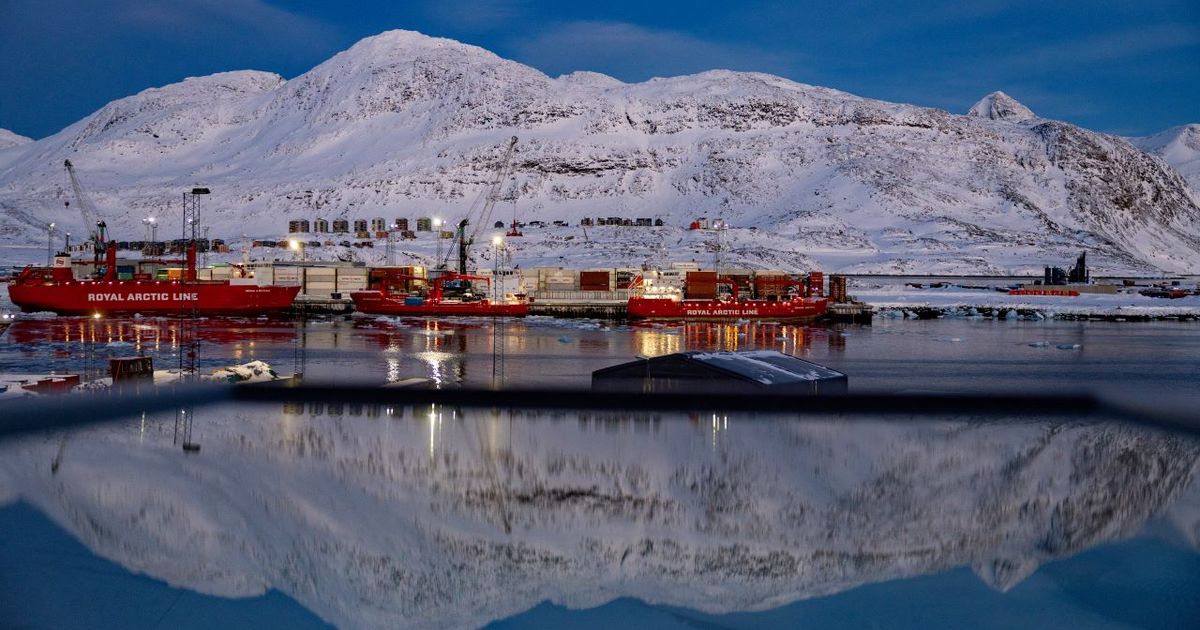
In parallel, U.S. officials convened with NATO counterparts to discuss the strategic importance of Arctic security, as reported on January 10. The talks, detailed in coverage from Diario Las Americas, emphasize the region's growing significance due to climate change-induced ice melt, which is opening new shipping routes, unlocking vast mineral resources, and heightening military competition.
The Arctic, encompassing territories claimed by eight nations including the U.S. (via Alaska), Russia, Canada, and Nordic states, has seen intensified activity. Russia has militarized its Arctic presence with new bases and hypersonic missile deployments, while China has branded itself a "near-Arctic state" and invested heavily in polar infrastructure. NATO's 2022 Strategic Concept identified the Arctic as a vulnerability, prompting enhanced cooperation.
U.S. Defense Secretary Lloyd Austin, in recent briefings, reiterated commitments to Arctic domain awareness through initiatives like the enhanced Air Defense Identification Zone and joint exercises such as Arctic Edge. The discussions with NATO allies focus on collective defense under Article 5, interoperability of forces, and countering hybrid threats in the High North. No specific outcomes were disclosed, but the engagement signals U.S. leadership in shoring up the alliance's northern flank.
Background and Broader Context
These events reflect evolving U.S. geopolitics in a multipolar world. The solar alliance exit prioritizes energy independence amid high global oil prices and domestic production records under Trump, while Arctic talks address immediate security challenges. Historically, the U.S. has balanced climate diplomacy with hard-power projections; the Obama era advanced Paris and ISA engagement, Trump I disengaged from climate pacts but bolstered NATO, and Biden realigned toward alliances.
Russia's 2022 invasion of Ukraine amplified NATO's Arctic focus, with Finland and Sweden's 2023-2024 accessions strengthening the alliance's northern presence. Meanwhile, U.S.-India ties remain robust via defense sales exceeding $20 billion and joint exercises, mitigating ISA friction.
Outlook
The dual developments position the U.S. to navigate climate and security arenas selectively. Observers anticipate further clarifications on ISA implications during upcoming G7 and Quad summits. On the Arctic front, NATO's June 2026 summit in The Hague may yield concrete commitments, including new rotational deployments.
As global tensions simmer—from Indo-Pacific rivalries to polar competition—these U.S. actions underscore a pragmatic approach to alliances and agreements, reshaping international dynamics in 2026 and beyond.
(Word count: 712)






