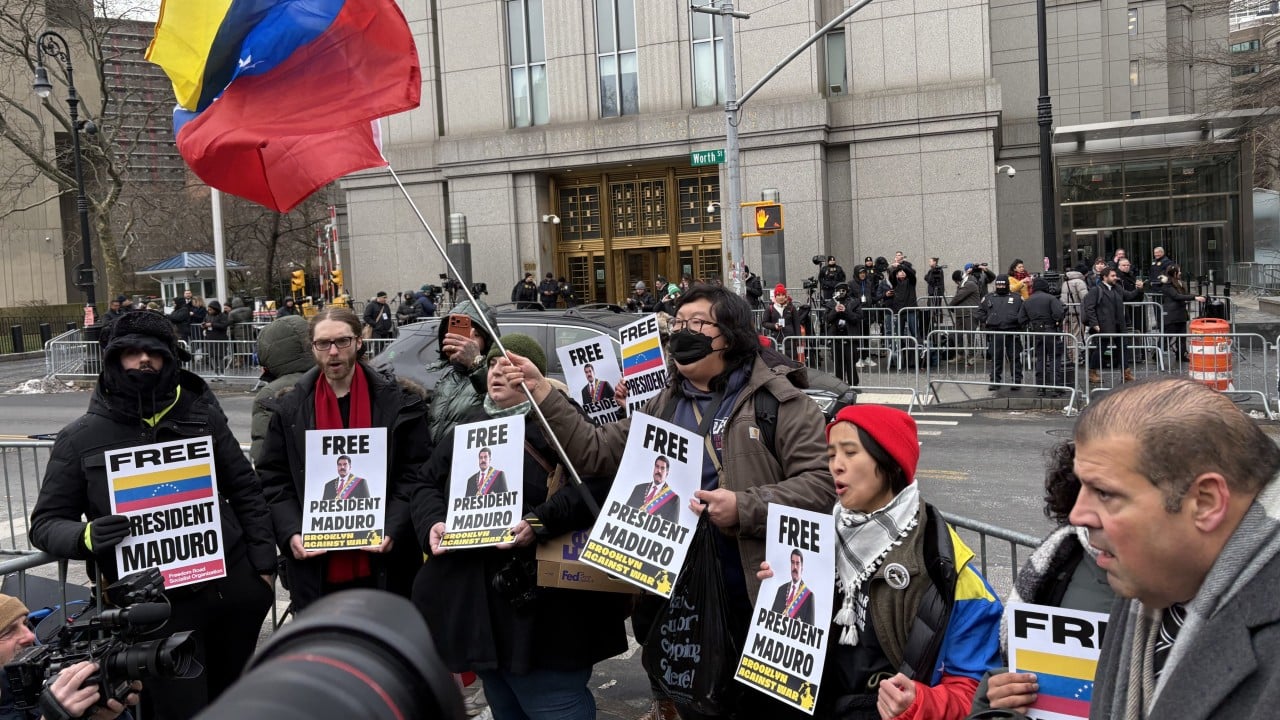

U.S. Military Captures Venezuelan President Maduro, Igniting Global Condemnation and Regional Reassessment
Caracas, Venezuela – In a dramatic escalation of U.S. foreign policy, American forces captured Venezuelan President Nicolás Maduro on Saturday, January 3, 2026, in an operation that has plunged Latin America into uncertainty and drawn sharp rebukes at the United Nations.
The raid, initiated around 10:06 a.m. GMT, resulted in Maduro's ouster with few injuries reported and no U.S. deaths, according to statements from President Donald Trump. By 1:20 p.m. GMT the same day, U.S. officials confirmed the Venezuelan leader's detention, framing the action as a pivotal step toward regime change in Caracas. The operation has installed a U.S.-managed "transition" government in Venezuela, marking the most direct U.S. military intervention in Latin America in decades.
President Trump hailed the mission as a success, emphasizing its precision and minimal casualties during a White House briefing. "We took decisive action to end the Maduro tyranny," Trump stated, aligning with his administration's long-stated goal of countering what it describes as a socialist dictatorship propped up by foreign adversaries.
The swift U.S. incursion has reverberated across the Western Hemisphere and beyond. Analysts cited in South China Morning Post reporting note that the events are prompting governments in Latin America to reassess the reliability of partnerships with China and Russia, key backers of Maduro's regime. Beijing and Moscow have provided Venezuela with billions in loans, oil infrastructure investments, and military support amid U.S. sanctions imposed since 2017 over human rights abuses, electoral fraud, and economic mismanagement.
"Venezuela's fall could signal to the region how far China and Russia can protect their partners when Washington decides to act," one analyst told the South China Morning Post. The operation underscores a more assertive U.S. posture under Trump's second term, which began in January 2025, amid renewed pledges to confront perceived threats from adversarial powers in the U.S. backyard.
International Backlash at the UN
The fallout intensified on Monday, January 5, when the U.N. Security Council convened an emergency session in New York. U.S. allies and adversaries alike condemned the intervention, with the United Nations' top official warning that the action may have violated international law.
According to Newsmax coverage, representatives from countries including Russia, China, and several Latin American nations blasted the U.S. move as an infringement on sovereignty. U.S. Ambassador to the UN Linda Thomas-Greenfield defended the operation, arguing it was justified under the principle of protecting democratic aspirations and halting regional destabilization. "The Maduro regime has long oppressed its people and invited foreign interference," she reportedly stated during the meeting.
The session highlighted deepening divisions. While some U.S. partners expressed private reservations, public criticism came from a broad spectrum, including Brazil and Mexico, which have navigated delicate balances between Washington and Caracas.
Historical Context of Venezuela's Crisis
Venezuela's turmoil traces back to 2013, when Maduro succeeded Hugo Chávez amid falling oil prices that crippled the country's economy. Hyperinflation peaked at over 1 million percent in 2018, prompting mass emigration—over 7 million Venezuelans have fled since—and U.S. sanctions targeting Maduro's inner circle. The 2019 presidential crisis, in which opposition leader Juan Guaidó was recognized by the U.S. and dozens of nations as interim president, set the stage for ongoing tensions, though Guaidó's influence waned.
Maduro retained power through contested elections in 2024, bolstered by alliances with Russia, China, Iran, and Cuba. U.S. policy under Trump has intensified, with renewed sanctions and diplomatic isolation efforts. Saturday's events represent a sharp departure from previous measures, evoking memories of U.S. interventions like the 1989 invasion of Panama.
Regional and Global Implications
Latin American leaders now face a strategic pivot. Countries like Nicaragua and Bolivia, aligned with Maduro, may recalibrate ties with Washington, while others weigh economic opportunities in a post-Maduro Venezuela rich in oil reserves—the world's largest proven deposits.
Analysts anticipate Trump's "next moves" could include bolstering transitional authorities and pressuring holdouts. The U.S. has signaled intentions to lift sanctions conditionally, fostering reconstruction under opposition figures.
At the UN, no resolution condemning the U.S. advanced, due to veto power dynamics, but the rhetoric underscores fraying multilateral consensus. As Venezuela transitions under U.S. oversight, questions linger over stability, potential insurgencies from Maduro loyalists, and the broader contest for influence in the Americas.
The operation's success metrics—Maduro's capture without major U.S. losses—bolster Trump's assertive doctrine, but the international uproar risks isolating Washington diplomatically. Regional observers await clarity on the transition timeline and elections, as Caracas grapples with its new reality.
(Word count: 682)






