
Strike Iran: February 2026 airstrikes trigger regional escalation of risks
The February 2026 airstrikes on Iran have triggered regional escalation and failed to force Iran to make nuclear concessions.[1] Two months of U.S. military strikes and a naval blockade on Iran have not succeeded in compelling Iran to agree to nuclear concessions.[1] The U.S. is reviewing Iran's latest ceasefire proposal amid ongoing Israeli strikes on southern Lebanon.[2] The airstrikes have heightened exposure to gender-based violence across the Asia-Pacific region, straining protection systems.[3] Iran has revised the death toll from a school bombing in Minab to 155, including students, teachers, and others killed in the attack on February 28.[5]
Overview of the Strikes
The February 2026 airstrikes on Iran marked a significant escalation in regional tensions, initiating a series of military actions that have reverberated across multiple geographies.[3] These strikes, as detailed in reports from early 2026, represented the opening salvo in what has been described as a broader conflict, with immediate and cascading effects on stability in the Middle East and beyond.[1][3] The context of these airstrikes stems from ongoing pressures applied by the United States under President Donald Trump, aimed at addressing Iran's nuclear program, though the precise triggers for the February operations are tied to the strategic calculations outlined in coverage of U.S. policy.[1]
From the outset, the strikes were part of a "maximum pressure" campaign, involving targeted military operations that sought to influence Iran's behavior on nuclear issues.[1] Reports indicate that these actions began in late February, coinciding with the first day of what Iranian media has termed "the war," highlighting the rapid intensification of hostilities.[5] The Asia-Pacific region's response, as monitored by humanitarian organizations, underscores how the strike Iran initiated a chain reaction, exacerbating vulnerabilities in countries far removed from the primary theater.[3] This overview reveals not just the military dimensions but also the interconnected risks that have strained regional protection frameworks.[3]
Detailed assessments from the Gender Based Violence Area of Responsibility and the United Nations Population Fund emphasize the strikes' role in triggering a "rapid escalation of risk" across Afghanistan, Bangladesh, Iran, Myanmar, Pakistan, the Philippines, and Sri Lanka.[3] The fragile state of protection systems prior to the strikes was already challenged by multiple acute humanitarian crises, and the February events amplified these pressures, leading to heightened exposure to gender-based violence (GBV).[3][4] In Iran itself, the strikes set off a sequence of events that included devastating incidents like the Minab school bombing, framing the overview of military engagements within a broader humanitarian lens.[5]
The strategic positioning of these airstrikes aligns with U.S. efforts to squeeze Iran economically and militarily, yet the outcomes have diverged from expectations.[1] Coverage from Fox News frames this as part of a sustained campaign without a breakthrough, while ReliefWeb updates provide a regional humanitarian perspective, illustrating how the strike Iran has reshaped risk profiles.[1][3] This dual lens—military and protective—defines the core context of the February 2026 operations, where initial strikes expanded into prolonged engagements.[1]
U.S. Actions and Outcomes
{IMAGE_2}
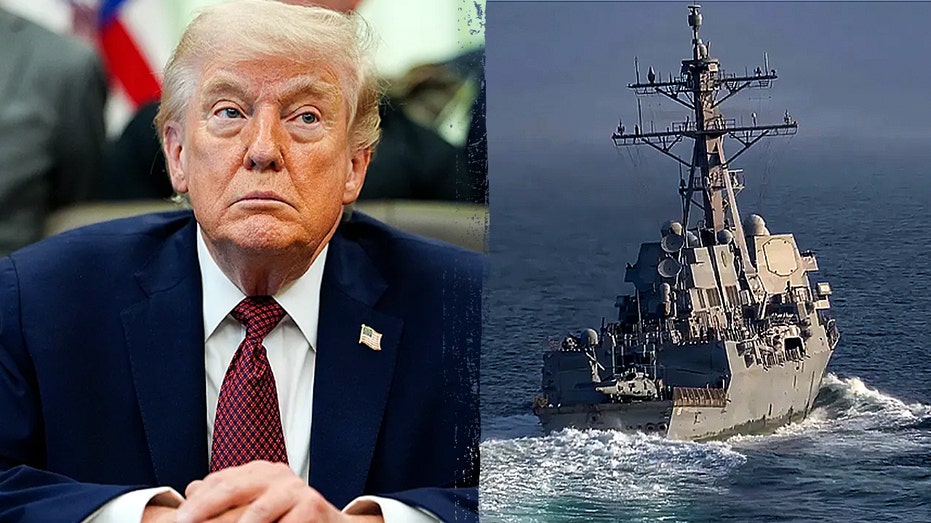
U.S. military strikes and a naval blockade on Iran, sustained over two months, have been central to President Donald Trump's "maximum pressure" strategy aimed at securing nuclear concessions from Tehran.[1] Launched in February 2026, these actions encompassed repeated airstrikes and maritime restrictions designed to compel Iran to alter its nuclear posture.[1] However, despite the intensity of this campaign, it has not forced Iran to yield on the nuclear demands articulated by the Trump administration.[1]
The naval blockade complemented the airstrikes by limiting Iran's access to sea routes, amplifying economic pressures alongside military ones.[1] Reports detail how this dual approach—strikes from the air and containment from the sea—failed to achieve the intended breakthrough, leaving U.S. objectives unmet after two full months of operations.[1] Trump's policy, characterized as squeezing Iran with maximum pressure, relied on these tools to push for concessions, yet Iranian resolve appears intact based on the absence of reported agreements.[1]
Outcomes of these U.S. actions highlight a strategic shortfall: the prolonged engagement without nuclear progress underscores the limitations of military coercion in this context.[1] The blockade, in particular, has been a key element, restricting trade and movement, but it has not translated into the diplomatic leverage sought.[1] This failure is contextualized within broader regional dynamics, where U.S. efforts intersect with other conflicts, yet the core metric—nuclear concessions—remains unfulfilled.[1]
Analyses of the campaign's trajectory indicate that while tactical strikes may have disrupted Iranian capabilities, the overarching goal of policy change has eluded U.S. planners.[1] The two-month timeline provides a clear benchmark for evaluating efficacy, with no evidence of Iran capitulating on nuclear issues.[1] This persistent outcome raises questions about the sustainability of such pressure tactics, though reports stop short of predicting shifts, focusing instead on the current impasse.[1]
Regional Escalation and Implications
The February 2026 airstrikes on Iran have triggered a rapid escalation of risk across the Asia-Pacific region, heightening exposure to gender-based violence (GBV) while further straining already fragile protection systems and service delivery.[3][4] This escalation has affected multiple countries, including Afghanistan, Bangladesh, Iran, Myanmar, Pakistan, the Philippines, and Sri Lanka, where pre-existing humanitarian challenges were compounded by the conflict's ripple effects.[3][4]
Humanitarian updates from the Gender Based Violence Area of Responsibility and the United Nations Population Fund describe a region facing "multiple acute" crises even before the strikes, with the Iran events acting as a catalyst for worsened conditions.[3][4] Protection systems, already under duress, have been pushed to their limits, impacting service delivery for vulnerable populations.[3] The implications extend to increased GBV risks, as displacement and instability from the Middle East escalation bleed into Asia-Pacific dynamics.[3][4]
Amid this, Israeli strikes on southern Lebanon continue, intertwining the Iran-focused actions with parallel fronts.[2] These ongoing attacks coincide with U.S. deliberations on Iranian proposals, illustrating how the strike Iran has fueled multi-front tensions.[2] The broader regional map now includes heightened hostilities in Lebanon, complicating containment efforts.[2]
The strain on protection systems is particularly acute, as the airstrikes' fallout disrupts aid coordination and response mechanisms.[3] Countries like Afghanistan and Pakistan, proximate to the conflict zone, face amplified pressures, while even distant nations like the Philippines and Sri Lanka report indirect impacts on GBV prevention.[4] This interconnected escalation demands a reevaluation of regional resilience, with service delivery gaps widening under the weight of new risks.[3]
Implications for stability are profound, as the strikes have not remained confined to Iran but have propagated vulnerabilities across a vast area.[3][4] The humanitarian lens reveals how military actions in one locale can destabilize protections elsewhere, underscoring the need for coordinated responses.[3]
Casualties and Human Impact
{IMAGE_3}
Iran has revised the death toll from a school bombing in Minab to 155, encompassing students, teachers, and others killed in the attack on February 28.[5] This incident, occurring on the first day of what Iranian media describes as the war, targeted a primary school and resulted in significant loss of life.[5]
Breakdown of the casualties includes 73 boys and 47 girls among the students killed, alongside 26 teachers, seven parents, a school bus driver, and a pharmacist.[5] Press TV and other Iranian media outlets reported this updated figure, which is lower than earlier estimates exceeding 175 fatalities.[5] The strike's precision—or lack thereof—in hitting a school underscores the human cost of the early phases of the conflict.[5]
The Minab bombing exemplifies the direct human impact of the February airstrikes, with civilian infrastructure bearing the brunt.[5] Families, educators, and children were central to the toll, highlighting vulnerabilities in populated areas during initial hostilities.[5] Iranian revisions to the death toll reflect ongoing assessments amid the chaos of war's onset.[5]
This event's scale—155 confirmed deaths—serves as a stark marker of the strikes' toll on non-combatants.[5] The inclusion of diverse victims, from young students to support staff, paints a picture of widespread devastation in a single incident.[5] Reports emphasize the bombing's timing on February 28, aligning it precisely with the conflict's ignition.[5]
Broader human impacts tie into regional strains, though the Minab case stands as a focal point of verified casualties.[5] The revised figures provide clarity amid initial overestimations, aiding in understanding the attack's scope.[5]
International Responses
The U.S. is actively reviewing Iran's latest ceasefire proposal, with President Trump meeting advisors on Monday to discuss it amid ongoing Israeli strikes on southern Lebanon.[2] This engagement signals a diplomatic track parallel to military actions, as the proposal's details are under scrutiny.[2]
Trump's consultation with advisors reflects a structured response to Iranian overtures, occurring against the backdrop of continued Israeli operations in southern Lebanon.[2] The persistence of these strikes complicates the ceasefire context, linking U.S.-Iran dynamics to Israeli actions.[2]
International responses thus far center on this U.S.-led review process, with no broader multilateral actions detailed in available reports.[2] The Monday meeting underscores timely deliberation, positioning the ceasefire proposal as a potential off-ramp.[2]
The interplay of U.S. review and regional strikes highlights the multifaceted nature of responses, where diplomatic efforts coexist with hostilities.[2]
What to watch next
Monitor U.S. decisions on Iran's ceasefire proposal following Trump's advisor meetings, alongside potential shifts in the nuclear standoff amid ongoing strikes and blockades.[1][2] Continued Israeli actions in Lebanon and GBV risk updates in Asia-Pacific will indicate escalation trajectories.[2][3]