
U.S. Military Action in Venezuela Escalates, Death Toll Surpasses 100 Amid Regime Change Push
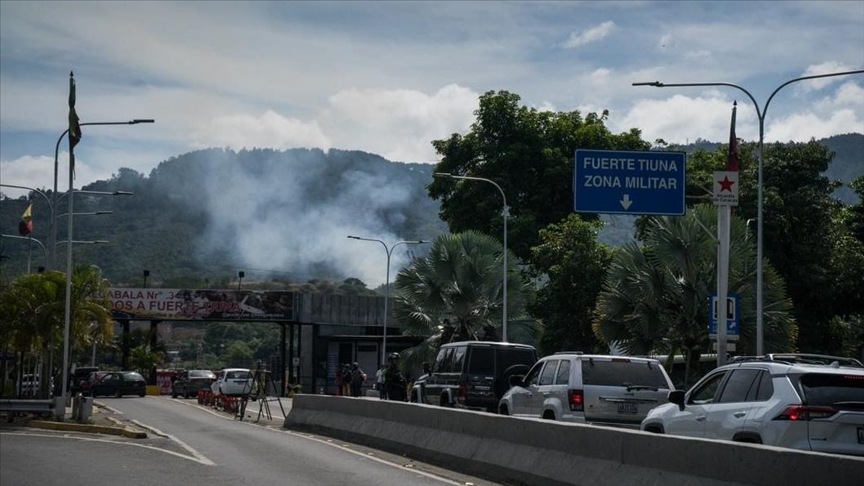
Caracas, Venezuela – The United States has launched military operations against Venezuela, initiating what President Donald Trump has described as a critical step toward regime change in Caracas. The action, which began on January 3, 2026, has rapidly intensified, with reports indicating a death toll exceeding 100 as of January 8, marking a sharp escalation in long-standing tensions between Washington and the South American nation.
According to monitoring from global event database GDELT, citing Senego, the human cost of the American intervention continues to mount, with "a hundred deaths announced" in initial assessments. The operations appear to target key regime assets loyal to President Nicolás Maduro, though specific details on the nature of the strikes—whether airstrikes, special forces insertions, or a broader incursion—remain limited in public reporting. This development represents the most direct U.S. military involvement in Venezuela since the imposition of economic sanctions in 2017.
The intervention stems from Trump's renewed foreign policy focus on Latin America following his inauguration earlier in 2025. In campaign rhetoric and early administration statements, Trump vowed to address what he called the "Maduro dictatorship," accusing the Venezuelan leader of human rights abuses, election fraud, and facilitating drug trafficking. The U.S. has historically supported opposition figures, including the short-lived recognition of Juan Guaidó as interim president in 2019. Recent escalations coincide with Maduro's disputed re-election in July 2024, which sparked widespread protests and international condemnation.
Rising Casualties and Operational Details
The Senego report, published on January 8, 2026, highlights the deteriorating situation on the ground, with the casualty figure described as "salourdit" or worsening. Venezuelan state media has reported clashes in key areas around Caracas and Maracaibo, though independent verification is scarce amid communication blackouts. U.S. officials have confirmed "precision operations" aimed at degrading Maduro's military capabilities, but have not disclosed troop numbers or timelines.
Eyewitness accounts filtered through social media and regional outlets describe explosions near government installations and military barracks. Humanitarian organizations, including the United Nations and Red Cross, have called for restraint and access to affected areas, warning of a potential refugee surge exacerbating Venezuela's ongoing exodus of over 7.7 million people since 2014, per UN estimates.
Historical Context of U.S.-Venezuela Tensions
Venezuela's crisis traces back to the death of President Hugo Chávez in 2013, after which Maduro assumed power amid plummeting oil prices and hyperinflation that peaked at over 1 million percent in 2018. The U.S. response evolved from sanctions on PDVSA, the state oil company, to the 2019 Guaidó episode, where more than 50 nations recognized the National Assembly leader as Venezuela's legitimate head of state. Trump, during his first term, labeled Maduro a "Cuban puppet" and deployed naval assets to the region in 2019 as a show of force.
The 2024 Venezuelan election, marred by opposition claims of fraud, reignited U.S. involvement. The Biden administration had pursued negotiations via Barbados talks in 2023, leading to temporary sanctions relief in exchange for electoral guarantees. Trump's return shifted this approach toward confrontation, with preemptive rhetoric in late 2025 warning of "all options on the table."
Regional powers have reacted variably. Brazil under President Lula da Silva condemned the U.S. action as "imperialist aggression," while Colombia, a U.S. ally, expressed cautious support for democratic restoration. Russia and China, longstanding Maduro backers providing arms and loans, vowed retaliation, with Kremlin statements decrying the strikes as a violation of sovereignty.
International Response and Humanitarian Concerns
The U.N. Security Council convened an emergency session on January 7, but veto powers stalled any resolution. European Union foreign ministers urged de-escalation, emphasizing dialogue. Domestically, U.S. congressional leaders from both parties voiced concerns over mission creep, with Senate Foreign Relations Committee Ranking Member Jeanne Shaheen calling for briefings.
On the humanitarian front, Venezuela's health system—already crippled by years of shortages—faces collapse. Pre-conflict reports from Human Rights Watch documented malnutrition affecting 30% of children and widespread medicine scarcity. The new violence risks compounding these issues, potentially displacing millions more toward borders with Colombia, Brazil, and Guyana.
Outlook Amid Uncertainty
As operations enter their sixth day, the path forward remains unclear. Maduro has rallied supporters with nationalist fervor, declaring a "popular resistance" phase. U.S. military spokespersons indicate the campaign is "limited in scope" but tied to broader goals of installing a transitional government. Analysts note parallels to past interventions like Libya in 2011, though Venezuela's oil wealth and alliances complicate outcomes.
The world watches closely as this high-severity conflict unfolds, with potential ripple effects on global energy markets—Venezuela holds the world's largest proven oil reserves—and hemispheric stability. Diplomatic off-ramps, if any, have yet to emerge.
(Word count: 682)






