
U.S. Military Action in Venezuela: A Turning Point in Foreign Policy
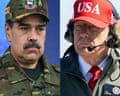
In a dramatic escalation of U.S. foreign policy, the United States has initiated military action in Venezuela, resulting in the capture of President Nicolás Maduro. This operation, which commenced on January 3, 2026, marks a significant shift under President Donald Trump's administration, as the U.S. seeks to enforce regime change in Caracas amid long-standing tensions.
The U.S. military operation targeted key locations in the Venezuelan capital, Caracas, where Maduro has maintained power despite ongoing economic and humanitarian crises in the country. Reports indicate that the operation was swift, with U.S. forces successfully apprehending Maduro and several of his senior officials. The details surrounding the operation remain limited, but sources suggest that it involved a combination of ground troops and air support, aimed at minimizing civilian casualties.
The decision to take military action comes after years of escalating tensions between the United States and Venezuela. Under Maduro's leadership, Venezuela has faced severe economic decline, hyperinflation, and widespread shortages of basic goods, prompting millions of citizens to flee the country. The U.S. government has long criticized Maduro's regime, accusing it of human rights abuses and corruption.
In a statement following the operation, President Trump emphasized the U.S. commitment to restoring democracy in Venezuela. "Today marks a new chapter for the people of Venezuela," he said. "We will support the establishment of a democratic government that respects the rights of its citizens."
The international community has reacted with a mix of support and concern. While some countries have applauded the U.S. intervention as a necessary step towards restoring democracy, others have condemned it as an infringement on Venezuela's sovereignty. Russia and China, both of whom have supported Maduro, have expressed strong opposition to the U.S. military action, warning of potential repercussions in the region.
This military intervention is the first of its kind since Trump took office, following a series of diplomatic efforts that largely failed to dislodge Maduro from power. The U.S. had previously imposed sanctions on Venezuela, targeting its oil exports and key officials within the regime. However, these measures did not achieve the desired outcome, leading to the current military response.
Background
Nicolás Maduro has been in power since 2013, succeeding Hugo Chávez. His administration has been marked by increasing authoritarianism, with opposition leaders often jailed or exiled. The situation in Venezuela worsened significantly after the 2018 presidential elections, which were widely deemed fraudulent by international observers. The ensuing political crisis has seen the emergence of interim leader Juan Guaidó, who received support from the U.S. and several Latin American countries.
The U.S. military action raises questions about the future of Venezuela and the potential for further conflict in the region. With Maduro's capture, the question of who will lead the country next looms large. The U.S. has indicated that it plans to work with opposition groups to establish a transitional government, but the path forward remains uncertain.
As the world watches the developments in Venezuela, the impact of U.S. military action on the geopolitical landscape will be closely scrutinized. The ramifications of this intervention could extend beyond Venezuela, affecting U.S. relations with other nations in Latin America and challenging the balance of power in the region.
Conclusion
The situation in Venezuela is evolving rapidly, and the implications of U.S. military action are profound. While the immediate goal appears to be the removal of Maduro and the establishment of a democratic government, the long-term consequences of such intervention will likely shape the future of U.S.-Latin America relations and the geopolitical dynamics in the region for years to come.






