US Launches Airstrikes on Iran After Attacks on Three Vessels in Strait of Hormuz
The US military launched airstrikes against Iran on Tuesday in response to Iranian attacks on three commercial vessels in the Strait of Hormuz, with explosions reported in southern Iran including Sirik, Qeshm Island and Bandar Abbas. These Iran strikes followed the US Central Command announcement that the action aimed to impose heavy costs for targeting commercial shipping.
US Launches Strikes on Iran
US Central Command stated the strikes were conducted to impose heavy costs for targeting commercial shipping and followed Iran's attacks on vessels in the Strait of Hormuz. [1] The US military said it launched the airstrikes on Tuesday. [1] US Central Command described the strikes as powerful and said they would impose heavy costs for targeting and attacking commercial shipping. [2] The strikes came shortly after Washington revoked a temporary sanctions waiver for Iranian oil. [2]
Explosions Reported Across Southern Iran
Iranian media reported multiple explosions: six on Qeshm Island, at least seven near Sirik port, and additional blasts in Bandar Abbas and Mesen. [1] State TV reported six explosions on Qeshm Island, the largest island in the vicinity of the Strait of Hormuz. [1] At least seven explosions were reported in areas close to Sirik Port. [1] The semi-official Fars News Agency reported 10 explosions in Sirik and four in Mesen on Qeshm Island. [5] Explosions were also heard in Bandar Abbas. [5]
Attacks on Commercial Vessels in Strait of Hormuz
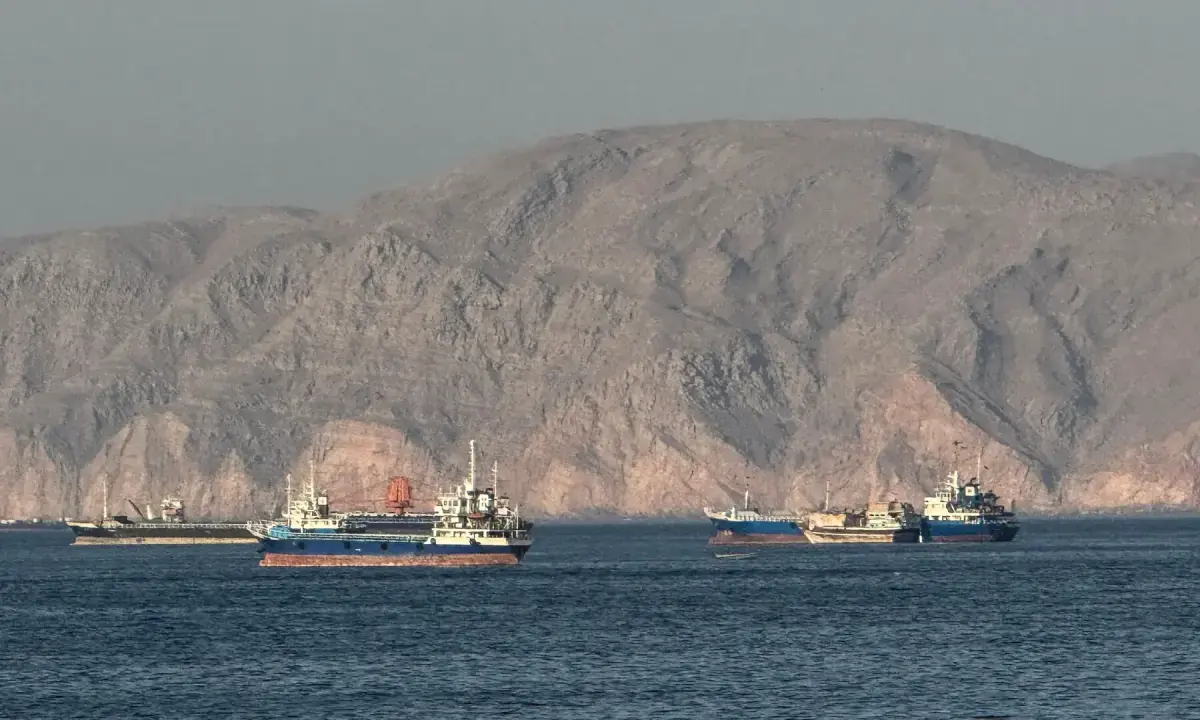
A Qatari LNG tanker was hit by an unknown projectile and caught fire off Oman, a Saudi-flagged crude oil tanker was damaged by IRGC missiles, and UKMTO reported strikes involving a projectile and a drone. [1] UKMTO said an unknown projectile hit a tanker overnight causing a fire, before two more vessels were struck, at least one by a drone. [2] All three vessels were struck close to Oman. [2] Qatar said one of the vessels was its LNG tanker Al-Rekayyat and blamed Iran for an unacceptable attack on international maritime navigation. [2] A US official warned that Iran’s attacks on vessels in the Strait of Hormuz were wholly unacceptable and would be met with consequences. [1]
Collapse of US-Iran Memorandum of Understanding
The strikes came after the US Treasury revoked a temporary sanctions waiver on Iranian oil sales, less than 20 days after a June memorandum of understanding that lifted a US naval blockade in exchange for Iran reopening the Strait of Hormuz. [1] The US Treasury Department cancelled a licence announced in June that had allowed Iran to produce, sell and deliver crude oil and related products through August 21. [1] The MoU mandated lifting the US naval blockade on Iran in exchange for Tehran reopening the vital Strait of Hormuz. [1] The US also agreed at the end of June to waive sanctions on Iranian oil for 60 days. [1]
Iran's Response and Regional Impact
Iran's foreign ministry condemned the US actions as violations of the MoU, held Washington responsible for consequences, and stated it would take measures to safeguard its interests and national security. [1] Iran’s foreign ministry said it held the US government responsible for the consequences of breaching the memorandum of understanding agreed between the two countries in June. [1] Iran’s deputy foreign minister Kazem Gharibabadi said the United States’ action in revoking the waiver for the exemption of sanctions on Iran’s oil sales constitutes a blatant violation of Article 10. [1] Qatar later summoned Iran's deputy ambassador to lodge a complaint. [2] Oil prices rose by more than 2 per cent as the renewed attacks reignited worries over global energy supplies. [2]
Ongoing Negotiations and Tensions
US negotiators were continuing to work in good faith towards a final deal. [2] The US-Iran memorandum of understanding was entirely performance-based, with the warning that Tehran would see benefits only if it showed good behaviour. [2] Under the 14-point US-Iran memorandum, Iran and Oman must hold talks to define the future administration and maritime services in the waterway with other Gulf states. [2] Maritime traffic had tentatively resumed after Washington and Tehran signed the memorandum last month, but Iran has insisted there will be no return to pre-war arrangements. [2]
What to watch next: Continued US-Iran talks toward a final deal remain performance-based, with concerns over freedom of navigation and maritime administration in the Strait of Hormuz.