
US Intensifies Pressure on Venezuela: Maduro Faces Narco-Terrorism Charges in Federal Court as Tanker Interception Looms
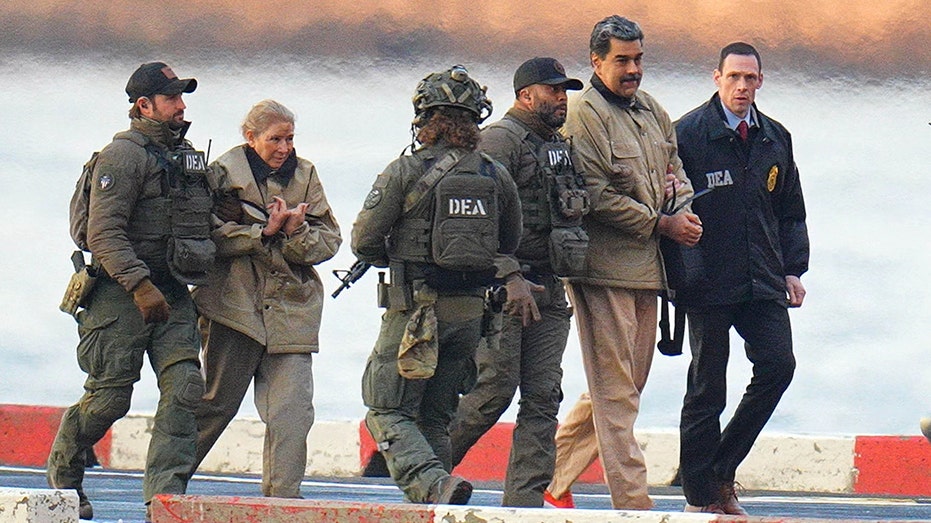
Washington, DC – In a significant escalation of U.S. actions against the Venezuelan regime, former Venezuelan President Nicolás Maduro made his first appearance in a U.S. federal court on Tuesday, facing charges of narco-terrorism and drug trafficking following his capture by American forces over the weekend. Concurrently, reports emerged that the U.S. is preparing to intercept a Russian-flagged oil tanker suspected of facilitating illicit Venezuelan oil trade, signaling a multifaceted crackdown on Maduro's network and its international enablers.
Maduro, long a target of U.S. sanctions and indictments, was transported to the United States after U.S. forces detained him in a weekend operation. His court appearance in federal court marks a dramatic turn in decades-long tensions between Washington and Caracas. The proceedings pit a team of federal prosecutors against Maduro's defense lawyers, overseen by a presiding judge tasked with navigating one of the highest-profile extradition and terrorism cases in recent memory.
Details of the legal lineup were outlined in coverage from Fox News, which detailed the key players: the judge presiding over the case, lead prosecutors from the Department of Justice handling the narco-terrorism accusations, and Maduro's defense team, now scrambling to mount a challenge in U.S. jurisdiction. The charges stem from longstanding allegations that Maduro and his associates orchestrated cocaine trafficking operations to destabilize the region, funneling drug proceeds to support his regime's repressive apparatus. These claims echo a 2020 U.S. indictment by the Southern District of New York, which accused Maduro of leading the "Cartel of the Suns," a narco-terror network embedded within Venezuela's military and government.
As Maduro contends with his courtroom battle, U.S. maritime authorities are gearing up for another front in the campaign against Venezuela's economic lifelines. According to CBS News, as reported by the Kyiv Independent, the U.S. plans to intercept a tanker flying the Russian flag that is linked to Venezuelan oil exports. This vessel is believed to be part of a shadow fleet used to evade international sanctions on Venezuelan petroleum, with Russia providing logistical support amid deepening Moscow-Caracas ties.
The tanker operation underscores the geopolitical ripple effects of Venezuela's oil trade. Since 2019, the U.S. has imposed sweeping sanctions on PDVSA, Venezuela's state oil company, aiming to starve Maduro's government of revenue amid accusations of human rights abuses, election fraud, and corruption. Russia has stepped in as a key partner, offering flagged vessels and technical aid to bypass these restrictions, allowing Venezuela to sell oil to markets like China and India. An interception would represent a bold enforcement of sanctions, potentially straining U.S.-Russia relations further amid ongoing conflicts in Ukraine and elsewhere.
Background on U.S.-Venezuela Tensions
The current developments build on a history of confrontation dating back to the early 2000s under Hugo Chávez, Maduro's mentor, whose socialist policies led to economic collapse and a humanitarian crisis displacing millions. Maduro assumed power in 2013 and consolidated control through disputed elections, including a 2018 vote widely rejected internationally. The U.S., under both Trump and Biden administrations, recognized opposition leader Juan Guaidó as interim president in 2019, imposing sanctions that halved Venezuela's oil production.
Efforts at dialogue, such as 2022-2023 talks in Mexico and Barbados, yielded partial sanction relief in exchange for electoral commitments, but Maduro's government has since cracked down on opponents ahead of 2024 elections marred by fraud allegations. Maduro's capture—details of which remain classified—suggests intensified U.S. intelligence and special operations focus, possibly leveraging regional allies like Colombia.
Russia's involvement complicates matters. Moscow has provided Venezuela with loans, military advisors, and now shipping support, viewing the partnership as a counterweight to U.S. influence in Latin America. Similar U.S. interceptions have targeted Iranian oil tankers in the past, setting precedents for such actions under international law.
Broader Implications and Outlook
Legal experts anticipate a protracted battle over Maduro's case, with defense arguments likely centering on sovereignty, diplomatic immunity claims, and the legitimacy of his capture. Prosecutors, armed with evidence from DEA investigations, aim to portray Maduro as a kingpin whose actions fueled violence across the Americas.
The tanker interception, if executed, could disrupt Venezuela's oil flows and send a message to sanctions-evading partners. U.S. officials have not commented publicly, but sources indicate coordination with naval assets in the Caribbean.
These moves come as the U.S. navigates a crowded geopolitical agenda, including Middle East tensions and European security. For Venezuela, Maduro's detention raises questions about regime stability: loyalists have vowed resistance, while opposition figures express cautious optimism for democratic transition.
As proceedings unfold, the cases highlight America's renewed commitment to enforcing sanctions and combating transnational crime. Further updates are expected from the federal court and maritime authorities in the coming days.
(Word count: 712)






