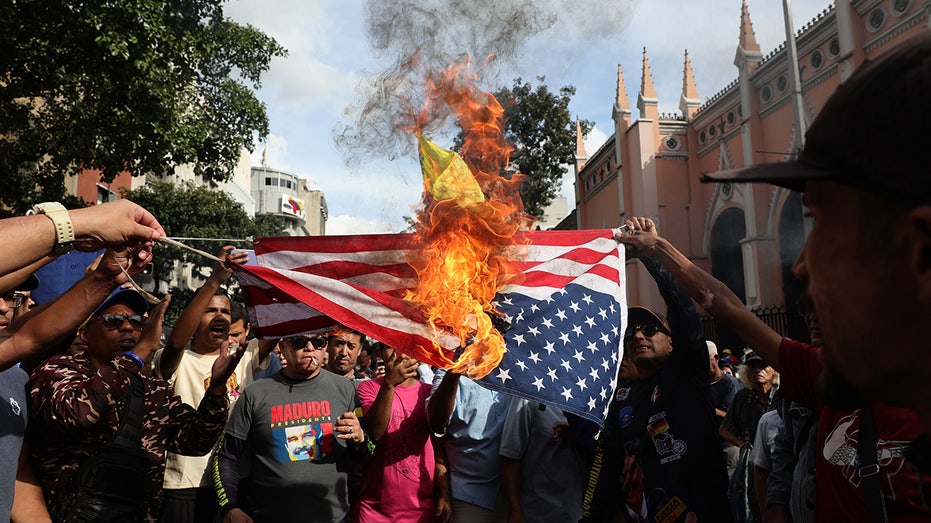

U.S. Drone Strike Targets Venezuelan Drug Facility, Kills 32 Cuban Officers Amid Maduro Seizure Push
Washington, D.C. — In a dramatic escalation of U.S. military involvement in Latin America, President Donald Trump ordered a drone strike on a Venezuelan facility linked to drug trafficking on December 31, 2025, resulting in the deaths of 32 Cuban officers stationed there under joint security agreements. The action, reportedly involving CIA-operated drones, has drawn sharp international condemnation while signaling a broader U.S. interventionist stance targeting Venezuelan President Nicolás Maduro and regional adversaries.
The strike occurred at 9:45 a.m. GMT on Wednesday, December 31, 2025, targeting what U.S. officials described as a key hub for alleged drug trafficking operations. According to reports, the facility was connected to networks accused of fueling narcotics flows into the United States. President Trump announced the operation shortly after, framing it as a decisive step against Maduro's regime, which the U.S. has long accused of enabling narco-terrorism. This move aligns with longstanding U.S. designations of Maduro and his associates as significant foreign narcotics traffickers, a label first applied by the Trump administration in 2020.
Details of the incident emerged rapidly in early January 2026. Fox News reported that Trump explicitly embraced U.S. interventionism, ordering forces not only to conduct the strike but also to prepare for seizing Maduro himself. The article highlighted Trump's rhetoric positioning Venezuela as the first target in a potential wider push across Latin America, with eyes on Cuba and Colombia next. This represents a shift from previous diplomatic and sanctions-based pressures, marking direct kinetic action on Venezuelan soil.
Compounding the fallout, Cuba disclosed on January 6, 2026, that 32 of its officers—aged 26 to 60—were killed in the U.S. attack. Channel News Asia detailed that these personnel were embedded in Venezuela as part of longstanding joint security arrangements between Havana and Caracas. Cuba's alliance with Maduro dates back over two decades, with thousands of Cuban military and intelligence advisors supporting the Venezuelan government amid economic collapse, political unrest, and opposition challenges. The deaths prompted immediate defenses from Washington, which maintained the strike was precision-targeted at illicit activities, not foreign military personnel.
Background on U.S.-Venezuela Tensions
The strike unfolds against a backdrop of protracted conflict between the U.S. and Maduro's socialist government. Since seizing power in 2013 following Hugo Chávez's death, Maduro has faced U.S. sanctions, international isolation, and domestic protests over hyperinflation, food shortages, and electoral fraud allegations. The U.S. recognized opposition leader Juan Guaidó as interim president in 2019, though that effort faltered without military backing.
Drug trafficking has been a flashpoint. In March 2020, the Trump administration indicted Maduro and top aides on narcoterrorism charges, alleging ties to Colombia's FARC guerrillas and cocaine shipments. Venezuela's strategic location has made it a transshipment point for South American cocaine bound for North America. Cuban involvement adds another layer: Havana provides security expertise in exchange for Venezuelan oil, a partnership strained by Venezuela's declining production but vital to both regimes.
Recent developments amplified pressures. Trump's return to the White House in January 2025 promised a hardline approach to Latin America, criticizing prior administrations for weakness. Maduro, meanwhile, has deepened ties with Russia, Iran, and China, hosting Wagner Group mercenaries (now Africa Corps) and acquiring advanced weaponry. A disputed July 2024 election, where Maduro claimed victory amid fraud accusations, sparked mass protests and further U.S. condemnations.
International Reactions and U.S. Defense
Cuba's revelation of its casualties has ignited diplomatic firestorms. Havana described the officers as "heroes" fulfilling international duties, vowing repercussions. Venezuela echoed this, labeling the strike an "act of war" and rallying allies for retaliation. The U.S. response, per reports, defends the operation as lawful self-defense against threats to American security, emphasizing intelligence on the facility's role in fentanyl and cocaine networks—substances driving U.S. overdose epidemics.
Latin American nations remain divided. Brazil and Colombia, key U.S. partners, have urged restraint, while left-leaning governments in Mexico and Bolivia condemned the unilateral action. The UN Security Council is expected to convene, though veto powers held by the U.S. limit outcomes.
Outlook
As details unfold, the strike raises risks of broader conflict. Trump's openness to seizing Maduro suggests potential follow-on operations, possibly involving special forces or allied support. Venezuela's military, bolstered by foreign advisors, could respond asymmetrically through proxies or cyberattacks. For The World Now's real-time tracking, markets are watching oil prices—Venezuela holds vast reserves—and migration flows, with over 7.7 million Venezuelans displaced since 2014.
The incident underscores shifting U.S. strategy in the hemisphere, prioritizing direct action over multilateralism. Whether it deters trafficking or entrenches Maduro's defiance remains to be seen, but it has undeniably redrawn fault lines in U.S.-Latin America relations.
(Word count: 712)






