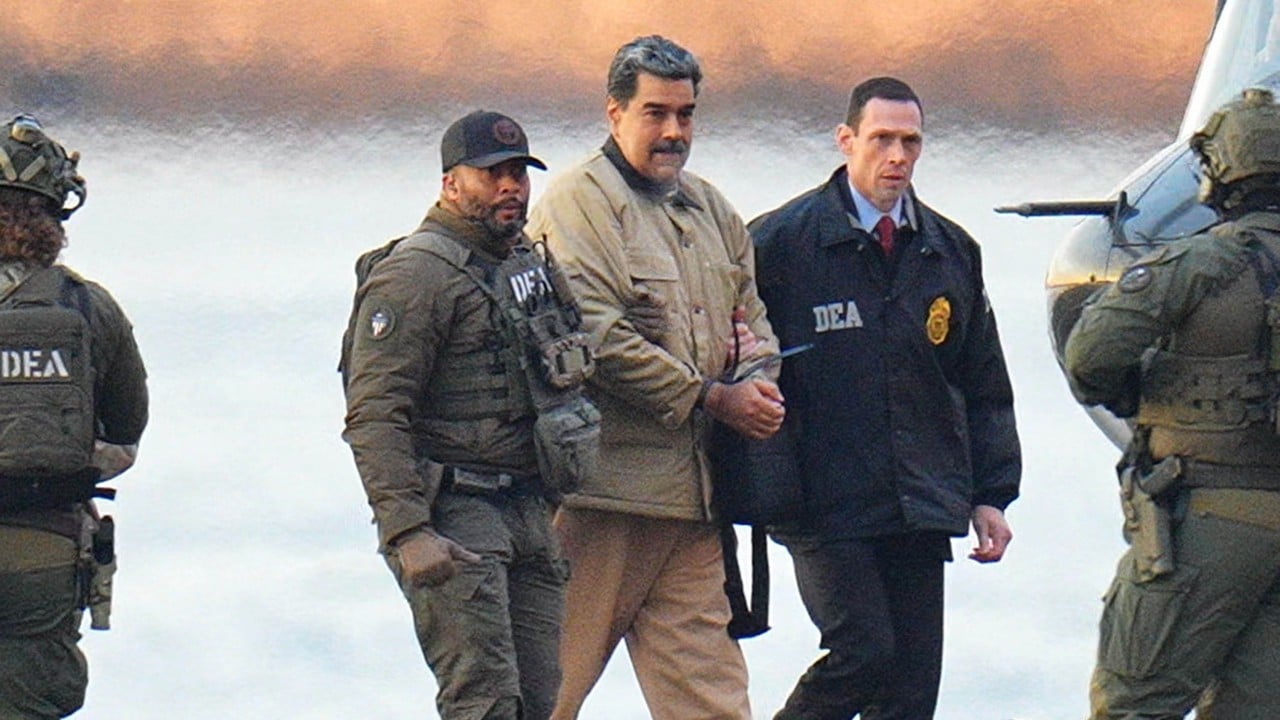

U.S. Drone Strike on Venezuelan Drug Facility Leads to Maduro Capture, Prompts Varied Global Reactions
Washington, D.C. — In a bold escalation of U.S. counter-narcotics efforts, President Donald Trump announced a drone strike on a Venezuelan facility linked to drug trafficking on December 31, 2025, which reportedly culminated in the capture of Venezuelan President Nicolás Maduro. The operation, described as involving a CIA drone, has drawn sharp international scrutiny, with Asian allies offering measured responses while South Korean lawmakers issued a strong condemnation.
The strike occurred on Wednesday, December 31, 2025, at 09:45 GMT, targeting a site authorities alleged was central to narcoterrorism activities. According to U.S. officials, the high-severity raid not only dismantled the facility but also led to Maduro's apprehension on Saturday, prior to January 6, 2026. Maduro was transported to U.S. soil to face narcoterrorism charges, marking a dramatic intervention in Venezuelan affairs. On Sunday, Trump declared that Washington was "in charge" of the South American nation, signaling a potential shift in regional dynamics.
Details of the operation remain limited, but it aligns with longstanding U.S. accusations against Maduro's regime for facilitating cocaine trafficking through Venezuela. The U.S. has imposed sanctions on Venezuelan officials for years, citing evidence from the Drug Enforcement Administration (DEA) that senior government figures, including Maduro, were complicit in shipping tons of drugs to American streets. This strike represents an unprecedented kinetic action, moving beyond economic pressure to direct military involvement.
Mixed International Responses Highlight Geopolitical Tensions
Global reactions have been notably restrained among U.S. Asian allies, who analysts attribute to economic dependencies on Washington. A South China Morning Post analysis noted that countries like Japan, South Korea, and others issued mild statements, often citing the need to "monitor the situation" rather than outright condemnation. "They don’t want to bite the hand that feeds," one analyst remarked, pointing to security alliances and trade ties that temper criticism of Trump's "cowboy tactics."
In contrast, South Korea's ruling Democratic Party (DP) lawmakers took a firmer stance. On January 6, 2026, they condemned the U.S. action as a "breach of international law," according to Yonhap News Agency. The DP criticized the strike as a violation of Venezuela's sovereignty, urging adherence to United Nations principles. This position underscores domestic political divides in Seoul, where the progressive-leaning party has historically been vocal on global human rights and anti-interventionism.
Other nations have echoed concerns over unilateralism. Latin American countries, historically wary of U.S. interventions—recalling events like the 1989 Panama invasion—have rallied behind Venezuela's opposition to the raid, though specifics from the provided sources focus on Asia. The United Nations has yet to issue a formal statement, but diplomats anticipate Security Council debates amid Russia's likely support for Maduro.
Background: A History of U.S.-Venezuela Friction
The strike occurs against a backdrop of deteriorating relations dating to 2017, when Trump first labeled Maduro's government a "narco-state." U.S. indictments in 2020 charged Maduro and top aides with conspiracy to distribute cocaine for the Revolutionary Armed Forces of Colombia (FARC), offering bounties up to $15 million for his capture. Venezuela's economic collapse, hyperinflation, and disputed 2018 elections exacerbated tensions, leading to U.S. recognition of opposition leader Juan Guaidó as interim president in 2019.
Recent developments, including Maduro's contested 2024 reelection amid fraud allegations, had already isolated Caracas. The drone operation revives debates over extraterritorial justice, with critics arguing it sets a precedent for powerful nations to bypass international courts like the International Criminal Court (ICC), which has probed Venezuelan human rights abuses but not drug charges.
Outlook: Uncertainty in Venezuelan Leadership and U.S. Policy
As Maduro faces trial, questions loom over Venezuela's governance. Trump’s assertion of U.S. oversight raises fears of a transitional administration under American influence, potentially involving opposition figures or military elements. Oil-rich Venezuela, holding the world's largest proven reserves, remains a strategic prize, with production crippled by sanctions now at risk of further disruption.
Analysts predict diplomatic fallout could strain U.S. alliances in Asia, where allies balance condemnation with strategic needs—such as countering China. South Korea's rebuke may signal broader unease in the Indo-Pacific. Meanwhile, the operation's success in curbing drug flows remains unverified, with traffickers historically adapting routes through Central America.
The international community watches closely as this high-stakes gambit unfolds, weighing enforcement of anti-drug laws against the perils of regime change by drone.
(Word count: 612)






