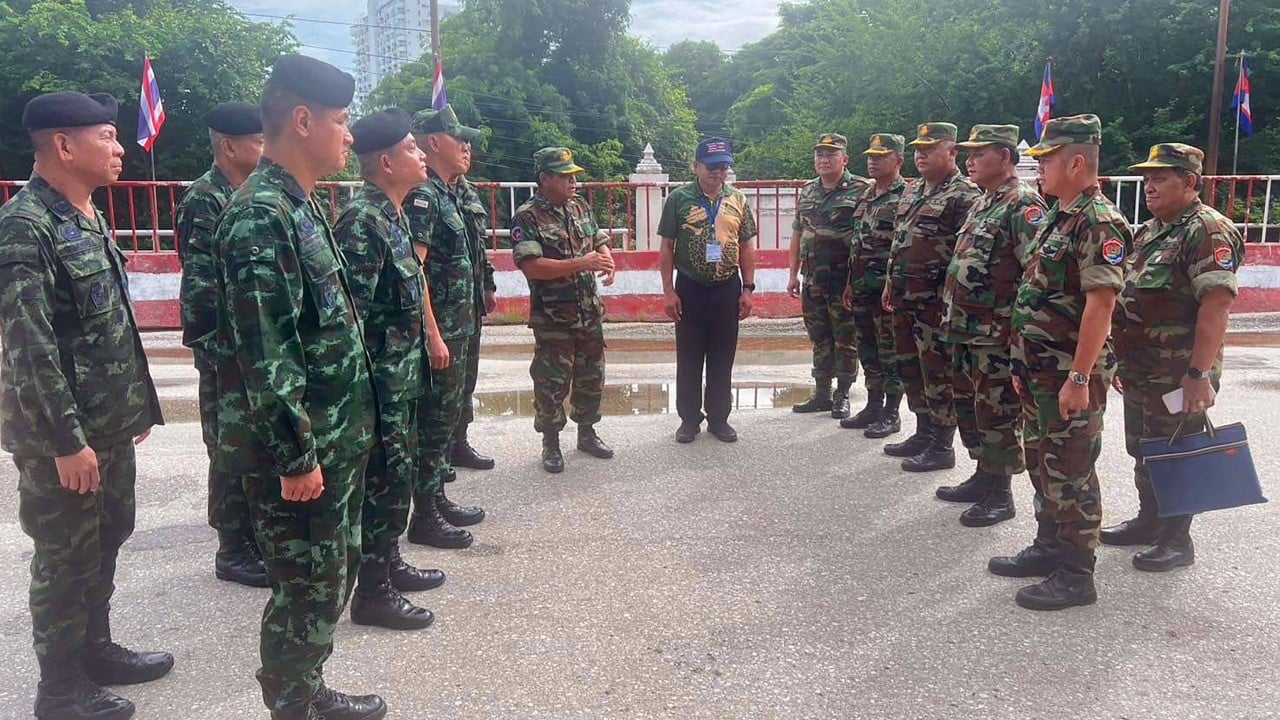

US Commits $45 Million in Aid to Support Fragile Thailand-Cambodia Truce Amid Regional Tensions
BANGKOK — The United States announced $45 million in humanitarian and security assistance on Friday to reinforce a tenuous ceasefire between Thailand and Cambodia, following recent border clashes that displaced thousands and heightened geopolitical strains in Southeast Asia.
The aid package, revealed during a visit by Michael DeSombre, the U.S. State Department's top official for East Asia and the Pacific, aims to address the humanitarian fallout from the fighting while tackling transnational threats like drug trafficking and cyber scams. DeSombre's trip to both nations underscores Washington's diplomatic push to stabilize the region, with U.S. President Donald Trump positioning the truce as a key foreign policy success.
According to statements from the U.S. State Department, the funding will primarily support individuals displaced by the conflict. "The US will provide a total of US$45 million in assistance, including to help support people displaced by the recent fighting," DeSombre said during his engagements in Thailand and Cambodia, as reported by Channel News Asia. An additional $20 million has been earmarked specifically for joint efforts to combat drug trafficking and cyber scams, issues that have surged along the porous border and fueled instability.
The announcement comes amid Trump's broader narrative of brokering peace deals, with the White House highlighting the Thailand-Cambodia truce alongside other diplomatic wins. South China Morning Post reported that DeSombre emphasized the U.S. commitment to "strengthen the ceasefire," noting that the aid is part of a multifaceted strategy to build confidence between the neighboring countries.
Details of the clashes remain limited in public reports, but they appear centered on longstanding territorial disputes along the shared 800-kilometer border. Fighting erupted in late 2025, displacing communities and prompting international concern over potential escalation in an already volatile region. The truce, mediated through ASEAN channels and U.S. encouragement, took hold just before the new year, but both sides have accused each other of violations.
Historical Context of Thailand-Cambodia Border Tensions
Thailand and Cambodia have a fraught history marked by disputes over ancient temple sites and overlapping maritime claims. The most prominent flashpoint is Preah Vihear, a 11th-century Khmer temple awarded to Cambodia by the International Court of Justice in 1962 but surrounded by contested land. Deadly clashes in 2008-2011 killed dozens and displaced tens of thousands, leading to ASEAN-brokered de-escalation.
Recent fighting revives these tensions amid domestic political pressures in both countries. Thailand, under a fragile coalition government led by Prime Minister Paetongtarn Shinawatra since 2024, faces internal divisions exacerbated by economic woes and military influence. Cambodia, ruled by Prime Minister Hun Manet since 2023, maintains tight control but contends with opposition crackdowns and economic reliance on China.
The U.S. intervention reflects a strategic pivot in Southeast Asia, where Washington seeks to counterbalance China's growing influence. Beijing has deepened ties with both nations through infrastructure projects under the Belt and Road Initiative, including dams and railways near the border. The aid package signals U.S. re-engagement post-Afghanistan withdrawal, aligning with Trump's "America First" diplomacy that prioritizes quick wins in stabilizing allies.
DeSombre's visit included meetings with Thai Foreign Minister Maris Sangiampongsa and Cambodian Deputy Prime Minister Prak Sokhonn, focusing on demining operations, refugee support, and intelligence-sharing. "The United States would offer US$20 million to help both countries combat drug trafficking and cyber scams, which have become a major concern," DeSombre noted, per South China Morning Post, linking border security to broader Indo-Pacific stability.
Regional Implications and Outlook
The $45 million infusion—modest compared to U.S. commitments elsewhere but targeted—could provide immediate relief to an estimated 10,000-20,000 displaced persons, though exact figures vary by source. Humanitarian groups like the UN High Commissioner for Refugees have called for sustained monitoring to prevent renewed hostilities.
ASEAN, often criticized for its non-interference principle, welcomed the U.S. role but stressed regional ownership. Thai and Cambodian leaders have pledged adherence to the truce, yet analysts point to underlying issues like resource competition and nationalist rhetoric as risks.
As Trump begins his second term, this episode may foreshadow U.S. strategy in Southeast Asia: leveraging aid and diplomacy for leverage against rivals. For Thailand and Cambodia, the aid offers a lifeline, but lasting peace will hinge on bilateral trust-building and addressing root causes.
The State Department has not detailed the full aid breakdown beyond the $20 million allocation, but officials indicated rapid disbursement through USAID and regional partners. Further U.S. visits are planned, signaling ongoing commitment amid a fluid geopolitical landscape.
(Word count: 612)






