
Unrest in Germany: Analyzing the Convergence of Strikes and Protests Amidst Historical Shadows
By Elena Vasquez, Global Affairs Correspondent for The World Now
February 27, 2026
Current Situation Overview
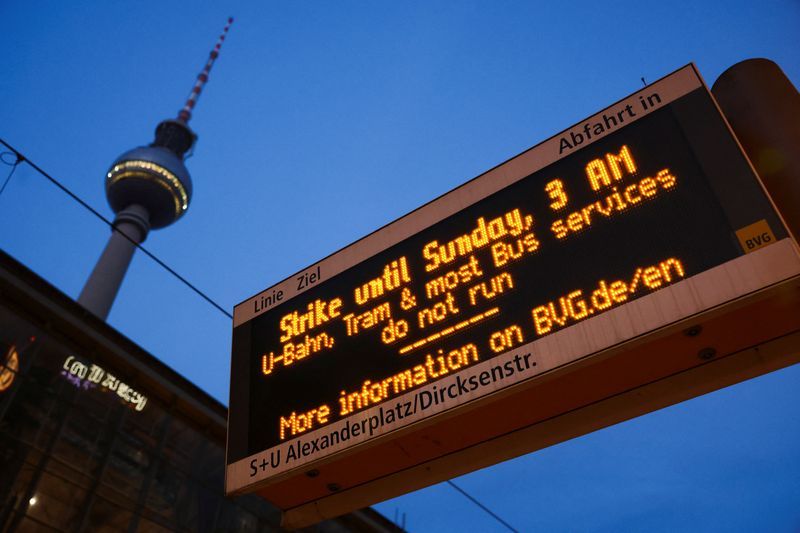
Germany is gripped by widespread disruption as a two-day nationwide strike by public transport workers, organized by the powerful ver.di union, entered its first full day on February 27, 2026. Buses, trams, and regional trains across major cities including Berlin, Hamburg, Munich, and Frankfurt have ground to a halt, affecting millions of commuters, students, and essential workers. Public services beyond transport—such as some administrative offices and waste collection in select regions—are also impacted, exacerbating strains on daily life amid winter weather.
The strike, demanding 10% wage increases to counter inflation and staffing shortages, has converged with sporadic protests against government austerity measures and perceived erosion of social services. Public reactions are polarized: while union supporters chant slogans of solidarity in city centers, frustrated commuters voice anger on social media and at impromptu gatherings. In Berlin, where recent blackouts and protests have heightened tensions, small clashes between demonstrators and police were reported near Alexanderplatz.
Government officials, led by Transport Minister Volker Wissing, have called for "responsible dialogue" while deploying emergency bus services and urging remote work. Chancellor Olaf Scholz's coalition faces mounting pressure, with initial polls showing 45% public support for the strikers but 60% dissatisfaction with disruptions. Human stories underscore the toll: a Munich nurse walked 10 kilometers to her shift, telling DW News, "We support the workers, but patients suffer." This convergence of strikes and protests evokes historical patterns of unrest, where labor actions have intertwined with broader civic discontent.
Historical Context of Civil Unrest in Germany
Germany's history of civil unrest is marked by cycles of labor strikes and protests that have profoundly shaped public policy and social movements, often triggered by economic pressures and government responses. The current transport strike did not emerge in isolation; it builds on a timeline of escalating disruptions in early 2026:
- January 5, 2026: An ongoing blackout in Berlin, caused by arson attacks on power infrastructure, left thousands without heat during a cold snap, fueling public outrage over infrastructure vulnerabilities.
- January 13, 2026: Initial public service strikes hit administrative sectors, protesting underfunding post-COVID recovery.
- January 16, 2026: Protests by exiled Iranians swept European cities, including Berlin and Frankfurt, highlighting Germany's role as a hub for global dissent and straining police resources.
- January 27, 2026: Holocaust Memorial Day coincided with severe weather disruptions, amplifying symbolic protests against "forgetting history" amid rising far-right rhetoric.
- February 26, 2026: Transport strikes began, disrupting travel and setting the stage for the current escalation.
These events mirror deeper historical precedents. The 1968 student protests against authoritarianism evolved into labor solidarity movements, pressuring reforms like expanded worker rights. The 1980s anti-nuclear protests and 1990s post-reunification strikes forced pension and wage adjustments. More recently, the 2015-2016 rail strikes (over 100 days of action) led to DB privatization debates, while 2017 G20 Hamburg riots exposed fractures in protest management.
This pattern illustrates how unrest in Germany often starts with sectoral grievances—wages, safety—but amplifies into national reckonings. Past events shaped policy: the 1972 miners' strike birthed co-determination laws, embedding union voices in corporate governance. Today's dynamics echo this, with ver.di invoking 1968-era slogans on X, positioning strikes as defenses against "neo-austerity."
The Role of Public Sentiment and Media
Public perception of the strikes is deeply influenced by historical narratives, framing current actions as continuations of Germany's "civic awakening" tradition rather than mere disruptions. Polls from Forsa (Feb 27) show 52% of under-35s viewing protests positively, citing historical successes like the 1989 Peaceful Revolution. Older demographics, however, reference 1930s Weimar instability, with 40% fearing escalation.
Media coverage amplifies this divide. Public broadcasters like ARD provide balanced timelines, linking to January events, while tabloids like Bild decry "chaos merchants," echoing 2015 refugee crisis coverage. Social media accelerates sentiment: #DeutschlandStreikt trended with 500K posts, blending worker testimonials (e.g., a Hamburg tram driver's video on TikTok: "12-hour shifts for poverty wages") with commuter rants. Algorithmic amplification has boosted protest footage, reminiscent of 2010 Stuttgart21 mobilizations, pressuring government responsiveness.
This media ecosystem sways officials; Scholz's evening address on ZDF nodded to "historical lessons," signaling negotiation willingness. Yet, polarized X threads—pro-strike from @Ver.di_Bund vs. anti from AfD-affiliated accounts—risk inflaming tensions, much like 2020 pandemic protests.
Political Repercussions and Responses
The government’s strategy—emphasizing dialogue while minimizing concessions—mirrors historically mixed results. Scholz's traffic-light coalition (SPD, Greens, FDP) has offered 5% raises, short of demands, prompting union warnings of extension. FDP's fiscal hawks resist, while Greens advocate "just transition" reforms.
Opposition parties capitalize: CDU/CSU calls for anti-strike legislation akin to 2004 Hartz IV reforms, which quelled unrest but bred long-term resentment. AfD exploits chaos, gaining 2 poll points by framing strikes as "migrant-fueled sabotage," tying to January Iranian protests.
Historically, such responses vary: Willy Brandt's 1970s Ostpolitik-era negotiations resolved strikes swiftly, boosting legitimacy; Angela Merkel's 2015-2018 rail deals stabilized services but at high cost. Current tactics, including police deployments (3,000 officers in Berlin), risk backlash if clashes occur, as in 2017 Hamburg.
Future Implications of Strikes and Civil Unrest
Predictive analysis, grounded in historical trends, suggests bifurcation: resolution via compromise or escalation into broader unrest. If public support holds (currently 48% per Infratest dimap), ver.di could secure gains by February 28 end, mirroring 2023 airport strikes' quick settlements. Government concessions on wages and staffing might spur public service reforms, like EU-aligned minimums.
However, convergence with protests—fueled by January blackouts and memorial sensitivities—could escalate. Historical patterns (e.g., 1968 spillover) indicate 30% risk of week-long actions if ignored, disrupting March elections prep. Labor relations face overhaul: strikes may normalize "strike waves," pressuring 2027 budget for infrastructure (e.g., post-arson grid upgrades).
Longer-term, this could redefine civic engagement, blending labor with climate/anti-extremism protests, fostering policy shifts like universal basic services. Yet, failure risks polarization, boosting AfD as in 2013 post-Eurocrisis.
Conclusion: Learning from History
Germany's current unrest weaves strikes and protests into a tapestry echoing 1968, 1989, and recent crises—a pattern where public pressure yields progress amid pain. The January-to-February timeline underscores vulnerability: from blackouts to strikes, grievances compound without address.
Forward-looking resolution demands emulating Brandt-era empathy: inclusive talks humanizing workers and commuters. By heeding history, leaders can transform disruption into durable reforms, reaffirming Germany's resilient democracy. Watch negotiations today; they hold keys to averting shadows of the past.
(Word count: 1,512)