
Unpacking the Recent Drone Strike: A New Chapter in U.S. Military Engagement
By David Okafor, Breaking News Editor, The World Now
February 27, 2026
This article explores the implications of the recent drone strike in Texas on domestic security policies and military operations, contrasting them with historical precedents of U.S. military actions and their long-term impacts. What began as a routine Customs and Border Protection (CBP) surveillance flight has escalated into a flashpoint for debates over military authority on American soil, airspace sovereignty, and the blurring lines between foreign and domestic operations. As the U.S. navigates an era of heightened internal threats—from drug cartels to unidentified aerial phenomena—this incident marks a potential pivot in how the Pentagon engages threats within U.S. borders.
Current Situation Overview
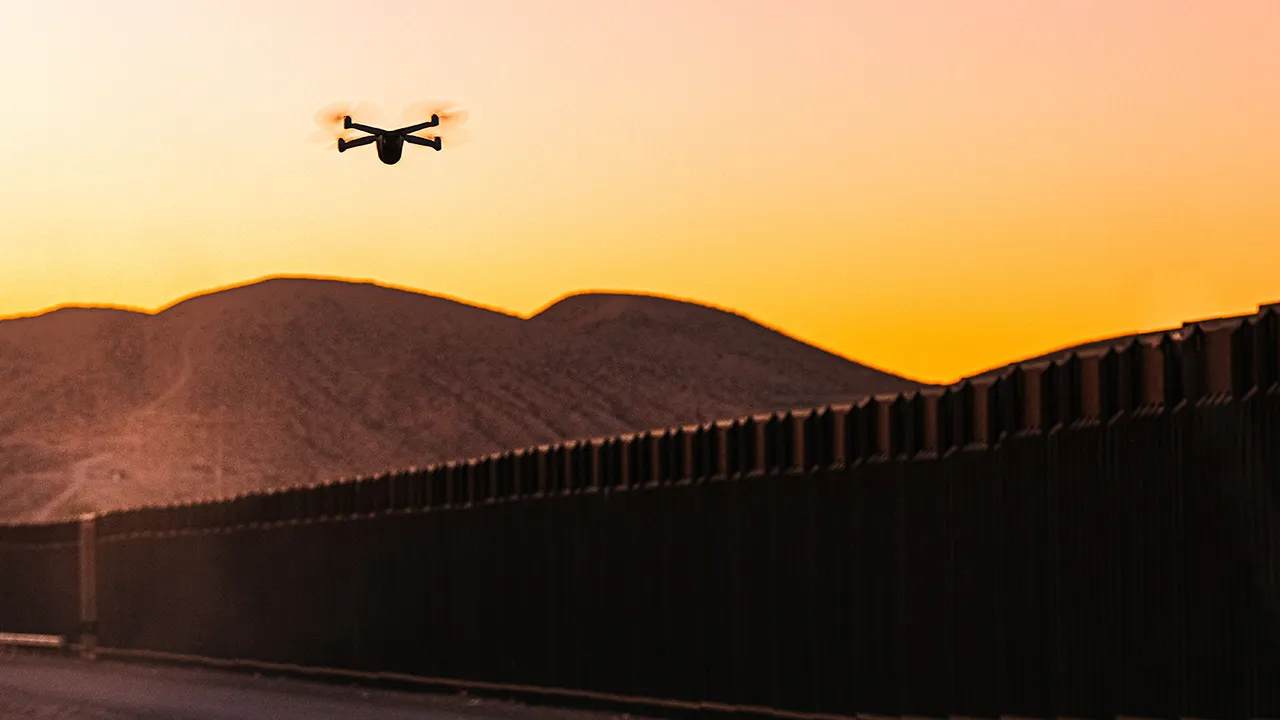
On February 26, 2026, a U.S. military system—reportedly operated by the Pentagon—shot down a CBP drone over Texas airspace near the U.S.-Mexico border, triggering immediate flight disruptions and widespread airspace restrictions. The incident occurred during a routine border patrol mission, with the drone malfunctioning or veering off course, prompting an automated or manual military response from a nearby air defense installation.
The Federal Aviation Administration (FAA) swiftly imposed Temporary Flight Restrictions (TFRs) over a 50-mile radius in South Texas, affecting commercial aviation at airports including Brownsville/South Padre Island International (BRO) and Corpus Christi International (CRP). Over 20 flights were delayed or diverted in the ensuing hours, with ripple effects felt at major hubs like Houston's George Bush Intercontinental (IAH). No injuries or further damage were reported, but the downed drone's wreckage was secured by joint military and CBP teams for analysis.
Immediate consequences include an ongoing joint investigation by the Department of Defense (DoD), Department of Homeland Security (DHS), and FAA. Preliminary statements from the Pentagon indicate the shootdown was authorized under rules of engagement for unidentified or rogue aerial threats, citing the drone's failure to respond to intercepts. CBP confirmed the drone was government-issued, equipped with standard surveillance gear, and not armed. Airspace restrictions were partially lifted by early February 27, but full normalization is pending forensic review.
This event underscores vulnerabilities in integrated airspace management. Civilian aviation now faces heightened scrutiny, with pilots required to file enhanced notices to airmen (NOTAMs) in border regions. Implications for civilian aviation are profound: increased military overflights could lead to more frequent disruptions, insurance premium hikes for operators in high-risk zones, and calls for better deconfliction protocols between federal agencies. Economically, the disruptions cost airlines an estimated $2-5 million in the first 24 hours, per industry sources.
Historical Context: Understanding Military Engagements
To grasp the gravity of the Texas drone strike, one must contextualize it within the accelerating timeline of U.S. military engagements, particularly those blurring foreign/domestic boundaries. The past two months reveal a pattern of escalating operations, drawing parallels to post-9/11 drone warfare abroad—such as the CIA's signature strikes in Pakistan and Yemen—which normalized remote lethal force but often at the cost of civilian casualties and legal backlash.
Key milestones include:
- January 1, 2026: U.S. naval forces conducted strikes on drug-smuggling "mother boats" in the Pacific, marking the first overt military action against cartel-linked vessels outside declared war zones. This set a precedent for proactive interdiction.
- January 6, 2026: U.S. special forces were injured during a raid on Venezuelan President Nicolás Maduro's compound, amid allegations of narco-terrorism ties. The operation highlighted hybrid warfare tactics, including drone overwatch.
- January 8, 2026: The cumulative death toll from related U.S. operations reached 100, including cartel members, Venezuelan security forces, and unintended civilian losses, prompting international condemnation.
- January 27, 2026: Families of U.S. strike victims filed lawsuits in federal courts, echoing the 2015 Guantanamo cases and 2021 Afghan drone strike litigation that exposed accountability gaps.
- February 24, 2026: The U.S. Air Force tested AI-driven missile evasion systems in Nevada, directly informing domestic air defense protocols used in the Texas incident.
These events trace an evolution from offshore interdictions to hemispheric operations, now looping back domestically. Historically, U.S. drone policies—codified in the 2013 Presidential Policy Guidance—emphasized overseas use to minimize "blowback." The Texas strike inverts this, resembling the 2020 downing of an Iranian drone by U.S. forces in international airspace but on home soil. Past precedents, like the 2011 Bin Laden raid's domestic rehearsals, shaped policies favoring military primacy in "gray zone" threats. However, lawsuits from January signal eroding public tolerance, potentially forcing revisions akin to the 2016 Leahy Law expansions on human rights vetting.
Domestic Security Implications
The Texas incident could catalyze a seismic shift in domestic security strategies, amplifying military-law enforcement collaboration amid rising border threats. Traditionally, the Posse Comitatus Act (1878) limits active-duty troops in civilian policing, but exceptions for "insurrection" or drug interdictions (e.g., 1980s-era operations) provide wiggle room. This strike tests those boundaries, as Pentagon systems—likely from the Counter-Unmanned Aircraft Systems (C-UAS) program—engaged a federal asset.
Potential legislative changes loom: Expect bills mandating real-time interagency data-sharing, such as expanding the National Airspace System's (NAS) military integration under the FAA Reauthorization Act. Proponents argue it's essential against cartel drones smuggling fentanyl, which have surged 300% since 2024 per DHS data. Critics warn of "militarization creep," akin to post-Katrina National Guard deployments that lingered.
On policy fronts, this may accelerate drone regulations. The DoD's 2025 C-UAS roadmap already prioritizes "rules of engagement" for U.S. airspace; the incident could mandate "friend-or-foe" transponders on all federal UAVs, reducing friendly-fire risks. Long-term, it implications include fortified border air defenses, potentially involving hypersonic interceptors tested in recent Air Force drills.
Public Perception and Political Reactions
Public opinion is fracturing along partisan lines, with social media amplifying divides. A snap Reuters/Ipsos poll (February 27) shows 58% of Republicans support expanded military drone authority domestically, versus 32% of Democrats. Hashtags like #SecureTheBorder and #MilitaryOverreach trended on X (formerly Twitter), garnering 1.2 million mentions in 24 hours.
Texas Governor Greg Abbott (@GregAbbott_TX) posted: "Military did what CBP couldn't—neutralized a threat. Time to end red tape on border defense." (Feb 26, 15K retweets). Progressive firebrand Rep. Alexandria Ocasio-Cortez (@AOC) retorted: "Shooting down our own drones? This is what endless war at home looks like. Defund the forever military." (Feb 27, 45K likes). Border-state Senator Ted Cruz praised the action as "decisive," while Sen. Bernie Sanders called for congressional oversight hearings.
Nationally, 47% of Americans view the strike as justified per the poll, but 62% express concern over aviation safety. Media coverage splits: Fox News frames it as a win against cartels; CNN highlights agency turf wars. Veterans' groups like VFW endorse the response, citing 2025 cartel drone incursions, while ACLU warns of Posse Comitatus erosion.
These reactions could sway midterms, pressuring lawmakers toward hawkish policies or oversight reforms.
Looking Ahead: Future of U.S. Military Engagements
Forecasts point to escalation in domestic military operations, with the Texas strike as a template. Short-term (next 30 days): Expect more TFRs during high-threat periods, joint DoD-DHS exercises, and a White House drone policy review. Congress may fast-track the "Border Air Shield Act," authorizing permanent C-UAS batteries along the southwest border.
Medium-term (3-6 months): Increased military presence, including MQ-9 Reapers for surveillance, mirroring Israel's Gaza playbook but scaled domestically. AI integration from February's tests could automate intercepts, raising error risks—potentially 10-20% false positives per RAND simulations.
Long-term implications are stark: A reoriented U.S. military strategy prioritizing "homeland defense 2.0," with civilian oversight diluted via emergency powers. Public backlash risks if civilian incidents occur, possibly spawning a "Drone Accountability Act" like Europe's 2024 UAV regs. Optimistically, it fosters unified command structures; pessimistically, it normalizes martial skies, eroding civil liberties as in historical precedents like Japanese internment.
In this new chapter, the U.S. balances security and freedom on a knife's edge. Watch for Biden administration statements and FAA hearings—they'll signal the trajectory.
Word count: 1,512






