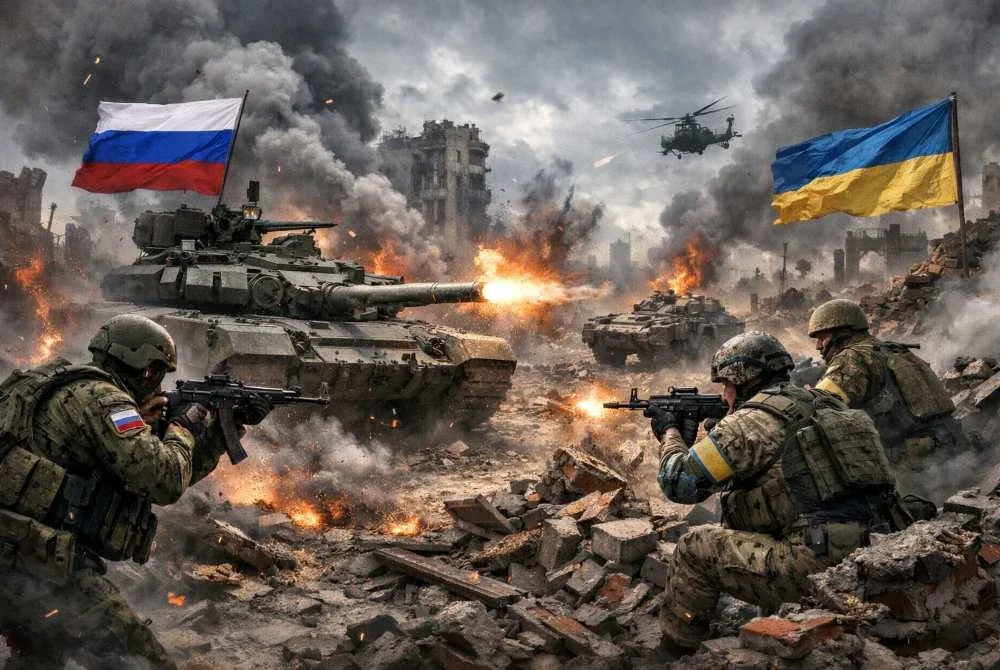

Ukraine's War: The Shifting Geopolitical Chessboard as Talks with Trump Loom
Key Developments Ahead of Geneva Talks
Ukrainian President Volodymyr Zelensky held a pivotal phone call with U.S. President Donald Trump on February 25, 2026, just ahead of high-stakes US-Ukraine talks in Geneva set for late this week. As Russia's invasion enters its fifth year—marking Day 1,460 since February 24, 2022—these discussions could pivot alliances, reshape military aid, and test Trump's "America First" foreign policy amid Ukraine's mounting human and economic toll.
The Stakes of the Geneva Talks
Confirmed: Zelensky and Trump discussed the Geneva agenda, where Ukraine will meet U.S. envoys before broader Russia talks (France24, Fox News). Zelensky positions Ukraine to secure unwavering U.S. support, fearing Trump's past skepticism on aid could slash $100B+ in assistance. A policy shift might prioritize quick ceasefires over full territorial recovery, impacting NATO's eastern flank and Europe's energy security. Russia, strained after four years (BBC), eyes concessions like a Donbas security zone, echoing Putin's December 29, 2025, order.
Historical Context: Lessons from Past Negotiations
The war's timeline underscores failed diplomacy. Canada's $2.5B aid on December 27, 2025, bolstered Kyiv amid Russia's Odessa isolation push by December 31 (Day 1,406). The Mariupol Theater's reopening that same day—once a 2022 airstrike symbol of horror—highlights Russia's cultural erasure tactics. Past talks, like Istanbul 2022, collapsed over maximalist demands; today's Geneva echoes Minsk accords' fragility, where ceasefires masked advances. These patterns warn of tactical pauses enabling Russian regrouping.
The Human Cost: Remembering the Fallen
As Ukraine commemorates its dead—over 100,000 soldiers and civilians per official tallies (BBC)—national morale hinges on resolve. Memorials amplify global sympathy, pressuring leaders like Trump. Yet fatigue grows; unconfirmed reports of 500+ daily casualties persist, fueling anti-war sentiment.
Economic Implications: The Rising Cost of Reconstruction
The World Bank now estimates $588B for rebuilding—a 12% jump (Cyprus Mail)—dwarfing military needs. This strains donors: U.S. aid competes with domestic priorities, while Europe's $200B+ pledges falter. Reconstruction could divert funds from frontline defenses, prolonging stalemate.
What This Means for Ukraine and Global Politics
The outcome of the Geneva talks could redefine Ukraine's future and its alliances. Potential U.S. aid guarantees or arms curbs may emerge, with confirmed talks possibly yielding a Donbas DMZ, easing Russia's Odessa bid but ceding land. The risk of escalation remains high: if Putin rejects terms, it could prompt Ukrainian strikes. A breakthrough could see China's "critical" mediation role (SCMP) broker peace via BRICS ties, potentially upending the U.S.-led order. Scenarios include alliance realignments that boost Europe-NATO unity or fracture it; unconfirmed leaks hint at a neutral Ukraine status.
This is a developing story and will be updated as more information becomes available.
(Word count: 600)






