
Ukraine's Consumer Lending Surge Highlights Adaptation to Prolonged War on Day 1,406
Kyiv, Ukraine – As the Russia-Ukraine war enters its 1,406th day, a notable boom in consumer lending within Ukraine underscores a grim normalization of life amid ongoing conflict, according to recent analysis from the Kyiv Independent.
The full-scale Russian invasion of Ukraine began on February 24, 2022, marking the start of what has become Europe's largest armed conflict since World War II. By December 31, 2025—Day 1,406 of the war—the front lines remain active, with Russian forces occupying approximately 20% of Ukrainian territory, including Crimea and parts of the Donetsk, Luhansk, Kherson, and Zaporizhzhia regions. Daily exchanges of artillery fire, drone strikes, and infantry clashes continue, classified at a "HIGH" severity level, while the overarching conflict maintains a "CRITICAL" rating due to its scale and humanitarian impact.
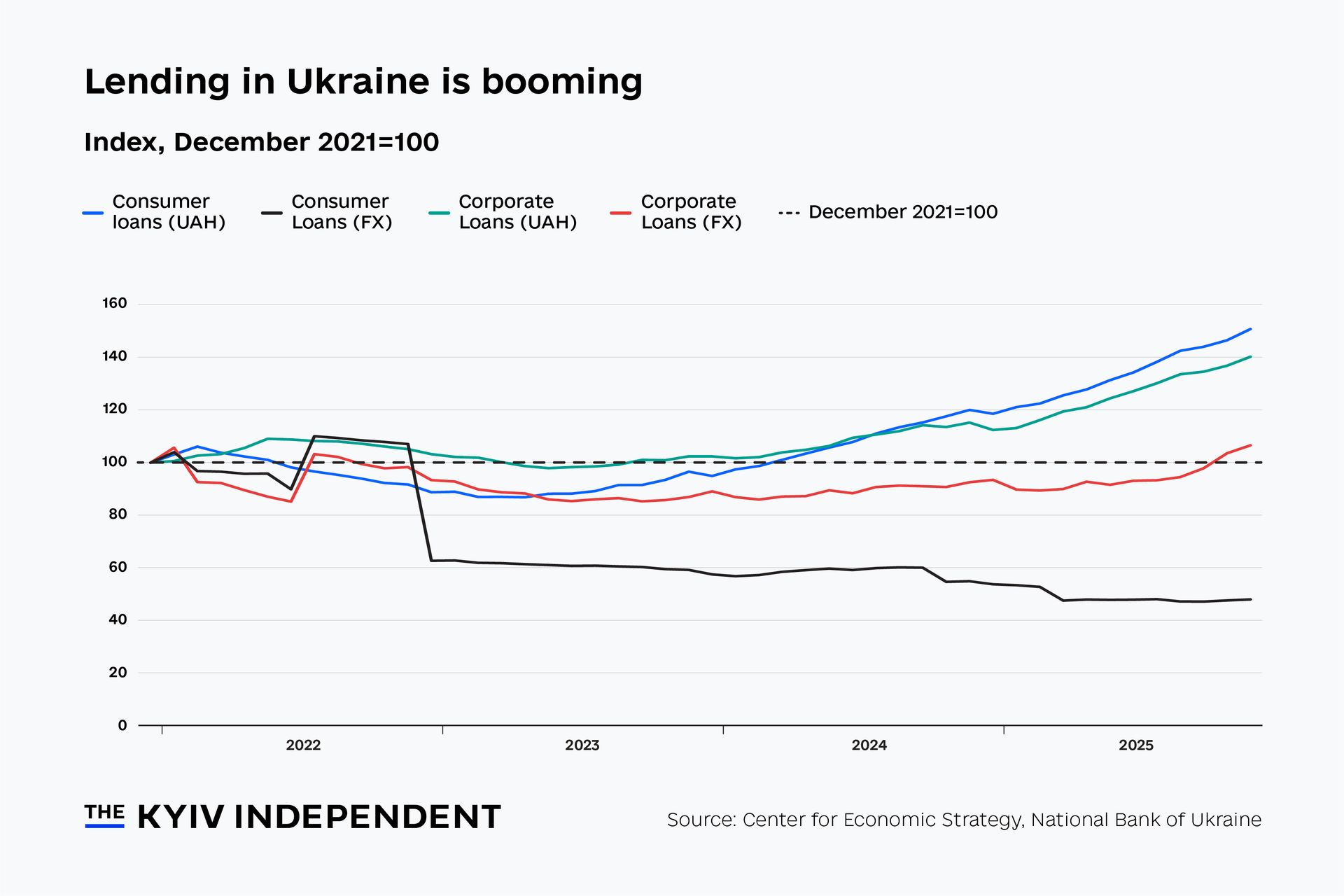
In this context, the Kyiv Independent's "Chart of the week," published on January 7, 2026, highlights a striking economic trend: a surge in lending activity among Ukrainians. The analysis suggests that this lending boom reflects how the population has begun to treat the war as a "new normal." Consumer loans for purchases such as appliances, vehicles, and home improvements have risen sharply, even as the economy grapples with war-related disruptions including infrastructure damage, population displacement, and international sanctions on Russia.
This development comes against a backdrop of economic resilience efforts. Ukraine's gross domestic product (GDP) contracted by over 30% in 2022 due to the invasion but rebounded with 5.3% growth in 2023, supported by Western aid exceeding $100 billion from the European Union, United States, and other allies. International financial institutions like the International Monetary Fund (IMF) have provided multibillion-dollar packages, while domestic banks have expanded lending to bolster civilian life. The National Bank of Ukraine has maintained interest rates to encourage borrowing, with data indicating a year-over-year increase in loan volumes despite air raid alerts and energy shortages.
Economic Adaptation Amid Battlefield Stalemate
The lending trend points to psychological and behavioral shifts among Ukraine's roughly 30 million remaining residents—down from 41 million pre-war due to 6 million refugees and internal displacement. Ukrainians are increasingly financing big-ticket items, signaling confidence in short-term stability or a desire to reclaim normalcy. This mirrors patterns observed in other protracted conflicts, where civilian economies adapt through informal and formal financial mechanisms.
On the military front, Day 1,406 encapsulated the war's attritional nature. Russian advances in the Donbas region have been incremental, with Ukrainian forces holding key defensive lines bolstered by Western-supplied weaponry such as F-16 jets, ATACMS missiles, and artillery systems. Ukraine's incursion into Russia's Kursk region in August 2024, which captured over 1,000 square kilometers, remains a point of contention, though Russian counteroffensives have partially reclaimed territory. Casualty estimates from Western intelligence sources exceed 1 million combined deaths and injuries, with Ukraine reporting over 43,000 soldiers killed as of late 2024.
International involvement continues to shape the conflict. NATO allies have committed over €50 billion in military aid for 2025, while U.S. President-elect Donald Trump's incoming administration has signaled potential negotiations, raising questions about future support. Russia, meanwhile, sustains its war economy through oil revenues and alliances with North Korea and Iran for munitions.
Background: From Invasion to Endurance
The war's roots trace to Russia's 2014 annexation of Crimea and support for separatists in Donbas, escalating into full invasion in 2022. Initial Russian gains, including the capture of Kherson and advances toward Kyiv, were reversed by Ukrainian counteroffensives, notably the 2022 Kharkiv liberation and Kherson retaking. The 2023 Ukrainian counteroffensive stalled against entrenched Russian defenses, leading to a war of attrition.
Humanitarian costs are staggering: over 10,000 civilian deaths verified by the UN, widespread destruction of energy infrastructure—leaving millions without power in winter 2024-2025—and a global food crisis triggered by Black Sea blockades, now mitigated by a grain corridor deal.
Economically, Ukraine's pivot to lending reflects policy successes. The government's "Victory Plan" emphasizes domestic production of drones and munitions, alongside digital innovations like the Diia app for wartime services. Banks report loan portfolios growing 20-30% annually, per central bank data, with microloans filling gaps left by damaged retail sectors.
Outlook: Normalization or Fragile Equilibrium?
The lending boom offers a silver lining of adaptation but also highlights unresolved tensions. As Day 1,406 fades into history, the war's trajectory hinges on U.S. policy shifts, European unity, and battlefield momentum. While Ukrainians borrow to build lives amid sirens, sustained international backing remains crucial to prevent economic collapse.
Negotiations could emerge in 2026, but President Volodymyr Zelenskyy's insistence on full territorial restoration clashes with Russia's maximalist demands. For now, the lending surge symbolizes endurance—a population betting on survival in a conflict that shows no swift end.
(Word count: 712)






