
Ukraine War: Zelenskyy Urges Europe to Build Anti-Ballistic Systems as Russian Attacks Intensify
Ukraine faces intensified Russian missile and drone barrages while President Zelenskyy urges Europe to rapidly develop its own affordable anti-ballistic missile systems, as both sides signal further escalation amid high Russian casualties and warnings that the attritional war could last years. The Ukraine war has exposed critical gaps in European air defences, with Ukraine critically low on Patriot munitions and largely unable to intercept Russian ballistic missiles over the past month. [1]
Russian Barrages Test Ukrainian Air Defences
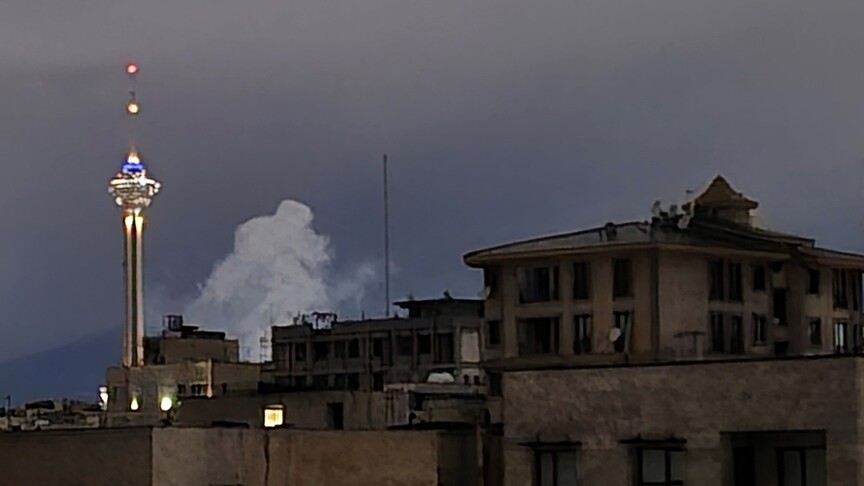
Another night brought fresh waves of ballistic missiles and drones against Kyiv, once again testing Ukraine's air defences. [1] Ukraine is critically low on munitions for its Patriot air defence systems and has been largely unable to down ballistic missiles, which travel at several times the speed of sound, over the past month. [1] While many drones and cruise missiles can be intercepted by a range of air-defence systems, ballistic missiles remain the most dangerous threat, requiring highly advanced and increasingly scarce interceptor missiles. [1] Zelenskyy, speaking in his nightly video address, said Ukraine needed its allies to ensure weapons supplies were provided more promptly. [1] "I am preparing changes in Ukraine's diplomatic efforts. We need a new level of cooperation with our partners to ensure that agreements on arms supplies are fulfilled," Zelenskyy said. [1]
Zelenskyy Pushes for European Anti-Ballistic Systems

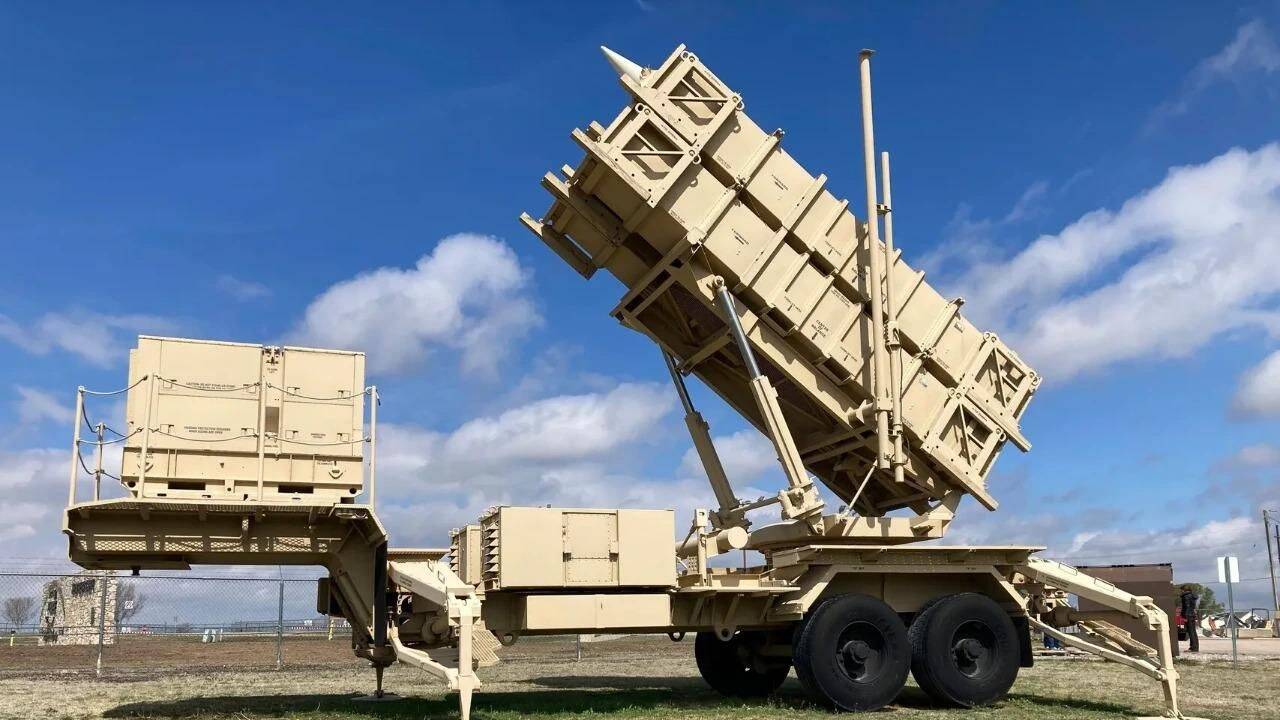
Russian ballistic missiles and drones target Kyiv as Ukraine's air defences face critical shortages. — Source: gdelt Speaking at the Nato defence industries forum, Zelenskyy said, "Europe needs affordable, mass-produced anti-ballistic systems as soon as possible. In fact, today." [1] He also urged European nations to rapidly expand their own production of anti-ballistic systems and the missiles that power them, arguing that the continent cannot afford to wait years for such capabilities. [1] For decades, Europe's ballistic missile defence has relied heavily on the United States. [1] The US-made Patriot remains Nato's primary system for intercepting ballistic missiles and has become the backbone of Ukraine's air defence against Russian ballistic missiles. [1] However, the war has exposed the limits of this dependence. [1] Patriot interceptors are expensive, production is slow, and European countries have limited stockpiles, making it difficult to sustain long-term support for Ukraine. [1] While Europe has developed systems such as IRIS-T SLM and SAMP/T, they are primarily designed to counter aircraft, drones and cruise missiles. [1] For high-end ballistic missile defence, Europe still depends largely on American Patriot systems. [1] Zelenskyy wants a "Anti-Ballistic Coalition" in which the boundary between NATO and Ukraine blurs. [2] He demanded from the US a licence for his country to produce Patriot air defence missiles and apparently received what he wanted. [2] He also proposed a "drone deal between Ukraine and Germany" and the creation of a "European anti-ballistic system." [2] He understood the leaders of the countries in the North Atlantic alliance to be of the opinion "that Ukraine's place is in NATO because NATO with Ukraine is an alliance of the future." [2]
Putin Rejects Ceasefire and Orders Escalation
Russian President Vladimir Putin, according to three sources close to the Kremlin, rejects calls for peace negotiations with Ukraine. [4] Recent Ukrainian drone attacks on Russian refineries and ports have instead strengthened his determination to continue the war. [4] Two of the sources believe that further escalation of the conflict, which has now been going on for the fifth year, is highly probable in the coming months. [4] Putin rejected proposals from his advisers who recommended a ceasefire along the current front line. [4] Instead of compromise, he wants to focus on capturing all of Donbas, which he considers a key goal of the war. [4] One of the people familiar with his thinking said that Putin does not intend to give in. [4] "He needs some kind of victory," the source described his motivation. [4] The Kremlin already indicated the same position in June when Putin publicly rejected Ukrainian President Volodymyr Zelenskyy's call for a personal meeting and a ceasefire. [4] Recent Ukrainian attacks deep into Russian territory played a key role. [4] Drones hit refineries, ports and fuel depots and caused problems with fuel supplies. [4] Instead of prompting the Kremlin to negotiate, the attacks had the opposite effect according to people around Putin. [4] The Russian president was reportedly enraged by the attacks and strengthened his conviction that he must respond even more harshly. [4] In the past week, Russia therefore carried out two large-scale missile and drone attacks on Ukraine, including Kyiv. [4] Dozens of civilians were killed in them. [4] Moscow claims it attacked only military targets. [4] Russian military commentators are increasingly publicly talking about the possibility of expanding the conflict outside Ukraine. [4] For example, the possibility of strikes on NATO bases in the Baltic states or Romania was mentioned. [4] Former high-ranking Russian Defence Ministry official Andrei Ilnitsky wrote in a commentary for the newspaper Kommersant that the next phase of the war could begin with extensive strikes on Ukrainian industrial enterprises, steelworks and the port in Odesa. [4] This could be followed by attacks on facilities in European Union countries where missiles or drones for Ukraine are manufactured. [4]
High Russian Losses in Attritional Fighting
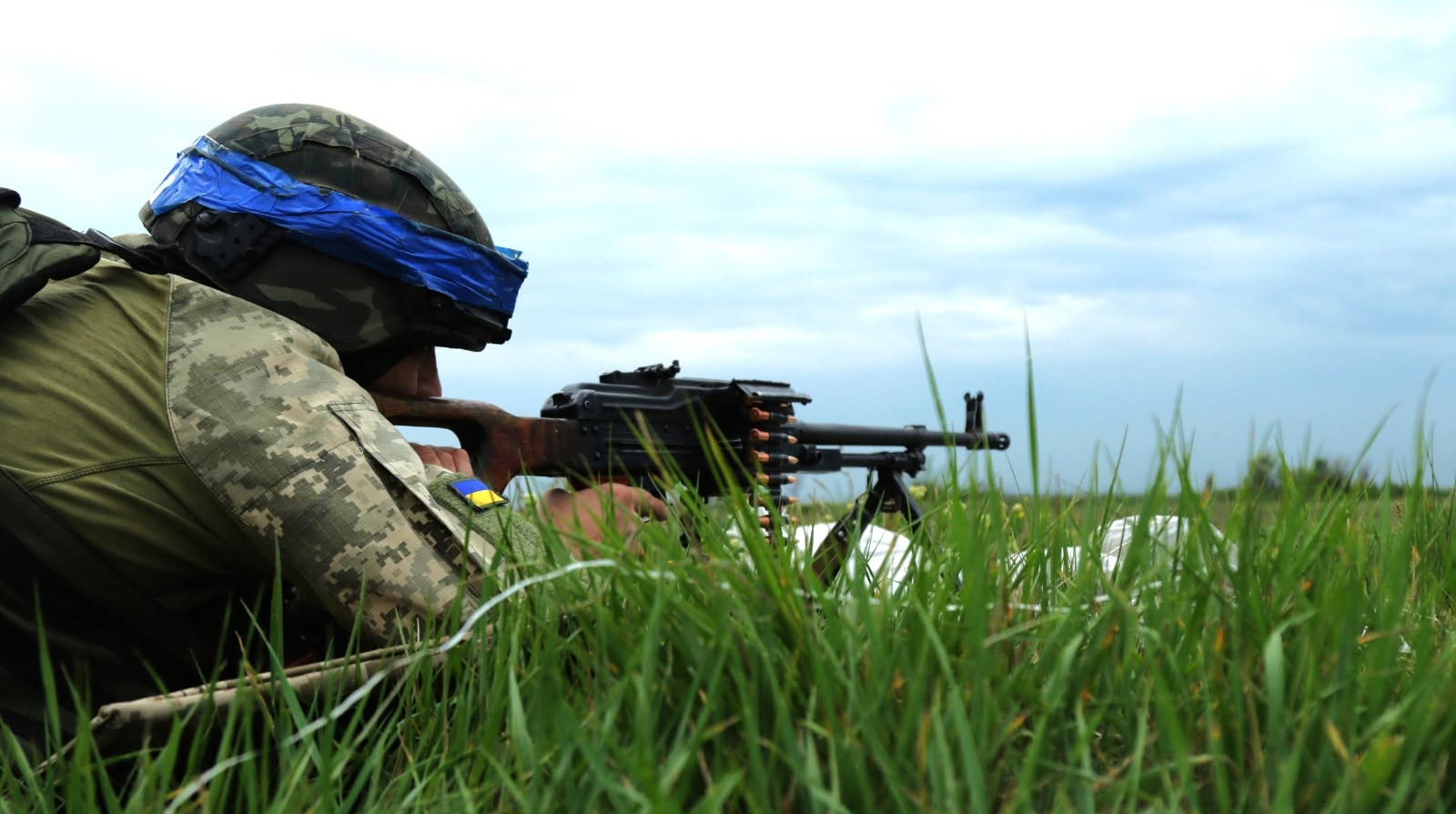
Russian forces suffer 1,320 soldier casualties and lose over 500 pieces of equipment in one day. — Source: ukrainskapravda Russia has lost 1,320 soldiers killed and wounded over the past day, bringing its total number of personnel losses to 1,419,090. [3] The total combat losses of the Russian forces between 24 February 2022 and 12 July 2026 are estimated to include approximately 1,419,090 (+1,320) military personnel, 12,120 (+4) tanks, 24,928 (+6) armoured combat vehicles, 45,807 (+53) artillery systems, 1,928 (+4) multiple-launch rocket systems, 1,485 (+0) air defence systems, 437 (+0) fixed-wing aircraft, 353 (+0) helicopters, 1,883 (+15) ground robotic systems, 403,959 (+2,034) operational-tactical UAVs, 4,889 (+2) cruise missiles, 33 (+0) ships/boats, 2 (+0) submarines, 119,038 (+428) vehicles and fuel tankers, and 4,407 (+5) special vehicles and other equipment. [3] Despite Putin believing in victory according to sources, the advance of the Russian army on the front has slowed significantly in recent months. [4] Hard fighting is now concentrated primarily around the city of Kostyantynivka in the Donetsk region. [4] According to an estimate by the American Center for Strategic and International Studies (CSIS), around two million soldiers have already been killed, wounded or missing since the start of the full-scale invasion in 2022. [4] Of these, approximately 1.4 million are on the Russian side. [4]
Warnings of Prolonged War and Escalation Risks
Former Ukrainian commander Valeriy Zaluzhnyi warns that despite successful attacks on Russian infrastructure, the war remains in a stalemate. [5] Endurance on both sides will be decisive. [5] Ukrainian strikes on Russian refineries and other strategic targets cause noticeable economic and military damage to Moscow, but do not in themselves bring an end to the war. [5] Zaluzhnyi sharply rejected the views of some Western analysts who say that Moscow is losing the war. [5] "That is a dangerous reading of the war," Zaluzhnyi warned. [5] Although Russia feels the attacks on energy infrastructure painfully, they "do not lead to the end of the war." [5] Today's fighting has a completely different character than conflicts in the past. [5] "It is no longer a war of rapid manoeuvres. It is a war of attrition," he emphasised. [5] Neither side has the upper hand. [5] The front has practically reached a dead end. [5] Russia cannot achieve its original goals or control all of Ukraine, but Kyiv currently does not have sufficient capacities to liberate all occupied territories. [5] A decisive turning point is therefore not yet in sight. [5] Zaluzhnyi pointed out that Ukraine prevented Russia from achieving several key goals during the war and caused it significant military and economic damage. [5] At the same time, however, he warned that Kyiv remains dependent on foreign financial, military and technological support and at the same time faces growing problems in its own country. [5] He also pointed to gradually weakening support from allies. [5] "Political changes in Washington and constant disagreements in Europe strengthen completely legitimate questions about whether it will be possible to maintain the current level of support in the future," he wrote. [5] The outcome of the war will not be decided by one big attack, but by the ability to endure a long-term conflict. [5] "Wars of attrition do not produce clear winners in the traditional sense. Endurance decides them," he concluded. [5]
Implications for European Defence and NATO
The war in Ukraine has shown that modern conflicts can rapidly deplete interceptor stockpiles, while production struggles to keep pace with demand. [1] Building an indigenous anti-ballistic missile capability would allow Europe to expand production, strengthen its defence industrial base, and ensure a more reliable supply of interceptors during future crises. [1] Sergei Karaganov demanded in Moscow that Europe must be "stopped" because it is a source of wars. [2] In an interview with the state channel Russia-24 at the end of April, he called for Russia to begin "a series of nuclear tests." [2] It is anyway "an idiotic view" to believe "that there can be no winners in nuclear wars." [2] Karaganov advocates "preemptive strikes" on targets in Europe, "initially with conventional weapons and then, if absolutely necessary, also with nuclear ones." [2] The updated Russian nuclear doctrine provides that Russia will in future regard "aggression" by a "non-nuclear state with the participation or support of a nuclear power" as a "joint attack." [2] Whoever attacks "important state or military objects" of critical infrastructure, for example with cruise missiles, hypersonic missiles "and other flying devices," must expect nuclear retaliation. [2] Without naming them, this doctrine contains a threat to the three nuclear powers among Ukraine's supporters: the USA, Great Britain and France. [2] The use of drones could lead to a larger war from one day to the next, according to ex-General Erich Vad. [2] Among Western military personnel, voices are increasing that warn against an escalation of the Ukraine conflict through unbridled support for Kyiv. [2] Colonel (ret.) Wolfgang Richter from the Geneva Centre for Security Policy analysed the dangers of a "horizontal expansion of the war" through drones at the beginning of July. [2] The risk is growing "that drones will be diverted to the territory of neighbouring NATO states," both Russian and Ukrainian. [2] This increases the risk of expanding the conflict with the consequence of a direct clash with Russia. [2] Brigadier General (ret.) Erich Vad, formerly an adviser to Chancellor Angela Merkel, criticises the course of unconditional support for Zelenskyy even more sharply. [2] In Ukraine, according to the general, there can be "no purely military solution." [2] The German government is acting "without a political concept." [2] Together with the political leadership in Paris, Chancellor Friedrich Merz is "escalating," instead of diplomatically. [2] With the use of Western combat drones "with ranges deep into the Russian hinterland," the danger is now "very high that a larger war could develop from one day to the next." [2] In addition, while the front in Ukraine stagnates, "the costs of this war are exploding," with serious consequences for the stability of German society. [2] Regarding the option of admitting Ukraine to the EU and NATO, he says: "We are bringing the conflict and the war into Europe." [2] And if a European war were to occur, "then it will take place in our country." [2] Zaluzhnyi also addressed the North Atlantic Alliance in the conclusion of his commentary. [5] He praised its previous help to Ukraine, but at the same time indicated that NATO will have to adapt to a new reality. [5] According to him, the alliance still starts from a way of thinking from the Cold War, when the main goal was to prevent direct escalation between nuclear powers. [5] Europe therefore needs a new strategic vision and leaders who can enforce it. [5]
What to watch next: Signs point to escalation on both sides, with Putin ordering plans for massive strikes on Ukrainian arms industry infrastructure and possibly military leaders, while Western military voices caution that drone use could lead to a larger war from one day to the next.