Ukraine War Remains Deadlocked Attritional Conflict Warns Zalužnyj
Former Ukrainian commander Valerij Zalužnyj warns that the Ukraine war remains in a stalemate as an attritional conflict that could last years, with Ukrainian long-range drone strikes on Russian infrastructure causing damage but not deciding the outcome, while Kyiv remains dependent on Western support that is showing signs of fatigue.
Zalužnyj's Assessment of the Stalemate
Former Ukrainian commander Valerij Zalužnyj states that successful Ukrainian strikes on Russian refineries and strategic sites inflict economic and military damage but do not lead to the end of the war, rejecting Western analysts' claims that Russia is losing. [1] The front line is in a deadlock: Russia cannot achieve its original goals or control all of Ukraine, and Ukraine currently lacks the capacity to liberate all occupied territories. [1] Zalužnyj warns that it is a mistake to assume a series of successful attacks means Russia is approaching defeat. [1] He rejects the views of some Western analysts who claim Moscow is losing the war, calling such assessments a dangerous reading of the conflict. [1] According to Zalužnyj, Russia feels the attacks on energy infrastructure painfully, yet they do not lead to the end of the war. [1] Today's fighting has a completely different character than conflicts in the past, he emphasizes, noting it is no longer a war of rapid maneuvers but an attritional war. [1]
Impact and Limits of Ukrainian Long-Range Drone Strikes
Ukraine has expanded its long-range UAV capabilities, striking as far as Omsk in Siberia over 2,400 km away, disrupting Russian fuel supplies and prompting export bans, while developing inertial guidance and AI to counter jamming. [2] Almost no air defense system protects the Omsk area because Russian authorities believed the Siberian city was too far for Ukraine to attack. [2] The strike led Russia to ban diesel exports and worsened the fuel crisis that has lasted throughout the past month. [2] Prior Ukrainian attacks had mainly occurred in the European part of Russia within about 1,600 km from territory under Ukrainian control. [2] Omsk lies nearly 2,400 km from Ukraine as the crow flies, requiring UAVs to follow long routes while avoiding Russian air defenses. [2] Two main factors have helped Ukraine accelerate long-range UAV attacks deep into Russian territory, according to researcher Bob Tollast of the Royal United Services Institute. [2] The first is a synchronized effort to increase UAV production and improve inertial navigation systems, control software, and computer vision technology that allow UAVs to operate effectively even when satellite positioning signals are jammed. [2] The second factor is support from foreign partners. [2] Tollast notes that oil refineries and fuel storage facilities are very large targets that are vulnerable to UAV attacks. [2]
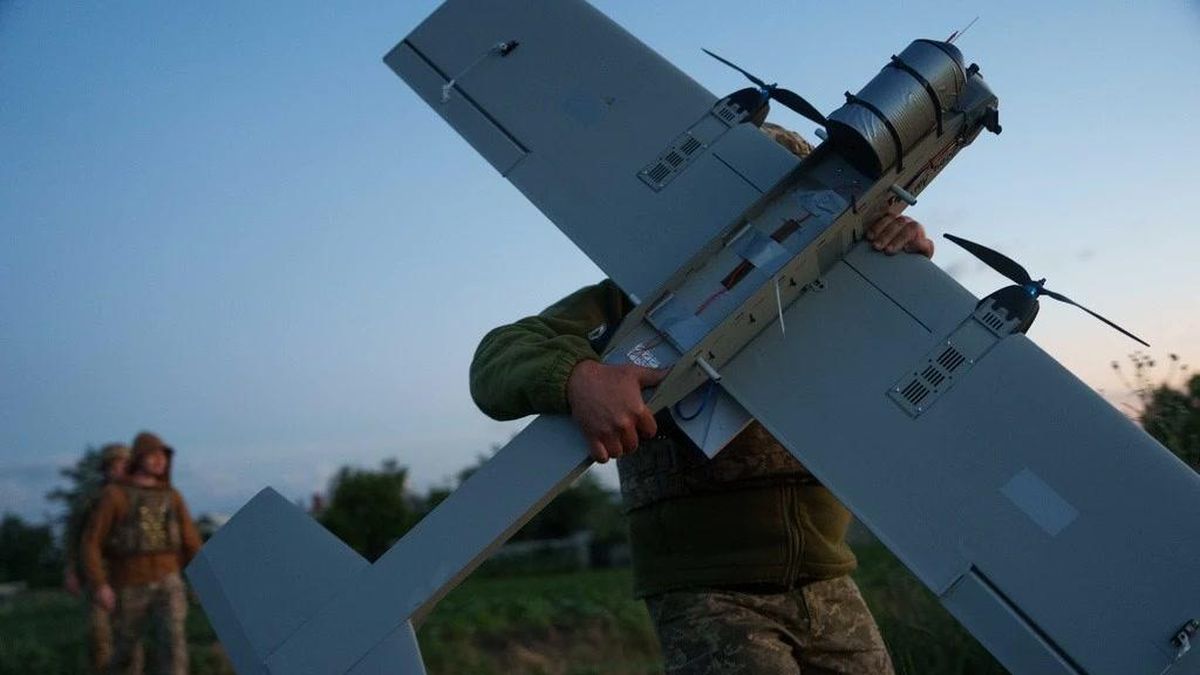
Former Ukrainian commander Valerij Zalužnyj warns the war remains a prolonged attritional stalemate. — Source: gdelt
Russia's Retaliatory Capacity and Mutual Adaptation
Russia retains the ability to retaliate with equal or greater force, and both sides are increasing UAV production and integration into warfare, fundamentally changing modern conflict as recognized by NATO Secretary General Mark Rutte. [1] Zalužnyj described Ukrainian attacks deep inside Russia as technologically extremely demanding operations. [1] At the same time, he pointed out that the Kremlin still has sufficient means for retaliation, stating that Russia continues to have the ability to strike back with equal or even greater force. [1] Therefore, he argues, it cannot be expected that this method of conducting combat will bring a decisive strategic victory to either side. [1] Russia has also sharply increased UAV production and integrated this type of weapon more deeply into its overall combat strategy. [2] After more than four years of conflict, Ukraine has rapidly increased its UAV production capacity and development while intensifying attacks on Russian energy infrastructure and military equipment. [2] Prominent targets such as large oil refineries in many cities have become objectives in a prolonged campaign aimed at reducing Russia's energy revenues. [2] Military experts assess that Ukraine's new-style UAV campaign plays a key role in slowing the advance of Russian forces, though increasingly effective long-range strikes also significantly raise the risk of conflict escalation. [2] Ukraine's battlefield advances show that the rapid application of UAVs is changing the nature of modern warfare, with operations becoming increasingly automated, connected, and data-driven. [2]
Dependence on Western Support and Risk of Fatigue
Zalužnyj highlights Ukraine's growing dependence on allied financial, military and technological aid amid fears of Western fatigue due to political changes in Washington and divisions in Europe, with endurance determining the outcome of this war of attrition. [1] Ukraine prevented Russia from achieving several key goals during the war and caused it significant military and economic damage. [1] At the same time, Zalužnyj pointed out that Kyiv remains dependent on foreign financial, military, and technological support while facing growing problems at home. [1] He also warned of gradually weakening support from allies, noting that political changes in Washington and ongoing divisions in Europe strengthen legitimate questions about whether the current level of support can be maintained. [1] According to Zalužnyj, the outcome of the war will not be decided by one major attack but by the ability to endure a long-term conflict. [1] Attritional wars do not produce clear winners in the traditional sense, he concluded, and endurance decides them. [1]
Daily Russian Personnel Losses
Russia's daily personnel losses are estimated at 1,490, bringing total losses since February 2022 to 1,417,770 according to the Ukrainian General Staff. [5] Russia has lost 1,490 soldiers killed and wounded over the past day, bringing its total number of personnel losses to 1,417,770. [5] The total combat losses of the Russian forces between 24 February 2022 and 11 July 2026 are estimated to include approximately 1,417,770 military personnel. [5] The information is being confirmed. [5]

Former Ukrainian commander Valerij Zalužnyj assesses the attritional stalemate in the Ukraine war. — Source: gdelt
Implications for NATO Strategy
Zalužnyj highlights Ukraine's growing dependence on allied financial, military and technological aid amid fears of Western fatigue due to political changes in Washington and divisions in Europe, with endurance determining the outcome of this war of attrition. [1] In the conclusion of his commentary, Zalužnyj also addressed the North Atlantic Alliance. [1] He praised its assistance to Ukraine so far but indicated that NATO will have to adapt to the new reality. [1] According to him, the alliance still proceeds from Cold War-era thinking whose main goal was to prevent direct escalation between nuclear powers. [1] Europe therefore needs a new strategic vision and leaders who can push it through, Zalužnyj argued. [1] NATO Secretary General Mark Rutte stated on 7 July that UAVs have fundamentally changed the nature of modern warfare and become a decisive factor on the battlefield, with the Russia-Ukraine conflict serving as the clearest proof. [2] At the recent NATO summit in Turkey, Rutte announced the NATO Drone Edge initiative under which member countries will invest more than 40 billion USD over the next five years to develop counter-UAV capabilities. [2] Over the course of more than four and a half years of conflict, Ukraine has built an innovation cycle much faster than traditional defense corporations, which usually take many years to field new products. [2] Coordination between the military, domestic startups, and the private sector enables new technology to be deployed in just a few weeks, with UAVs continuously improved based on battlefield feedback. [2] Rutte said the alliance is building a NATO ready for the UAV era together, leveraging the latest innovative technologies, investing in the transatlantic defense industry, and drawing practical lessons from the Ukraine battlefield. [2]
What to watch next: Zalužnyj's commentary indicates that NATO will need to develop a new strategic vision beyond Cold War thinking while member states invest more than 40 billion USD over five years in counter-drone capabilities, and both Russia and Ukraine continue ramping up UAV production and integration.